Retail Logistics Services for E-Commerce Freight

Keep palletized inventory moving from suppliers and ports to warehouses, distribution centers, stores, and other commercial receiving points. Tetrix Transport coordinates retail logistics services through FTL, LTL, dry van, warehousing, drop trailer, drayage, and qualified cross-border freight across North America.

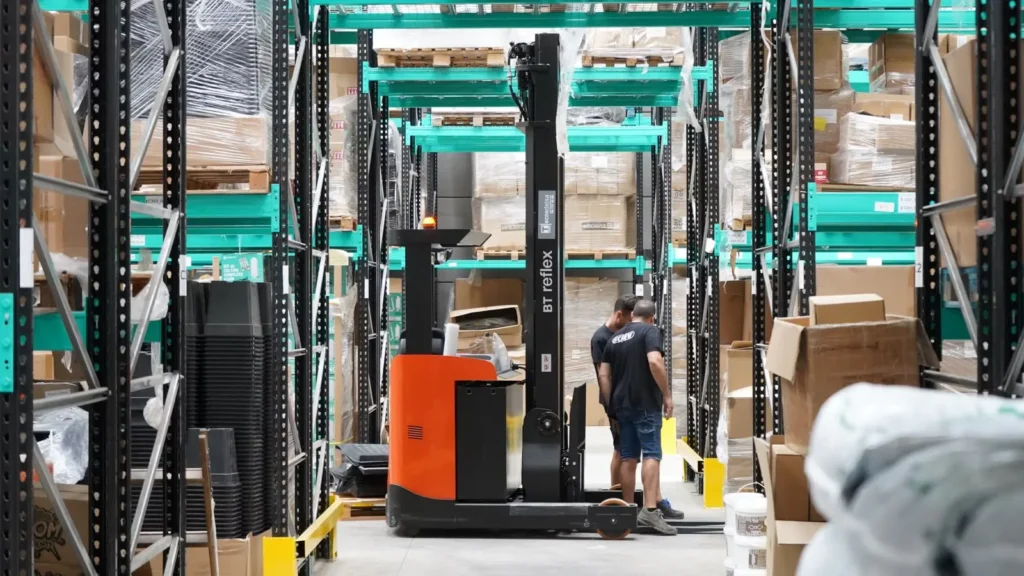
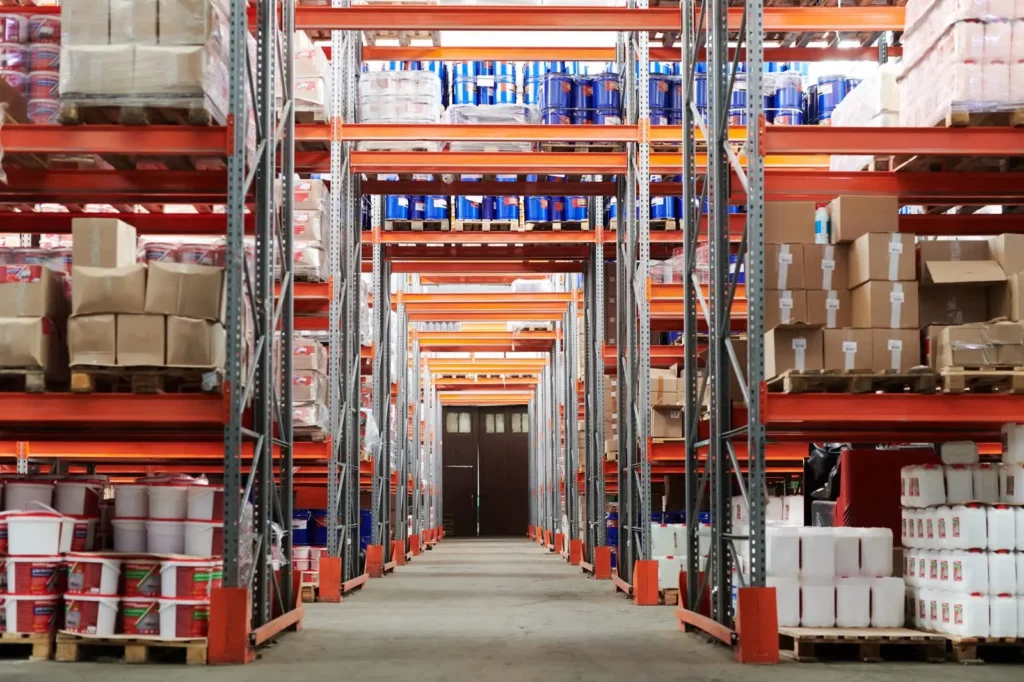
Shelves of palletized goods and cartons inside a distribution warehouse

RETAIL LOGISTICS

Retail freight is judged at the receiving door.

A shipment can reach the destination city and still miss the job. Distribution centers, stores, warehouses, and cross-docks may require fixed appointments, purchase-order references, pallet labels, routing instructions, delivery numbers, and specific unloading procedures. Missing one detail can lead to detention, refusal, rescheduling, or inventory arriving after the promotion begins.

Tetrix Transport provides retail logistics services for e-commerce freight shipping, acting as a freight brokerage and transportation coordinator for brands, importers, wholesalers, retail suppliers, distributors, online retailers, and their vendors. We arrange full truckload freight, LTL, dry van, warehousing, drop trailer, drayage, and qualified cross-border transportation according to the inventory, shipment size, routing guide, delivery window, and receiving location.

RETAIL FREIGHT

How businesses use retail freight shipping

Start with the use case closest to your shipment. Final equipment and service depend on the product, packaging, pallet count, dimensions, weight, value, freight class, routing instructions, destination access, and required receiving window.

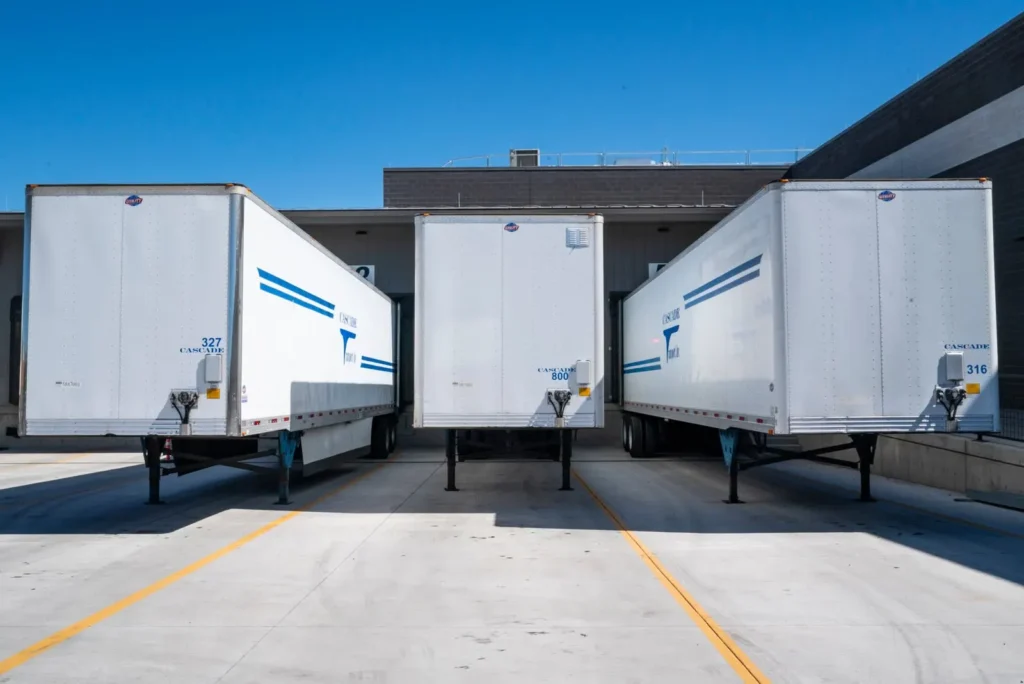
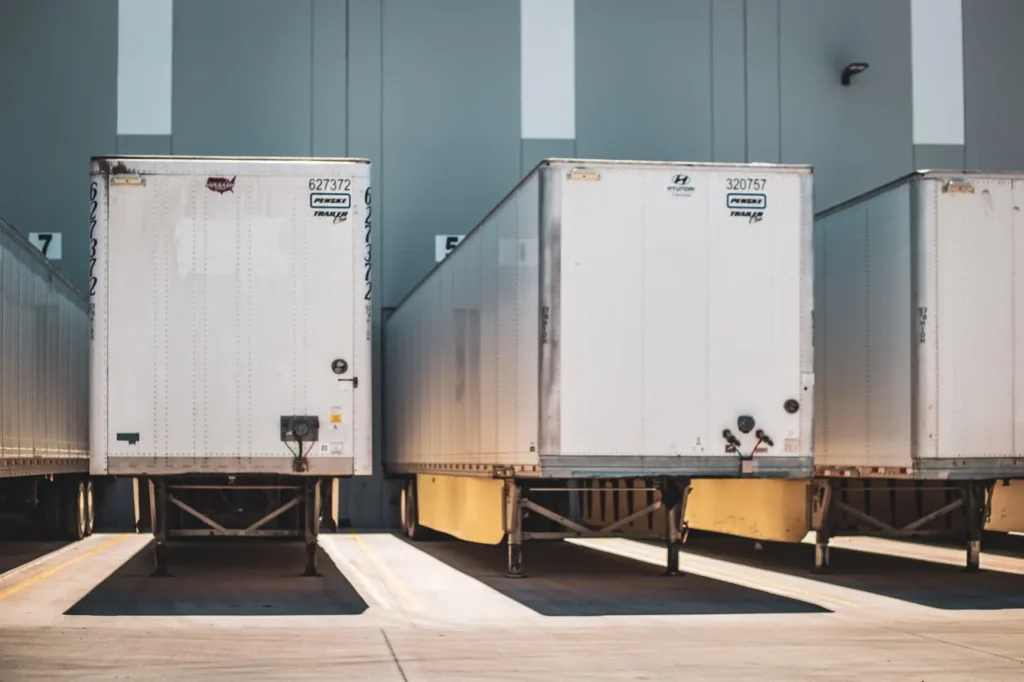
Freight trailers parked at warehouse loading bays

Distribution center replenishment

Distribution center freight should be planned from the receiver’s routing guide, not only the mileage. Send the purchase order, delivery number, vendor identification, appointment details, pallet labels, seal requirements, lumper process, pallet-exchange rules, and check-in instructions before pickup. Tetrix Transport coordinates FTL or LTL capacity around the accepted receiving window and confirmed shipment profile. The shipper remains responsible for accurate product, count, labeling, packaging, and retailer documentation.
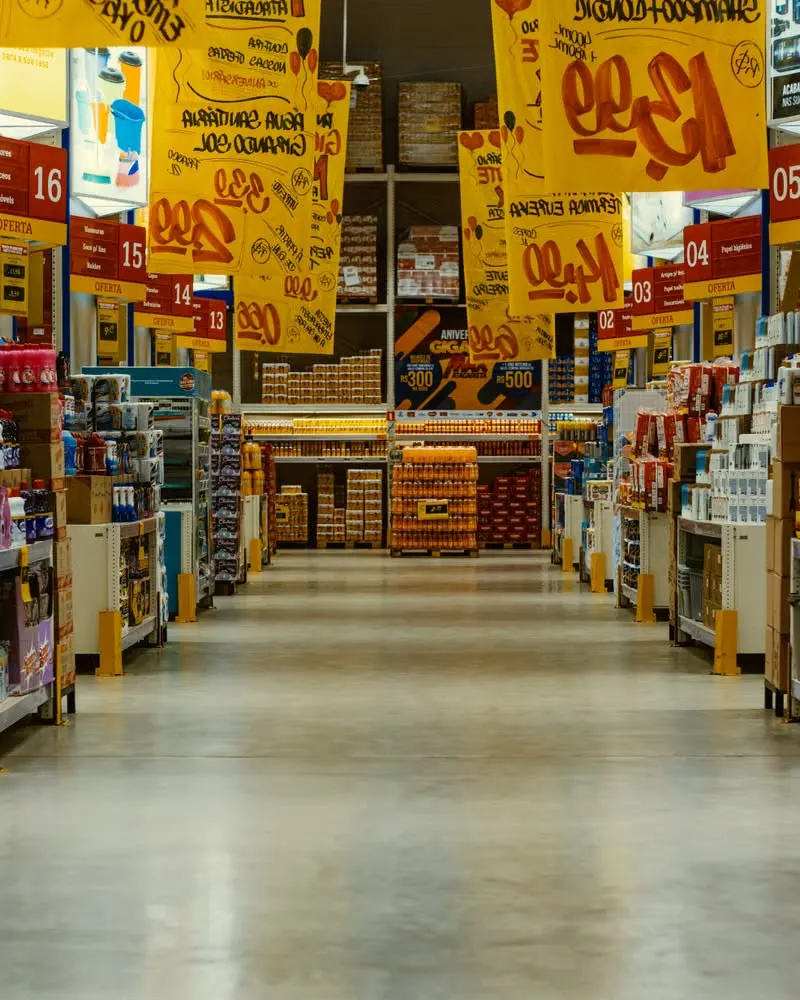
Stocked aisles and sale displays inside a retail store

Store-ready freight delivery

Retail stores may have shorter receiving hours, smaller docks, limited backroom space, and stricter vehicle access than a distribution center. Provide the exact entrance, receiving contact, appointment or call-ahead rule, trailer restriction, unloading method, and parking limitations. Liftgate, pallet jack, driver assist, inside delivery, or straight-truck service must be requested and confirmed before booking. Tetrix Transport coordinates the commercial freight move but does not assume store labor or fixture installation unless a separate written service is accepted.

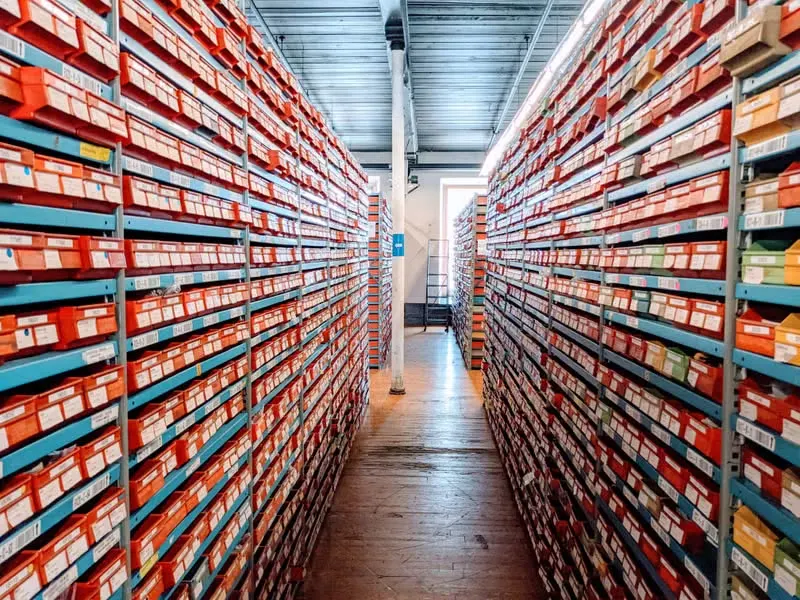
Rows of shoe boxes organized on warehouse shelves

Product launch and store reset freight

Launches and resets can combine merchandise, displays, fixtures, signage, packaging, and installation materials with one fixed go-live date. The plan should identify which items travel together, each destination’s delivery window, site contact, unloading method, and responsibility after delivery. Multi-location programs may work better as separate shipments, a routed multi-stop load, or staged releases depending on volume and timing. Tetrix Transport reviews the schedule and coordinates available freight capacity around the confirmed rollout plan.

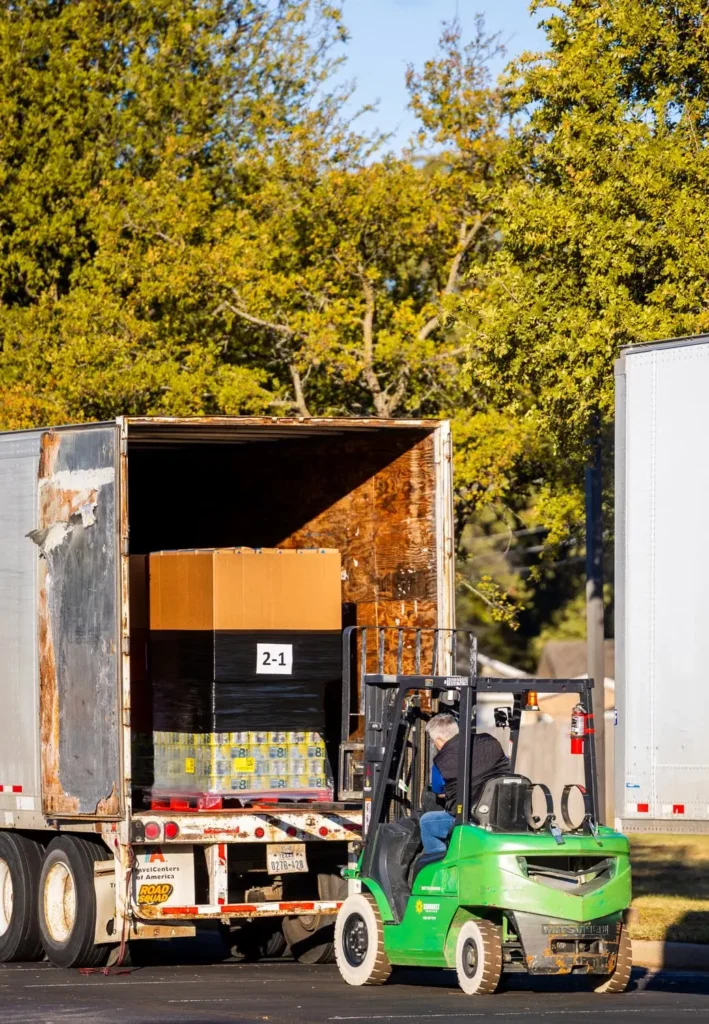
Forklift loading a pallet of boxed goods into a freight trailer

Vendor-to-warehouse inbound freight

Vendor inbound freight connects manufacturers, importers, wholesalers, and suppliers with a retailer’s warehouse or distribution network. Each tender should include the supplier’s actual ready time, commodity, pallet count, dimensions, weight, purchase-order references, routing instructions, and warehouse appointment. Tetrix Transport coordinates the carrier and handoff after those details are confirmed. Multiple vendor shipments may be reviewed for consolidation when product compatibility, timing, origin geography, and the receiving plan make it practical.

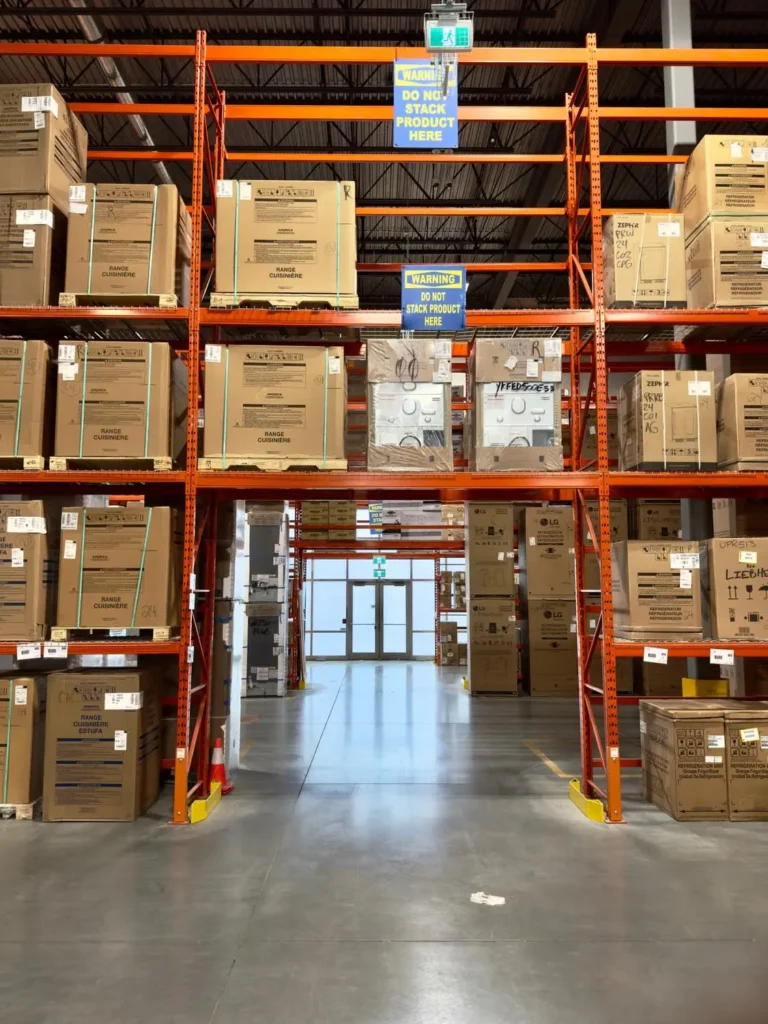
Boxed appliances stored on racks in a warehouse

Smaller replenishment shipments

Less-than-truckload shipping can fit smaller quantities of properly packaged retail inventory that do not need a full trailer. Accurate freight class, dimensions, weight, density, stackability, value, and accessorials help prevent reclassification or service changes. Because LTL freight normally passes through terminals and shares trailer space, packaging should tolerate normal network handling. Appointments, liftgate service, limited access, notifications, and delivery references should be included in the first quote.

Aerial view of stacked shipping containers at a port terminal

Cross-border retail freight

Retail freight between the United States, Canada, and Mexico may involve commercial documents, customs brokers, carrier handoffs, border facilities, inspections, and a final delivery appointment. The shipper and importer should confirm product eligibility, classification, valuation, country of origin, labeling, customs responsibility, and any agency requirement before pickup. Tetrix Transport coordinates qualified transportation after those responsibilities and documents are clear. Transit planning should allow for border processing instead of treating the lane like a domestic shipment.

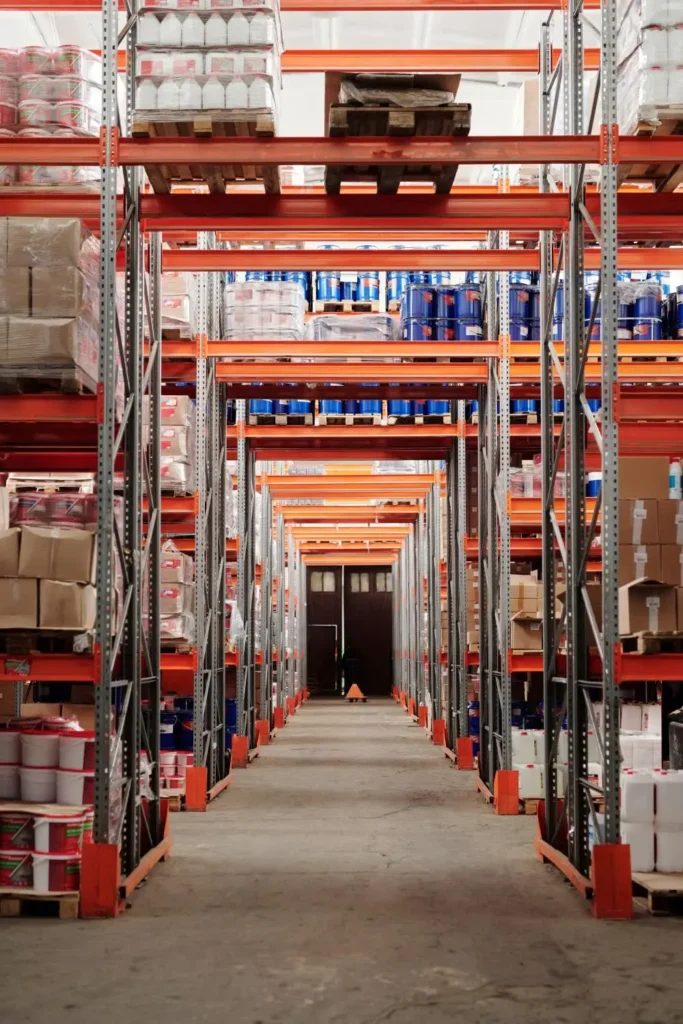
Pallets of packaged goods stored on tall warehouse shelving

Warehouse consolidation and scheduled release

Inventory sometimes becomes available before a promotion, store, customer, or distribution center is ready to receive it. Tetrix Transport can coordinate warehousing and distribution, cross-docking, consolidation, and scheduled release for approved freight when a suitable facility is available. Product dimensions, weight, value, handling needs, storage conditions, inventory instructions, dwell time, and release authority must be defined first. Standard storage does not automatically include order fulfillment, individual parcel shipping, relabeling, returns processing, or marketplace preparation.

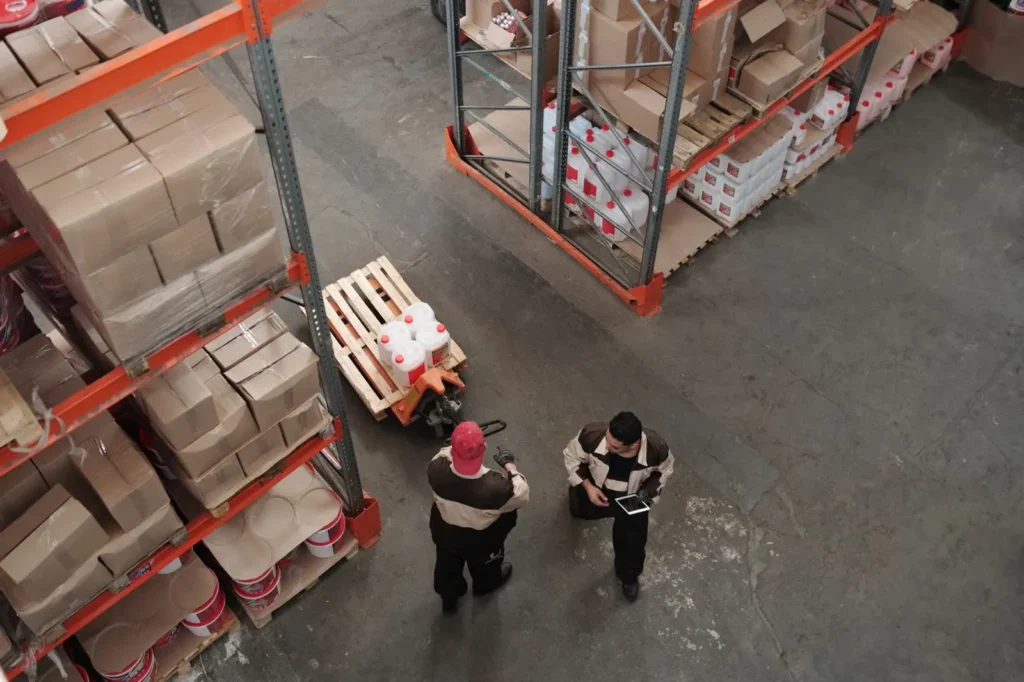
Two warehouse workers checking stock beside racks of cartons

Retail returns and reverse logistics

Reverse logistics may move unsold, recalled, damaged, seasonal, reusable, or customer-returned products from stores and distribution points to a warehouse, vendor, repair facility, liquidator, or recycler. The return plan should identify product condition, quantity, packaging, pickup contact, consolidation point, destination, and final disposition responsibility. Batteries, aerosols, chemicals, damaged electronics, and other regulated products must be disclosed before transportation is arranged. Tetrix Transport coordinates accepted return freight but does not inspect products, determine resale eligibility, issue customer refunds, or choose the disposition path.

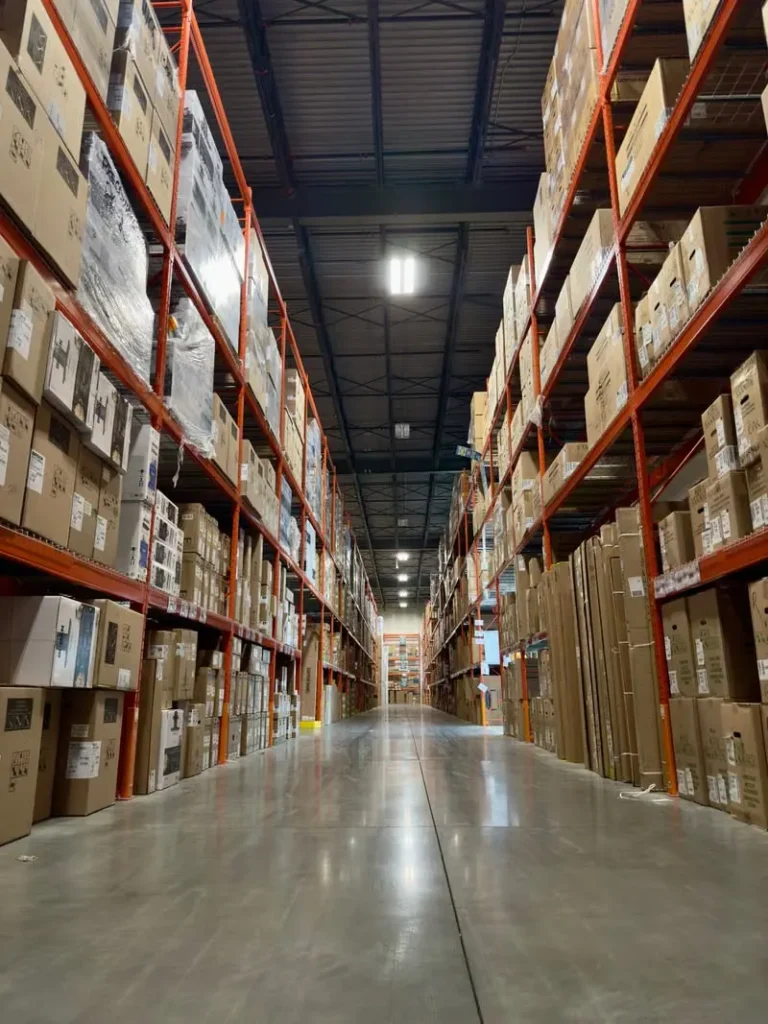
Long warehouse aisle lined with boxed merchandise

Seasonal and promotional retail freight

Holiday inventory, promotions, weather-driven products, school seasons, and limited releases can compress more freight into a short delivery period. Share lane forecasts, expected pallet or truckload volume, shipping days, retailer appointments, launch dates, and likely exceptions as early as possible. Tetrix Transport can review primary and backup capacity options for accepted lanes. Forecasts support planning, but equipment is reserved only after the service terms and individual shipment tender are confirmed.

Three enclosed freight trailers parked at warehouse docks

Multi-location retail distribution

Store networks and regional distribution programs may involve different contacts, hours, equipment limits, and delivery references at every destination. A usable master schedule should list each address, stop sequence, appointment, product allocation, unloading method, and exception contact. Tetrix Transport reviews whether separate direct shipments, multi-stop FTL, LTL, or warehouse releases best fit the confirmed plan. Route feasibility, legal transit, handling exposure, and the cost of missed stops should guide the decision.

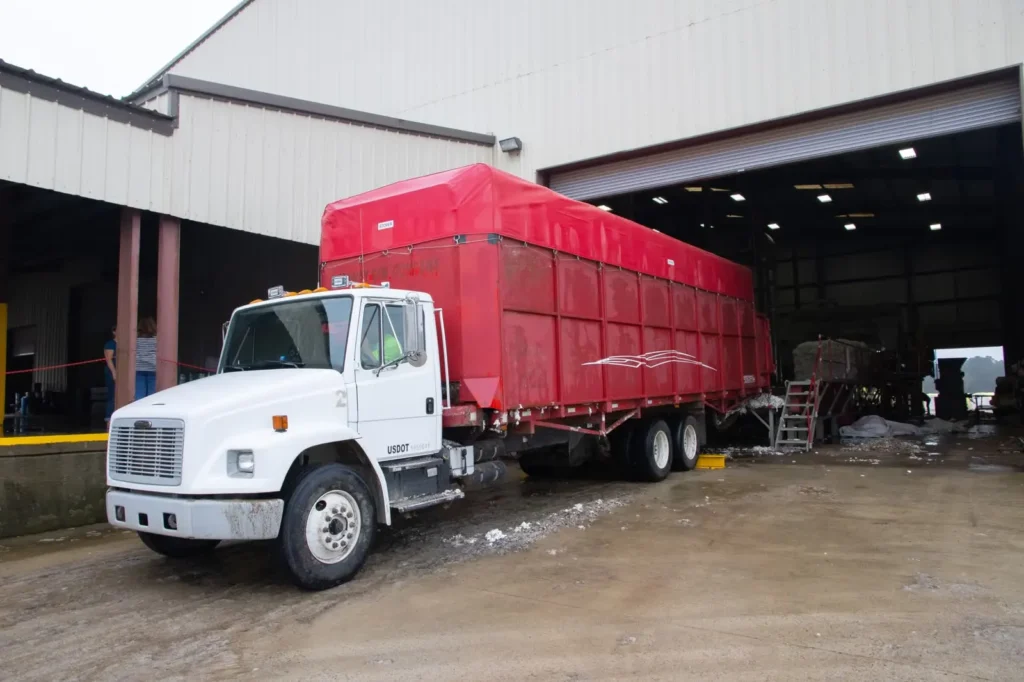
Truck with a red covered trailer parked by a warehouse

Retail freight across North America

Tetrix Transport coordinates domestic United States lanes and qualified retail freight to or from Canada and Mexico. Equipment and service are selected from the product, packaging, volume, schedule, documents, border plan, and receiver requirements. Cross-border freight is accepted only after product eligibility, customs responsibilities, required filings, and handoffs are understood. Lane-specific capacity and timing are confirmed with each quote.

Freight trailers parked at warehouse loading bays

Dedicated capacity for recurring retail lanes

Recurring supplier, warehouse, distribution center, and store lanes are easier to plan when forecasts match actual tenders. Provide lane pairs, weekly volume, shipping days, equipment, loading time, receiving appointments, seasonal changes, and known accessorials. Tetrix Transport can review repeat spot, contract, dedicated, or drop-trailer options for qualified programs. A forecast or lane discussion does not reserve a truck or trailer until the operating terms and shipment tender are confirmed.

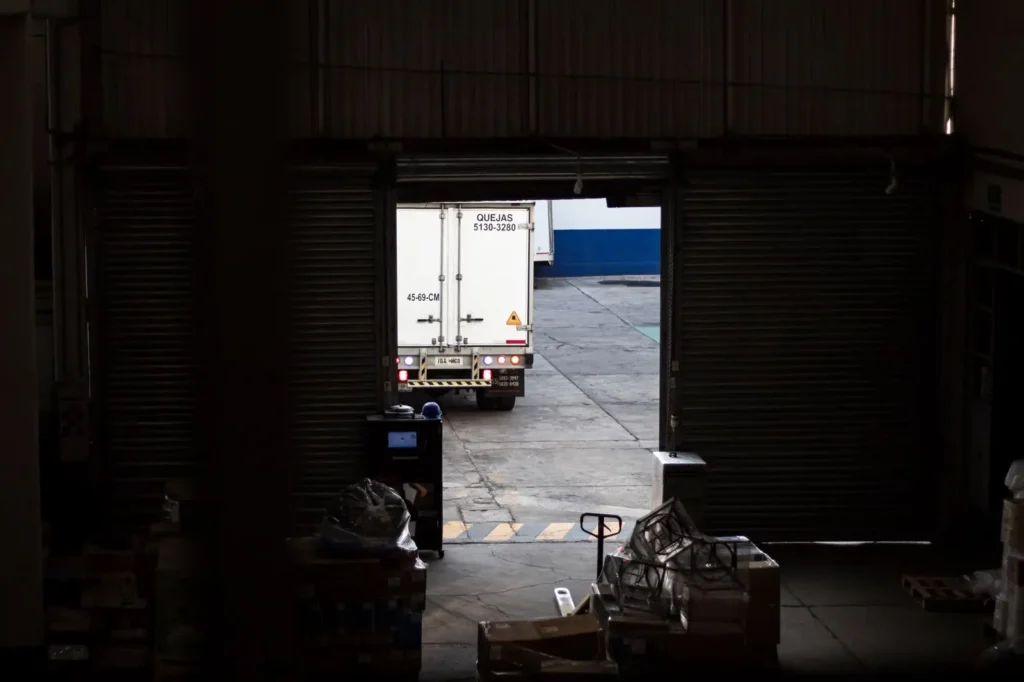
Freight truck seen through an open warehouse loading door

Time-sensitive retail freight

Replacement inventory, missed vendor shipments, launch materials, fixtures, and promotional goods can become urgent when a receiving window is closing. Share the exact ready time, required delivery time, dimensions, weight, loading method, destination rules, and latest acceptable arrival. Tetrix Transport reviews direct or expedited options that are legal and realistic for the lane. Pickup and delivery estimates remain subject to confirmed capacity, facility readiness, road conditions, and hours-of-service rules.

1 / 13

FTL FREIGHT

Dedicated trailer space for volume and fixed windows

FTL can fit larger replenishment orders, launch inventory, fragile displays, high-value products, or freight that benefits from fewer handling points. A dedicated trailer does not remove the need for accurate pallet counts, total weight, load distribution, seals, purchase-order references, and a confirmed receiving appointment. Tetrix Transport plans the shipment from the actual freight and destination requirements.

Three enclosed freight trailers parked at warehouse docks

LTL FREIGHT

Replenish inventory without waiting for a full trailer

LTL may lower transportation cost for smaller pallet quantities, regional replenishment, samples, and vendor orders. The tradeoff is additional terminal handling, shared trailer space, and more dependence on packaging, freight class, and accessorial accuracy. The requested service level and appointment must still fit the retailer’s actual inventory deadline.

Forklift loading a pallet of boxed goods into a freight trailer

WAREHOUSING

Hold, consolidate, and release inventory to schedule

Warehousing can support vendor consolidation, overflow inventory, cross-docking, launch staging, and scheduled delivery when a suitable facility is available. Storage requirements, handling method, count controls, dwell time, release authority, and final appointments should be agreed before arrival. Freight storage is different from consumer order fulfillment, so any pick-and-pack, labeling, kitting, or parcel work requires separate written confirmation.

Forklift and workers among pallets in a warehouse

Retail logistics services at a glance

U.S.
Nationwide retail freight coordination
FTL / LTL
Options for full and partial shipments
DC / STORE
Appointments planned for each destination
CA / MX
Qualified cross-border retail lanes

Plan the receiving details before the inventory leaves the dock.

Send the product, packaging, pallet count, dimensions, weight, origin, destination, ready date, required receiving window, equipment, purchase-order references, and routing instructions. Tetrix Transport will review the lane and identify a suitable available freight option for an accepted shipment.

Request a Quote

Request a Retail Freight Quote

Add your shipment details below and a Tetrix Transport specialist will follow up. For an urgent commercial load, call (888) 889-6323 with the product, origin and destination ZIP or postal codes, pallet count, dimensions, weight, equipment, ready time, required delivery time, and appointment details.

    Pickup Date *

    Service Type *

    Commodity *

    Company Name *

    Phone *

    Email *

    FREIGHT DENSITY CALCULATOR

    Estimate your freight class instantly

    Enter your shipment dimensions and total weight to estimate its density-based freight class.

    Calculate NowSample values shown. Change any field to calculate your shipment.
    Density Calculator
    Suggested classClass 65

    Freight services for retail inventory

    Transportation and staging options are selected from the product, shipment size, packaging, schedule, routing guide, destination access, and receiving requirements.

    01

    FTL freight

    Dedicated trailer capacity for larger retail shipments

    02

    LTL freight

    Palletized replenishment without a full trailer

    03

    Warehousing

    Approved storage, consolidation, and scheduled release

    04

    Cross-border freight

    Coordinated United States, Canada, and Mexico lanes

    Match the service to the retail shipment

    Choose capacity from the product, packaging, pallet count, dimensions, weight, value, handling tolerance, route, destination access, and delivery window. Special services are included only when requested, priced, and confirmed.

    1 / 5

    LTL

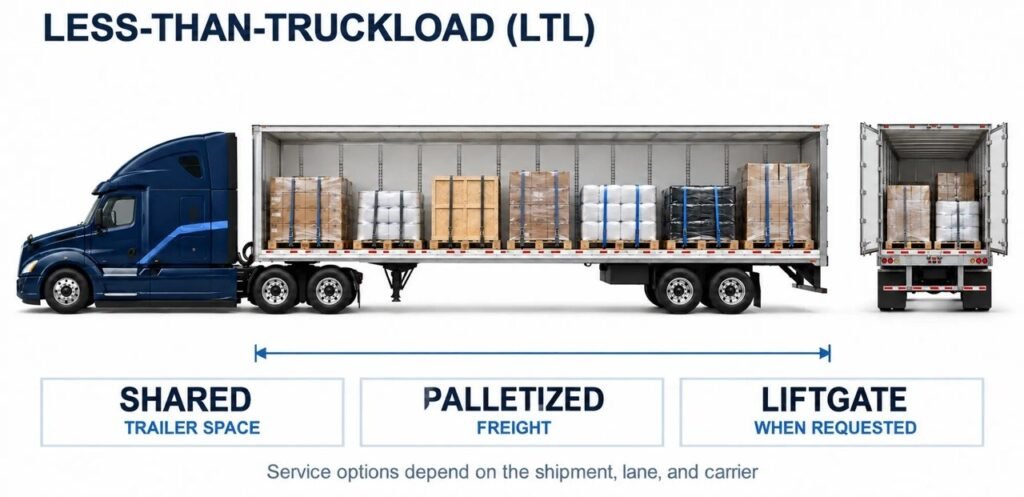
    LTL service can fit smaller quantities of properly packaged and classed retail merchandise. Accurate dimensions, weight, density, freight class, value, stackability, handling tolerance, liftgate needs, limited access, notifications, and appointment instructions help Tetrix Transport request the correct service.

    CLASS
    Accurate freight classification
    PACKAGING
    Built for terminal handling
    ACCESS
    Destination needs declared
    DELIVERY
    Appointment service requested
    Navy truck with palletized freight sharing trailer space; liftgate service may be requested for LTL shipments

    Shared trailer space · Palletized freight · Liftgate by request

    FTL

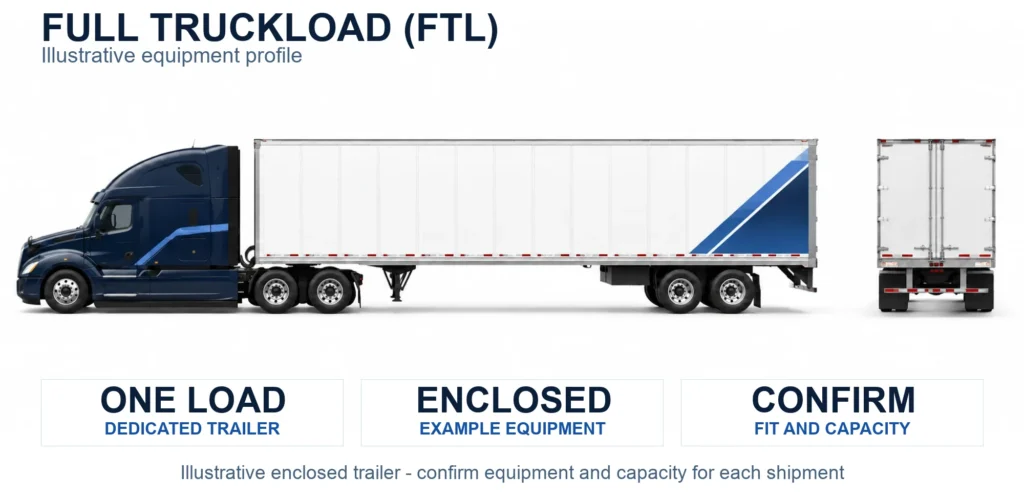
    Full truckload service provides dedicated trailer space for larger orders, launch inventory, displays, store fixtures, and shipment profiles that benefit from fewer transfers. Total weight, pallet placement, loading method, seals, route, transit, and receiver instructions are reviewed before the trailer is dispatched.

    TRAILER
    Dedicated to the tendered load
    HANDLING
    Fewer transfer points
    WEIGHT
    Load distribution reviewed
    RECEIVING
    Window confirmed before pickup
    Navy full-truckload truck with enclosed trailer, illustrating dedicated FTL freight

    Illustrative equipment dimensions. Actual dimensions and available payload are confirmed for each carrier and shipment.

    Dedicated truckload · Enclosed trailer example · Fit and capacity confirmed

    Warehousing

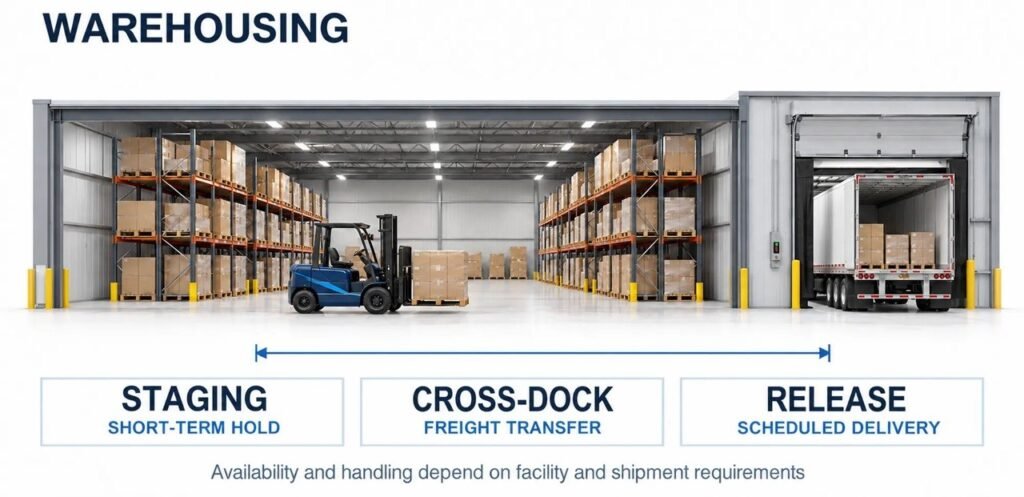
    Warehouse support may include approved storage, consolidation, cross-docking, overflow space, and scheduled outbound releases. Tetrix Transport reviews product dimensions, weight, value, handling equipment, storage conditions, count requirements, dwell time, release authority, and the final delivery plan before placement.

    STORAGE
    Product requirements reviewed
    CONSOLIDATION
    Vendor freight combined when suitable
    RELEASE
    Written authority documented
    DELIVERY
    Final appointment coordinated
    Warehouse with pallet storage, forklift and docked trailer; staging, cross-dock and scheduled release services

    Staging · Cross-dock · Scheduled release

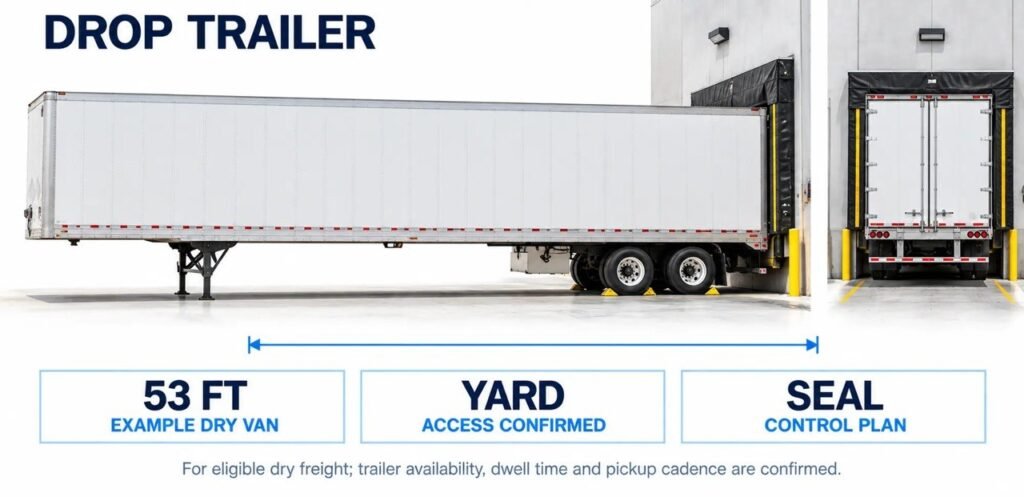
    Drop trailer

    Drop trailer service can give qualified warehouses or distribution centers more time to load and unload recurring dry freight without holding a driver at the dock. A workable program depends on volume, trailer type, yard space, security, dwell expectations, inspection procedures, and a clear process for loaded and empty equipment.

    YARD
    Space and access confirmed
    SECURITY
    Trailer controls documented
    DWELL
    Operating expectations agreed
    EMPTY
    Return process established
    53-foot dry van trailer staged at warehouse docks for scheduled pickup and freight loading

    53 ft example van · Yard access · Seal plan

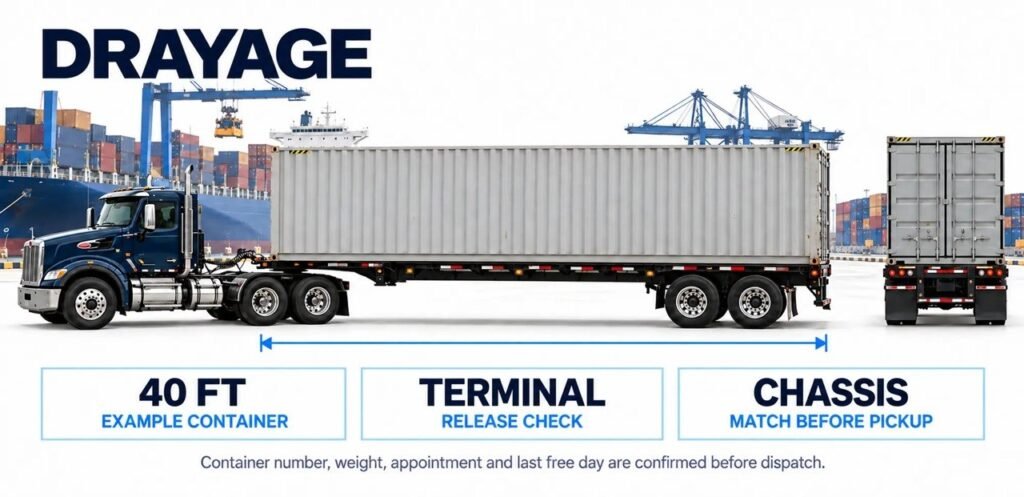
    Drayage

    Drayage and port trucking can move qualified retail containers between ports, rail ramps, warehouses, transload facilities, and distribution points. Container number, terminal, availability, last free day, appointment, chassis, weight, customs release, handling plan, and onward transportation should be confirmed before dispatch.

    TERMINAL
    Pickup requirements confirmed
    CONTAINER
    Number and availability verified
    HANDOFF
    Warehouse or transload planned
    ONWARD
    Final freight leg coordinated
    Navy truck hauling a 40-foot container at a port; terminal release and chassis match before pickup

    40 ft example container · Terminal release · Chassis match

    Retail and e-commerce freight across the United States

    Retail freight changes from one market to the next. Select a state below for a practical view of its distribution corridors, commercial receiving points, seasonal constraints, and planning details. Tetrix Transport coordinates qualified freight in all 50 states and Washington, DC, subject to lane, equipment, product, and capacity review.

    Retail freight shipping in Alabama

    Alabama retail freight commonly moves through Birmingham, Huntsville, Montgomery, Mobile, and the I-65, I-20, and I-85 corridors. Those routes connect suppliers and regional warehouses with growing population centers, Gulf Coast facilities, and store networks across the Southeast. Mobile-area port freight may require a planned drayage or transload handoff before the inland leg begins. Tetrix Transport coordinates FTL, LTL, dry van, and approved warehouse moves around actual receiving hours, pallet details, and appointment requirements.

    Request a Quote

    Retail freight shipping in Alaska

    Alaska retail freight often requires more than a standard point-to-point truck move. Inventory serving Anchorage, Fairbanks, and outlying communities may involve an ocean terminal, consolidation point, highway leg, or local delivery partner, with longer lead times than a Lower 48 lane. Weather, ferry or sailing schedules, remote access, and seasonal road conditions should be reviewed before a delivery date is promised. Tetrix Transport evaluates the complete commercial route and confirms which portions can be coordinated for the product and destination.

    Request a Quote

    Retail freight shipping in Arizona

    Phoenix is Arizona’s main distribution market, while Tucson, Yuma, Flagstaff, and the Nogales corridor support regional, interstate, and cross-border retail flows. Extreme summer heat can affect loading conditions, temperature-sensitive products, and the amount of time freight should remain on a dock or in a trailer. Northern Arizona adds elevation, winter weather, and grades that can change realistic transit planning. Tetrix Transport matches the equipment and schedule to the commodity, receiving window, and any border or warehouse handoff.

    Request a Quote

    Retail freight shipping in Arkansas

    Arkansas retail logistics are closely tied to Little Rock, Fort Smith, Jonesboro, and the Northwest Arkansas business corridor. Supplier freight headed to major retail networks may carry detailed routing, labeling, purchase-order, appointment, and delivery-reference requirements. Rural origins and destinations also make accurate access information important, especially when a location has limited dock hours or equipment. Tetrix Transport coordinates each accepted move from the vendor’s confirmed ready time through the warehouse or distribution center check-in process.

    Request a Quote

    Retail freight shipping in California

    California retail freight moves through the Los Angeles and Long Beach port complex, the Inland Empire, the Bay Area, Sacramento, San Diego, and numerous regional warehouse markets. Port appointments, container availability, freeway congestion, warehouse cutoffs, and local delivery restrictions can influence the plan before an inland truck is dispatched. Northern and Southern California also present different traffic patterns, distances, wildfire exposure, and seasonal operating conditions. Tetrix Transport coordinates drayage, dry van, FTL, LTL, and warehouse handoffs using the shipment’s actual terminal, facility, and appointment details.

    Request a Quote

    Retail freight shipping in Colorado

    The Denver and Aurora area anchors Colorado retail distribution, with regular freight demand around Colorado Springs, Fort Collins, Pueblo, and mountain communities. Deliveries west of the Front Range may face steep grades, winter closures, chain restrictions, and limited receiving hours at resort or small-market locations. A Denver delivery plan should not be reused for a mountain destination without checking access, equipment, and legal transit time. Tetrix Transport reviews the exact route and receiving conditions before coordinating the appropriate retail freight option.

    Request a Quote

    Retail freight shipping in Connecticut

    Connecticut sits inside the busy Northeast retail corridor, with Hartford, New Haven, Stamford, Bridgeport, and I-84 and I-95 serving as key freight markets. Short mileage can still involve heavy traffic, toll considerations, tight delivery windows, and facilities with limited truck access. Store deliveries near older downtown areas may need smaller equipment, call-ahead service, or precise directions to the receiving entrance. Tetrix Transport coordinates the lane using the destination’s actual dock rules rather than relying only on distance.

    Request a Quote

    Retail freight shipping in Delaware

    Delaware retail freight is shaped by Wilmington, Newark, Dover, the I-95 corridor, and connections to Philadelphia, Baltimore, and the Delmarva Peninsula. The state’s compact size can make regional replenishment efficient, but bridge traffic, coastal seasonality, and appointment timing still affect a workable schedule. Shipments serving beach markets may encounter restricted receiving windows and sharply higher seasonal volume. Tetrix Transport plans commercial deliveries around facility access, product volume, and the next warehouse or store handoff.

    Request a Quote

    Retail freight shipping in District of Columbia

    Retail deliveries in Washington, DC require careful attention to receiving appointments, vehicle access, loading zones, and building-specific instructions. Stores, commercial buildings, and nearby distribution points may use different docks, hours, and unloading procedures even within a short distance. Share the exact entrance, product, pallet count, equipment restrictions, contact, and delivery reference before pickup. Tetrix Transport reviews the lane and coordinates an appropriate commercial freight option around the confirmed receiving plan.

    Request a Quote

    Retail freight shipping in Florida

    Florida retail freight serves Miami and South Florida, Orlando, Tampa, Jacksonville, and fast-growing markets along both coasts. Long in-state distances, tourism-driven demand, port freight, and limited north-south highway alternatives can make replenishment planning more complex than the map suggests. Hurricane season may disrupt facilities, roads, ports, and appointments, so shippers should keep contacts and contingency instructions current. Tetrix Transport coordinates approved dry van, FTL, LTL, drayage, and warehouse moves using confirmed readiness and receiving information.

    Request a Quote

    Retail freight shipping in Georgia

    Georgia connects the Port of Savannah with the Atlanta distribution market and regional centers such as Macon, Augusta, and Columbus. Import inventory may move from a container terminal to a transload facility, warehouse, distribution center, or direct commercial receiver. Atlanta congestion and Savannah terminal timing should be built into the plan instead of absorbed as an afterthought. Tetrix Transport coordinates each leg and confirms the handoff, equipment, references, and appointment before dispatch.

    Request a Quote

    Retail freight shipping in Hawaii

    Hawaii retail freight normally depends on ocean transportation, terminal handling, and an island delivery plan. Honolulu and Oahu support the largest concentration of inventory, while Maui, Hawaii Island, Kauai, and smaller markets may require separate inter-island arrangements and longer lead times. Product compatibility, packaging, sailing schedules, container availability, storage, and final-mile access all matter before freight leaves the mainland. Tetrix Transport reviews the full commercial routing request and confirms which coordinated services are available for the shipment.

    Request a Quote

    Retail freight shipping in Idaho

    Boise and the Treasure Valley lead Idaho’s retail growth, with additional freight activity around Twin Falls, Idaho Falls, Pocatello, and Coeur d’Alene. Interstate lanes can be straightforward, while rural deliveries and routes through mountain or high-desert areas call for more careful timing. Winter weather, long distances between service points, and seasonal tourism may affect capacity and receiving schedules. Tetrix Transport plans retail freight from the exact origin, destination, product, and access conditions instead of treating every Idaho lane alike.

    Request a Quote

    Retail freight shipping in Illinois

    Illinois is a major retail distribution state, led by Chicago, Joliet, Elwood, Rockford, Peoria, and the Metro East area near St. Louis. The Chicago region combines warehouses, rail ramps, intermodal yards, toll roads, and dense store markets, so appointment and yard information should be complete before pickup. Central and southern Illinois routes may involve longer rural stretches and different capacity patterns. Tetrix Transport coordinates the appropriate dry van, FTL, LTL, drayage, or warehouse handoff for the confirmed lane.

    Request a Quote

    Retail freight shipping in Indiana

    Indianapolis and nearby Plainfield and Whitestown form a central distribution hub with access to major Midwest population centers. Fort Wayne, South Bend, Evansville, and northwest Indiana add manufacturing, warehouse, and retail demand across the state. Congestion near Chicago, winter weather, and tightly scheduled distribution centers can affect pickup and delivery timing. Tetrix Transport builds the move around the shipment profile, facility instructions, and the retailer’s accepted receiving window.

    Request a Quote

    Retail freight shipping in Iowa

    Iowa retail freight commonly moves through Des Moines, Cedar Rapids, Davenport, Waterloo, Council Bluffs, and Sioux City. The I-80 and I-35 corridors support regional replenishment, while smaller communities may have limited dock schedules or longer distances from a carrier’s next service point. Snow, wind, and agricultural peak periods can influence road conditions and equipment availability. Tetrix Transport coordinates commercial freight with realistic timing and complete origin and destination access details.

    Request a Quote

    Retail freight shipping in Kansas

    Kansas supports central distribution through the Kansas City area, Wichita, Topeka, Salina, and the I-70 and I-35 corridors. Its location works well for regional store and warehouse replenishment, but long western routes and widely spaced delivery points require accurate mileage and hours. Severe thunderstorms, high winds, snow, and seasonal capacity shifts can change a pickup or receiving plan. Tetrix Transport reviews the lane, equipment, pallet profile, and appointment before coordinating the shipment.

    Request a Quote

    Retail freight shipping in Kentucky

    Louisville, Lexington, Northern Kentucky, and Bowling Green anchor retail distribution across Kentucky. I-65, I-64, and I-75 connect warehouses and suppliers with Midwest and Southeast store networks, while river crossings and urban traffic can affect appointment timing. Eastern Kentucky and smaller communities may involve hills, restricted access, or limited receiving hours. Tetrix Transport coordinates FTL, LTL, dry van, and scheduled warehouse moves from the actual facility requirements.

    Request a Quote

    Retail freight shipping in Louisiana

    Louisiana retail freight serves New Orleans, Baton Rouge, Shreveport, Lafayette, Lake Charles, and commercial markets along the Gulf. Port activity, river crossings, bridge traffic, and industrial corridors can all influence the timing of warehouse and store deliveries. Tropical weather and flood-related closures may require revised appointments or routing during storm season. Tetrix Transport confirms the shipment status, receiver availability, and safe legal route before coordinating each accepted move.

    Request a Quote

    Retail freight shipping in Maine

    Portland, Lewiston-Auburn, Augusta, and Bangor serve as important retail freight points for Maine and northern New England. Deliveries beyond the southern population centers may involve long rural miles, fewer nearby capacity options, and stores with narrow receiving schedules. Winter storms and strong summer tourism patterns can affect both transit and inventory demand. Tetrix Transport reviews the full route, destination access, and appointment details before arranging service.

    Request a Quote

    Retail freight shipping in Maryland

    Maryland retail freight moves through Baltimore, the I-95 corridor, Washington-area suburbs, Frederick, and the Eastern Shore. Port and rail freight may need drayage, transloading, or a warehouse handoff before it reaches a distribution center or store. Congestion, bridge and tunnel routes, urban restrictions, and regional appointment windows should be checked early. Tetrix Transport coordinates the commercial move with the correct facility references, equipment, and delivery instructions.

    Request a Quote

    Retail freight shipping in Massachusetts

    Massachusetts retail distribution centers on Greater Boston, Worcester, Springfield, and the Route 128, I-90, and I-495 corridors. Boston-area stores and facilities may involve dense traffic, tolls, limited loading space, and exact delivery hours. Western Massachusetts can function as a gateway to the rest of New England but brings different distances and winter conditions. Tetrix Transport plans each shipment around the address, trailer access, unloading method, and confirmed appointment.

    Request a Quote

    Retail freight shipping in Michigan

    Michigan retail freight serves Detroit, Grand Rapids, Lansing, Flint, Ann Arbor, and markets throughout both peninsulas. Detroit-area lanes connect with Canadian trade as well as a dense network of suppliers, warehouses, and retail receivers. Winter weather, bridge crossings, and longer northern routes can change expected transit and capacity. Tetrix Transport coordinates domestic and qualified cross-border freight after the commodity, documents, facility rules, and timing are confirmed.

    Request a Quote

    Retail freight shipping in Minnesota

    The Minneapolis-Saint Paul region is Minnesota’s main retail distribution center, with additional demand around Rochester, St. Cloud, Duluth, and Mankato. Upper Midwest lanes support regular store and warehouse replenishment, but severe winter conditions can affect roads, docks, and appointments. Freight headed north or west may also travel longer distances between commercial service points. Tetrix Transport uses realistic transit planning and confirmed receiving details for every accepted shipment.

    Request a Quote

    Retail freight shipping in Mississippi

    Mississippi retail freight moves through Jackson, Tupelo, Gulfport, Hattiesburg, and the Memphis-adjacent market around Southaven. I-55 and I-20 support regional distribution, while Gulf Coast routes connect with ports and seasonal consumer demand. Rural delivery points, tropical weather, and limited receiving windows can require additional planning. Tetrix Transport coordinates freight from the vendor or warehouse to the confirmed commercial destination with the needed references and access instructions.

    Request a Quote

    Retail freight shipping in Missouri

    St. Louis and Kansas City anchor Missouri’s retail distribution, while Springfield, Columbia, and Joplin support regional store and warehouse networks. The state links major east-west and north-south corridors, making it useful for replenishment and multi-state distribution programs. River crossings, urban congestion, severe weather, and long rural delivery legs can still affect appointment reliability. Tetrix Transport reviews the actual stop requirements and coordinates the equipment and schedule accordingly.

    Request a Quote

    Retail freight shipping in Montana

    Montana retail freight serves Billings, Missoula, Bozeman, Great Falls, Helena, and widely dispersed smaller markets. Long distances, mountain passes, winter weather, and fewer nearby capacity options make lead time especially important. Resort and tourism demand can also shift receiving volume and commercial access in certain communities. Tetrix Transport reviews the mileage, route, equipment, and delivery instructions before confirming an available freight plan.

    Request a Quote

    Retail freight shipping in Nebraska

    Omaha and Lincoln are Nebraska’s largest retail freight markets, with Grand Island, Kearney, and North Platte supporting the I-80 corridor. That central route is valuable for interstate distribution, although western Nebraska adds considerable distance between major service points. Snow, wind, road closures, and rural receiving schedules can affect both transit and capacity. Tetrix Transport coordinates the move from confirmed pickup readiness through the warehouse, distribution center, or store appointment.

    Request a Quote

    Retail freight shipping in Nevada

    Las Vegas and Reno-Sparks drive much of Nevada’s retail warehousing and distribution demand. Las Vegas freight often supports resorts, conventions, stores, and population growth, while northern Nevada warehouses connect with Northern California and western states. Desert heat, mountain routes near Reno, event schedules, and long rural distances should be considered when setting delivery expectations. Tetrix Transport matches the commercial freight plan to the exact market, product, facility, and time window.

    Request a Quote

    Retail freight shipping in New Hampshire

    New Hampshire retail freight centers on Manchester, Nashua, Concord, Portsmouth, and the commercial corridor linked to Greater Boston. Southern markets support frequent regional replenishment, while northern and mountain destinations may involve longer routes and limited receiving hours. Winter conditions and seasonal tourism can alter both capacity and delivery access. Tetrix Transport coordinates the shipment using the destination’s confirmed dock, equipment, notification, and appointment requirements.

    Request a Quote

    Retail freight shipping in New Jersey

    New Jersey is a dense retail logistics market built around Newark and Elizabeth, the port complex, Edison, Secaucus, Trenton, and the warehouse corridor along the New Jersey Turnpike. Import containers may require terminal pickup, transloading, storage, and an inland delivery appointment, each with separate timing. Traffic, tolls, limited urban dock access, and strict distribution center schedules can make short moves operationally demanding. Tetrix Transport coordinates the available drayage, dry van, FTL, LTL, or warehouse handoff from complete shipment and facility information.

    Request a Quote

    Retail freight shipping in New Mexico

    Albuquerque is New Mexico’s primary retail distribution market, with Santa Fe, Las Cruces, and border-area routes adding distinct freight needs. High elevation, desert heat, winter weather in northern areas, and long distances between population centers can affect transit planning. Shipments connected to the border require clear documents, handoffs, and broker responsibilities before pickup. Tetrix Transport reviews the domestic or qualified cross-border route and coordinates service around the confirmed commercial receiving plan.

    Request a Quote

    Retail freight shipping in New York

    New York retail freight spans New York City and Long Island, the Hudson Valley, Albany, Syracuse, Rochester, and Buffalo. Downstate deliveries may involve truck restrictions, tolls, limited loading zones, smaller receiving doors, and precise appointment windows. Upstate lanes bring longer mileage, lake-effect snow, and different warehouse and store networks. Tetrix Transport plans the equipment, route, references, and arrival procedure for the actual destination rather than treating the state as one market.

    Request a Quote

    Retail freight shipping in North Carolina

    North Carolina retail distribution runs through Charlotte, the Triad, the Triangle, Asheville, Fayetteville, and Wilmington. The state links fast-growing consumer markets with manufacturing suppliers, warehouses, ports, and Southeast transportation corridors. Mountain routes in the west and tropical weather near the coast require different timing and contingency planning. Tetrix Transport coordinates each accepted shipment around the origin, product, route, destination access, and receiving appointment.

    Request a Quote

    Retail freight shipping in North Dakota

    Fargo, Bismarck, Grand Forks, and Minot are North Dakota’s principal retail freight markets. Long rural routes and lower population density can mean fewer nearby trucks, terminals, or recovery options than in larger distribution regions. Severe cold, snow, wind, and seasonal road conditions should be reflected in lead times and appointment planning. Tetrix Transport reviews capacity for the exact lane and confirms the commercial delivery instructions before dispatch.

    Request a Quote

    Retail freight shipping in Ohio

    Ohio offers broad retail distribution coverage through Columbus, Cleveland, Cincinnati, Dayton, Toledo, Akron, and major interstate corridors. Its central location supports efficient positioning for many Midwest and eastern markets, subject to the specific origin, destination, and service. Turnpike traffic, urban appointments, winter weather, and high-volume warehouse schedules still need careful coordination. Tetrix Transport arranges FTL, LTL, dry van, and approved warehouse services using complete shipment and receiving details.

    Request a Quote

    Retail freight shipping in Oklahoma

    Oklahoma City and Tulsa anchor retail distribution in Oklahoma, with additional freight demand around Lawton, Ardmore, and the I-35 and I-40 corridors. The state connects Texas, the central Plains, and Southeast markets, making it useful for regional replenishment. Severe thunderstorms, tornado-related disruptions, high winds, and temperature extremes may change safe pickup or delivery timing. Tetrix Transport coordinates the freight plan after confirming facility status, product requirements, and an available legal route.

    Request a Quote

    Retail freight shipping in Oregon

    Oregon retail freight serves Portland, Salem, Eugene, Medford, Bend, and distribution routes throughout the Willamette Valley. Freight east of the Cascades or over mountain passes faces different mileage, grades, weather, and capacity conditions than an I-5 corridor delivery. Wildfire smoke, closures, winter storms, and seasonal tourism can also affect commercial schedules. Tetrix Transport reviews the route and receiving location before coordinating the right equipment and timing.

    Request a Quote

    Retail freight shipping in Pennsylvania

    Pennsylvania’s retail network includes Philadelphia, the Lehigh Valley, Harrisburg, Scranton, Pittsburgh, Erie, and extensive warehouse markets along major interstates. Eastern Pennsylvania supports heavy distribution center and port-related activity, while western lanes connect with Ohio and the broader Midwest. Turnpike tolls, mountain grades, urban access, and winter weather can all influence cost and transit. Tetrix Transport coordinates the shipment around its actual facility instructions, route, equipment, and appointment.

    Request a Quote

    Retail freight shipping in Rhode Island

    Rhode Island retail freight is concentrated around Providence, Warwick, Pawtucket, and the Quonset area. The state’s short distances connect easily with Boston and the rest of southern New England, but dense streets and limited dock space can complicate store deliveries. Exact receiving entrances, vehicle limits, loading zones, and appointment contacts should be supplied before dispatch. Tetrix Transport uses those details to coordinate an appropriate commercial freight option.

    Request a Quote

    Retail freight shipping in South Carolina

    South Carolina retail freight moves through Greenville-Spartanburg, Columbia, Charleston, Florence, and coastal consumer markets. The Port of Charleston supports import inventory that may require drayage, transloading, storage, or an inland warehouse appointment. Tourism seasons, hurricane disruptions, and congestion along growing corridors can change capacity and receiving conditions. Tetrix Transport coordinates each approved leg using current terminal, facility, product, and scheduling information.

    Request a Quote

    Retail freight shipping in South Dakota

    Sioux Falls is South Dakota’s largest distribution market, with retail freight also serving Rapid City, Brookings, Aberdeen, and smaller communities. East-west shipments can cover long distances, and western routes may involve tourism traffic or weather near the Black Hills. Winter storms, wind, and sparse service points call for realistic lead time and accurate delivery contacts. Tetrix Transport reviews lane-specific capacity and coordinates the commercial receiving appointment for each accepted load.

    Request a Quote

    Retail freight shipping in Tennessee

    Tennessee’s retail freight network is led by Memphis, Nashville, Knoxville, Chattanooga, and Jackson. Memphis provides major warehouse and multimodal connections, while Nashville’s rapid growth and central location support broad regional distribution. Urban traffic, mountain routes in the east, and high-volume warehouse appointments can affect an otherwise direct lane. Tetrix Transport coordinates dry van, FTL, LTL, and approved warehouse services around the confirmed shipment and receiver requirements.

    Request a Quote

    Retail freight shipping in Texas

    Texas retail freight spans Dallas-Fort Worth, Houston, Austin, San Antonio, El Paso, major Gulf ports, and several border gateways. The state’s size means a same-state load can still involve substantial mileage, multiple traffic markets, weather changes, and carefully timed driver hours. Port freight and Mexico-connected inventory also require clear terminal, customs, handoff, and appointment plans. Tetrix Transport coordinates the suitable domestic or qualified cross-border option from the shipment’s exact lane and requirements.

    Request a Quote

    Retail freight shipping in Utah

    Salt Lake City, Provo, Ogden, and the I-15 corridor form an important distribution base for Utah and the Intermountain West. St. George and more remote markets add long desert routes, while northern and mountain areas face snow, grades, and seasonal recreation traffic. Warehouse deliveries along the Wasatch Front can also involve dense traffic and fixed appointment schedules. Tetrix Transport plans retail freight around the actual route, receiver, equipment, and legal transit time.

    Request a Quote

    Retail freight shipping in Vermont

    Vermont retail freight serves Burlington, Rutland, Montpelier, Brattleboro, Bennington, and a broad network of small communities. Rural access, mountain roads, mud season, winter weather, and tourism peaks can make final delivery more complex than the linehaul portion. Canada-connected freight needs clear customs responsibilities and a confirmed border plan before pickup. Tetrix Transport reviews the complete route and destination requirements before arranging available capacity.

    Request a Quote

    Retail freight shipping in Virginia

    Virginia retail distribution includes Northern Virginia, Richmond, Hampton Roads, Roanoke, and the Shenandoah Valley. Port freight near Norfolk may connect with inland warehouses, while I-95 traffic and Hampton Roads bridge-tunnel routes can affect appointment timing. Mountain routes in the west and urban restrictions near Washington require different equipment and scheduling decisions. Tetrix Transport coordinates each retail load using confirmed terminal, warehouse, store, and delivery information.

    Request a Quote

    Retail freight shipping in Washington

    Washington retail freight moves through Seattle, Tacoma, Everett, Spokane, Yakima, and Vancouver, with ports and warehouses supporting Pacific trade. Puget Sound congestion and terminal timing can shape western Washington deliveries, while Cascade passes separate them from eastern markets. Snow, mountain closures, wildfire conditions, and agricultural peak traffic may affect routes and available equipment. Tetrix Transport coordinates drayage, dry van, FTL, LTL, and warehouse handoffs from current shipment and facility details.

    Request a Quote

    Retail freight shipping in West Virginia

    West Virginia retail freight serves Charleston, Huntington, Morgantown, Parkersburg, and the Eastern Panhandle. Mountain grades, winding access roads, bridge routes, and smaller commercial facilities can affect trailer choice and legal transit time. A destination described only by ZIP code may not reveal dock limitations or the correct truck entrance. Tetrix Transport confirms access, unloading, appointment, and contact details before coordinating the move.

    Request a Quote

    Retail freight shipping in Wisconsin

    Wisconsin retail distribution is concentrated around Milwaukee, Madison, Green Bay, the Fox Valley, Kenosha, and Eau Claire. These markets connect with Chicago, Minneapolis-Saint Paul, and broader Great Lakes store and warehouse networks. Snow, ice, seasonal demand, and appointment-heavy facilities can change timing throughout the year. Tetrix Transport coordinates the lane from accurate pallet, equipment, facility, and receiving information.

    Request a Quote

    Retail freight shipping in Wyoming

    Wyoming retail freight serves Cheyenne, Casper, Gillette, Rock Springs, and tourism-driven markets such as Jackson. Long distances, high winds, mountain grades, winter closures, and limited alternative routes can all affect safe transit. Capacity may be less flexible for remote pickups or destinations, making early and accurate tender information valuable. Tetrix Transport reviews the entire commercial route before confirming equipment and a realistic delivery plan.

    Request a Quote

    Ready to plan your next retail freight move?

    Send Tetrix Transport the commodity, pallet count, dimensions, weight, origin, destination, ready date, delivery window, equipment, and receiving instructions. We will review the commercial lane and coordinate a suitable available freight option for an accepted shipment.

    Request a freight quote

    Retail logistics questions shippers ask

    What retail and e-commerce freight does Tetrix Transport coordinate?

    Tetrix Transport coordinates commercial freight for palletized inventory, packaged consumer goods, apparel, fixtures, displays, supplies, vendor orders, warehouse transfers, store replenishment, and other approved retail products. Available modes may include dry van, FTL, LTL, drayage, warehousing, drop trailer, and qualified cross-border service. Acceptance depends on the commodity, packaging, dimensions, weight, value, lane, equipment, timing, and receiving requirements. Regulated, high-value, fragile, temperature-sensitive, or unusually handled products must be disclosed before a quote is finalized.

    What information is needed for a retail freight quote?

    Provide the commodity, number of handling units, packaging, dimensions, total weight, declared value when requested, origin, destination, ready date, and required delivery window. Include the purchase order, delivery number, routing guide, freight class for LTL, temperature or handling requirements, and all known accessorials. Tell us whether either facility requires an appointment, liftgate, pallet jack, call ahead, driver assist, limited-access service, or special check-in. Complete details produce a more useful quote and reduce changes after the shipment is booked.

    Can Tetrix Transport deliver to retail distribution centers and stores?

    Yes, Tetrix Transport coordinates qualified freight to distribution centers, warehouses, stores, cross-docks, and other commercial receiving locations. The shipper should provide the current routing guide and every appointment, label, purchase-order, delivery-reference, seal, pallet, and check-in requirement. Store deliveries may also need a smaller vehicle, liftgate, pallet jack, driver assist, or call-ahead service, which must be requested and confirmed in advance. Receiver acceptance and unloading remain subject to the facility’s rules and the accuracy of the shipping documents.

    Should a retail shipment move by FTL or LTL?

    FTL often fits larger loads, fixed delivery windows, high-value inventory, fragile displays, or freight that benefits from fewer handling points. LTL can be practical for smaller pallet quantities when the product is packaged for terminal handling and the class, dimensions, weight, and accessorials are accurate. The lower linehaul price is not the only factor because missed appointments, extra handling, detention, or reclassification can change the total cost. Tetrix Transport compares the shipment size, timing, handling exposure, and receiver requirements before recommending an available option.

    Can retail inventory be stored, consolidated, and released on schedule?

    Tetrix Transport can coordinate approved storage, cross-docking, vendor consolidation, overflow space, and scheduled outbound transportation when a suitable facility is available. The review includes product type, dimensions, weight, value, storage conditions, handling equipment, count instructions, dwell time, release authority, and final delivery plan. Standard freight storage does not automatically include kitting, labeling, pick-and-pack, parcel fulfillment, marketplace preparation, or returns processing. Any work beyond storage and normal pallet handling must be described, priced, and accepted in writing.

    Can Tetrix Transport support seasonal volume and recurring replenishment lanes?

    Tetrix Transport can review recurring FTL, LTL, dry van, drop trailer, and warehouse-release programs for qualified retail lanes. Share origin and destination pairs, weekly volume, shipping days, equipment, loading time, appointments, accessorials, seasonal peaks, and historical exceptions as early as possible. A forecast helps with planning but does not reserve equipment until operating terms and individual shipments are accepted. For peak periods, primary and backup options should be discussed before inventory becomes urgent.

    Does Tetrix Transport coordinate retail freight with Canada and Mexico?

    Tetrix Transport coordinates qualified Canada cross-border freight and Mexico cross-border freight when the product, lane, documents, customs responsibilities, and handoffs have been reviewed. The shipper and importer remain responsible for accurate commercial information, product eligibility, classification, valuation, country of origin, labeling, and required agency compliance. Tetrix Transport is not a customs broker and does not make customs or legal determinations. Border processing and inspection time should be included in the delivery plan.

    Does Tetrix Transport provide parcel delivery, order fulfillment, or tracking for shipments booked elsewhere?

    No. This service is for business freight booked directly with Tetrix Transport, such as pallets, truckloads, warehouse transfers, distribution center deliveries, and store replenishment. Tetrix Transport does not operate a consumer parcel network, provide individual online-order tracking, or automatically perform pick-and-pack fulfillment or marketplace preparation. If another retailer, broker, carrier, or online seller arranged your shipment, contact that company or the sender shown on your confirmation for tracking and delivery help.

    Scroll to Top