Agricultural Logistics Services

Plan agricultural logistics services for farm inputs, machinery, packaged products, and qualified temperature-sensitive freight around planting, harvest, rural access, and receiving windows. Tetrix Transport arranges FTL, LTL, refrigerated, open-deck, warehousing, and cross-border transportation across North America.

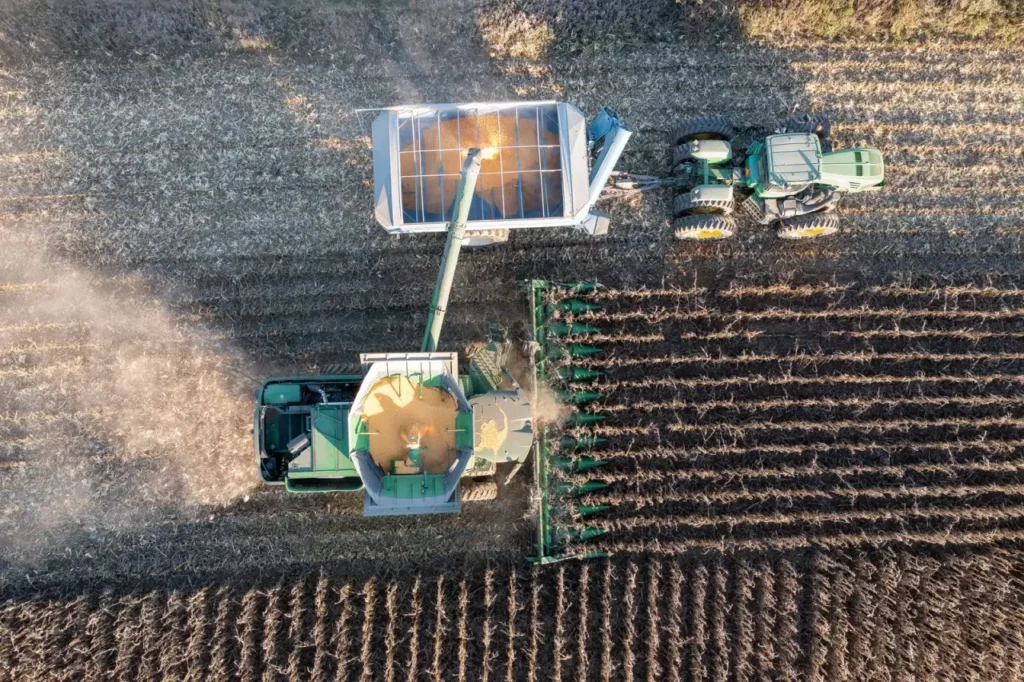
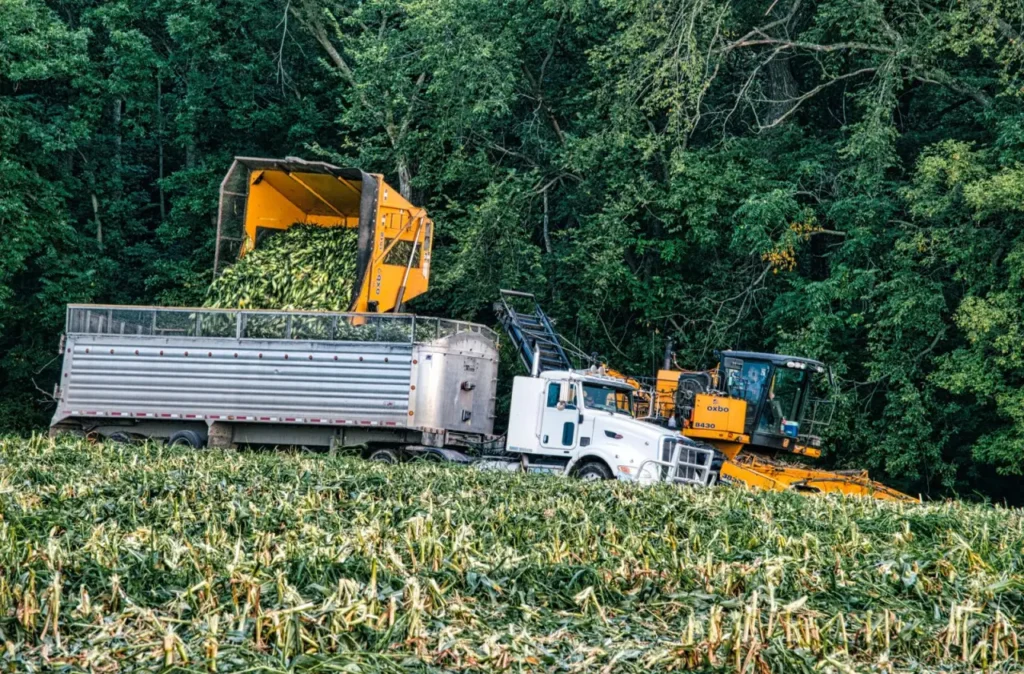
Combine unloading harvested corn into a semi-truck at a farm

AGRICULTURAL LOGISTICS

Agricultural freight has a calendar, a commodity, and a destination constraint.

Seed and fertilizer have to arrive before fieldwork begins. Machinery may have a narrow transfer window between jobs. Harvested products can have limited shelf life, while rural pickup points may have restricted road access, no loading dock, or only one person available to receive the truck. Those operating details affect the quote as much as the mileage.

Tetrix Transport provides agricultural logistics services as a freight brokerage and logistics coordinator for agribusiness suppliers, equipment dealers, growers, processors, packers, distributors, cooperatives, and their vendors. We arrange full truckload freight, LTL, refrigerated, open-deck, warehousing, and qualified cross-border transportation from the actual commodity, dimensions, loading method, access, schedule, and receiver requirements.

AGRICULTURAL FREIGHT

How agriculture and farming shippers use Tetrix Transport

Start with the shipment profile closest to yours. Final equipment and service depend on the exact commodity, packaging, dimensions, weight, loading method, temperature instructions, route, site access, and delivery window.

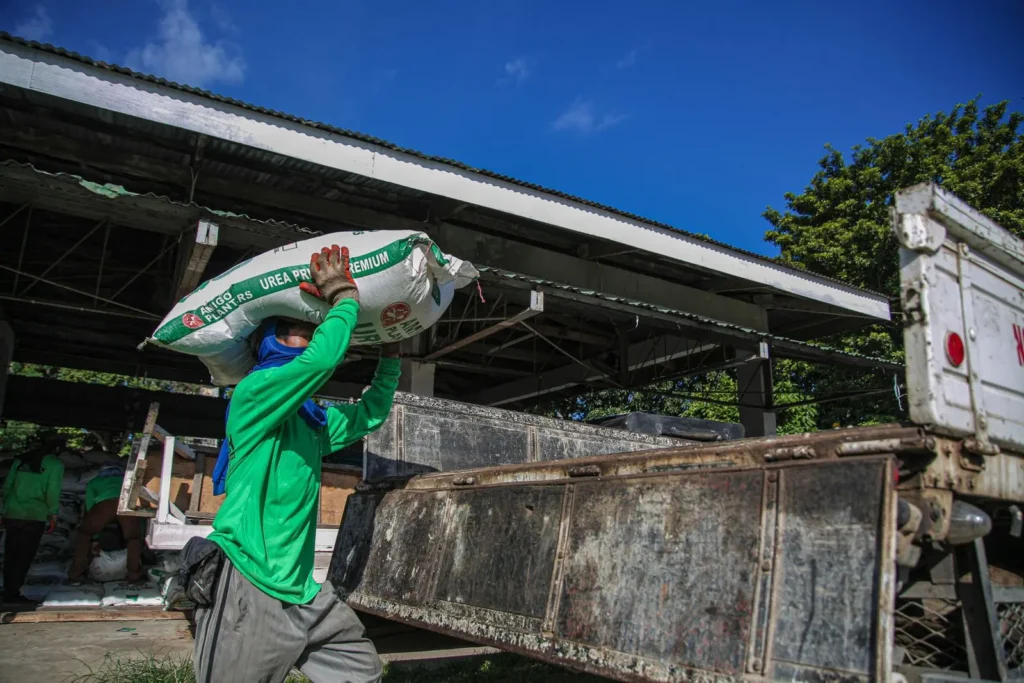
Worker loading a fertilizer bag onto a truck at a farm supply depot

Agricultural inputs and farm supplies

Tetrix Transport coordinates packaged seed, bagged feed, palletized fertilizer, crop-protection products, packaging, parts, and other approved inputs moving to farms, dealers, cooperatives, processors, and warehouses. Dry van or LTL may fit standard packaged freight, while regulated chemicals require an exact product description, packaging information, and safety documentation before acceptance. Planting schedules, pickup readiness, rural access, and the receiver’s unloading plan should be established before the truck is dispatched. Loose bulk products and hazardous materials are handled only when the required equipment and qualified service are confirmed.
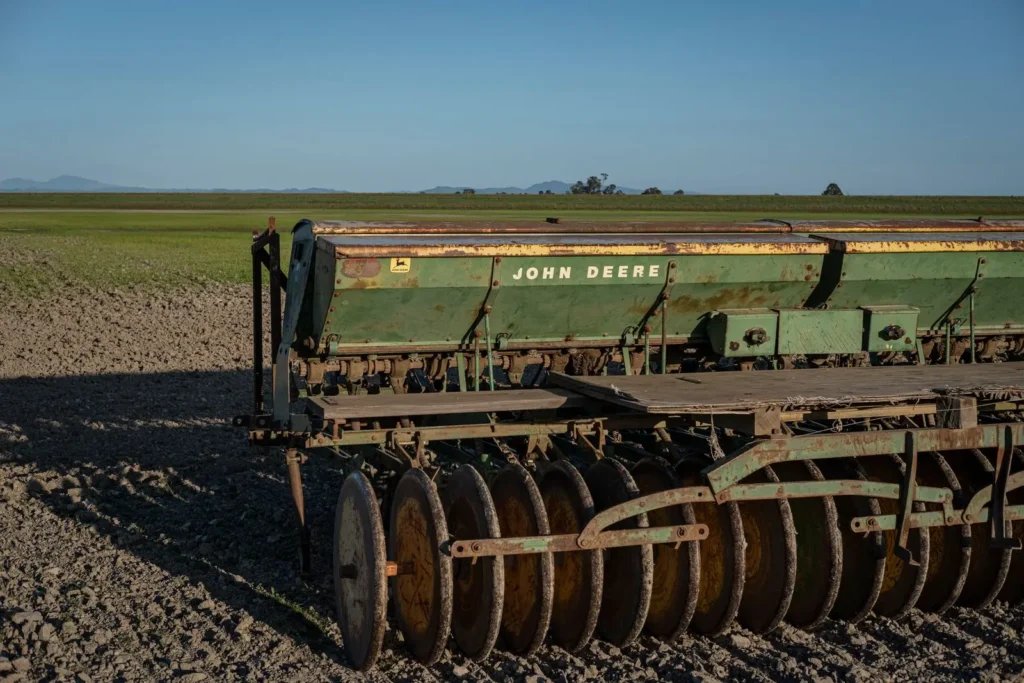
Seed drill standing in a cultivated field

Farm machinery and equipment transportation

Tractors, combines, planters, balers, tillage tools, and attachments rarely quote correctly from a model name alone. Send the transport dimensions, weight, attachment details, operating condition, loading method, tie-down points, and photos before pricing. Tetrix Transport checks flatbed and open-deck freight options such as flatbed, step deck, or RGN capacity when the shipment requires them. Over-dimensional moves may also need route review, permits, escorts, or disassembly, all of which must be settled before pickup.

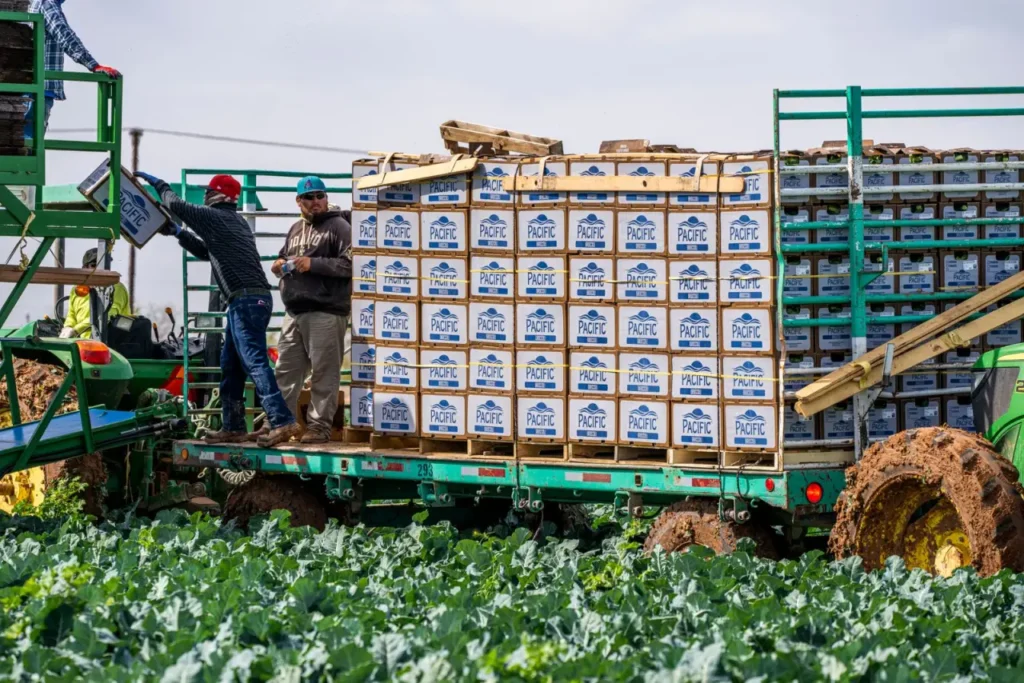
Workers loading boxes of harvested vegetables onto a farm trailer

Harvested products and packaged commodities

Harvest freight is controlled by product readiness, packout, available equipment, and the receiver’s appointment. Tetrix Transport coordinates approved packaged produce, bagged or palletized agricultural goods, ingredients, and other qualified commodities from farms, packing houses, coolers, processors, and warehouses. The shipper should provide packaging, pallet pattern, product temperature, ventilation needs, shelf-life concerns, and loading time. Commodity eligibility and trailer requirements are confirmed before the load is accepted.

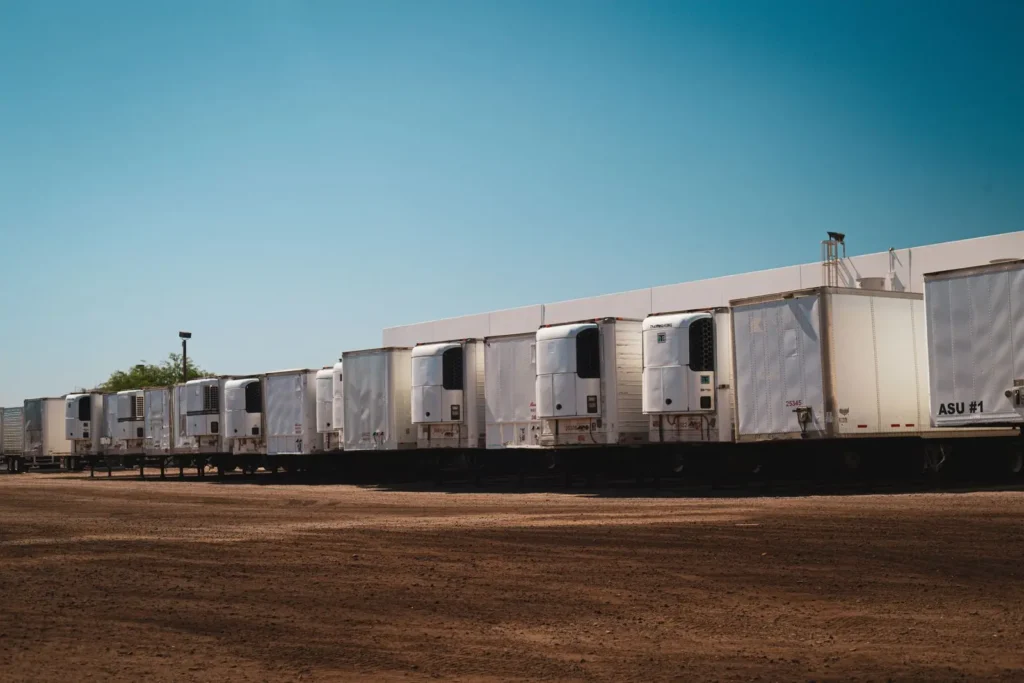
Row of refrigerated semi-trailers parked outside a distribution facility

Temperature-sensitive agricultural freight

A reefer booking begins with written product instructions, not a guessed setting. Provide the required setpoint or range, product temperature at loading, pre-cooling instructions, packaging, airflow or ventilation needs, and any monitoring request. Tetrix Transport coordinates temperature-controlled transportation from those requirements and available qualified capacity. The shipper remains responsible for determining product condition, safe temperature, packaging, and loading readiness.

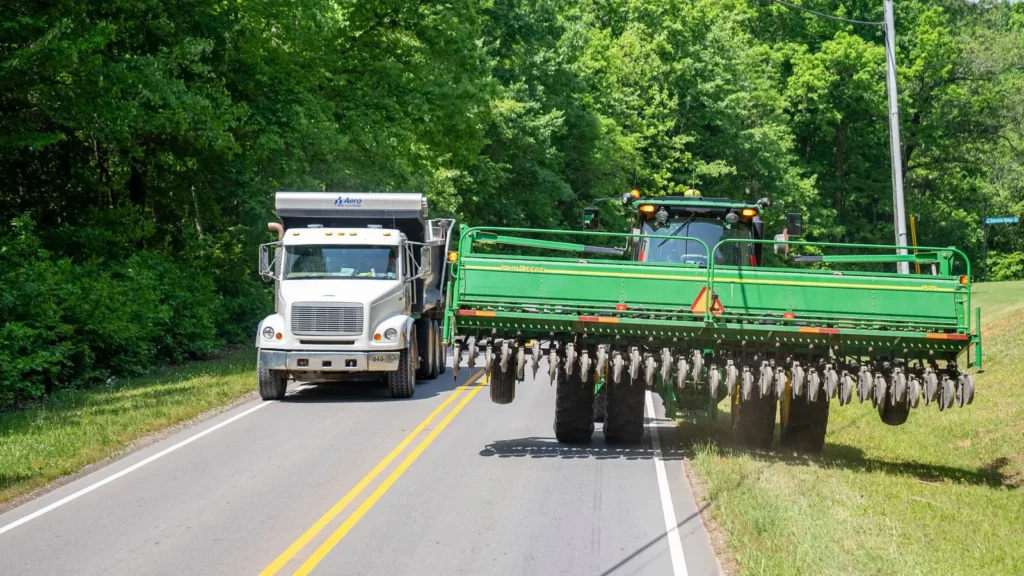
Freight truck passing large farm equipment on a rural road

Rural farm pickup and delivery

A farm address does not show whether a 53-foot trailer can pass the gate, turn around, or reach the loading point. Share the road surface, weight or bridge restrictions, grade, gate width, overhead clearance, turning space, and weather-related access limits. Tetrix Transport also confirms whether a dock, forklift, crane, loader, or liftgate is required. A reachable site contact and clear arrival instructions help prevent lost time or a failed pickup.

Commercial semi-trucks parked together at a truck stop

Cross-border agricultural freight

Agricultural products can face commodity-specific import, export, inspection, permit, or phytosanitary requirements in addition to normal customs paperwork. Tetrix Transport coordinates qualified transportation between the United States, Canada, and Mexico after the commodity, documents, customs contacts, border handoff, and final appointment are defined. The shipper and importer must confirm product eligibility with their customs broker and the applicable agricultural authorities before pickup. Tetrix Transport does not act as the importer of record or customs broker unless a separate written arrangement states otherwise.

Aerial view of a combine harvesting grain into a tractor trailer

Capacity planning for planting and harvest

Agricultural demand can rise quickly when weather opens a planting window or a crop is ready to move. Share expected origins, destinations, equipment, weekly volume, ready dates, and receiver hours as early as possible. Tetrix Transport can use that forecast to discuss capacity and lane options before the peak, but a forecast is not a confirmed truck. Each shipment still needs a final tender, accurate load details, and a workable pickup appointment.

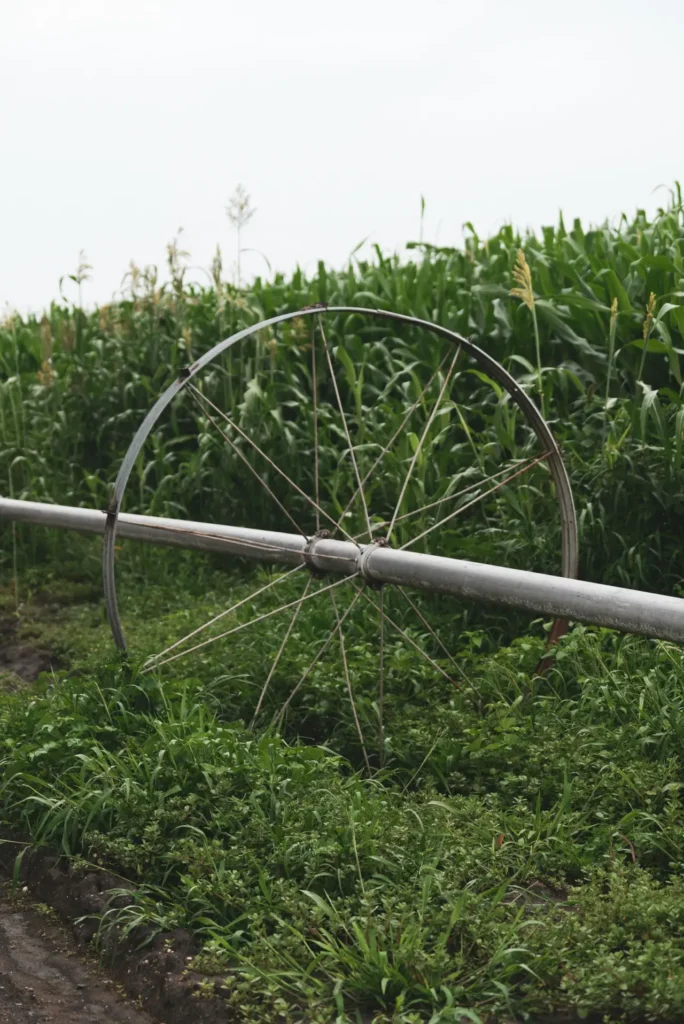
Center-pivot irrigation equipment beside a cornfield

Irrigation systems, pumps, and farm equipment

Irrigation pipe, pumps, reels, pivots, tanks, and replacement components can require different trailers within the same project. Provide a piece list with dimensions, weights, loading points, stackability, and the unloading method at the farm or dealer. Tetrix Transport selects enclosed or open-deck capacity from the largest and heaviest pieces, not the average item. Long or over-dimensional components may require permits, route restrictions, escorts, or scheduled travel.

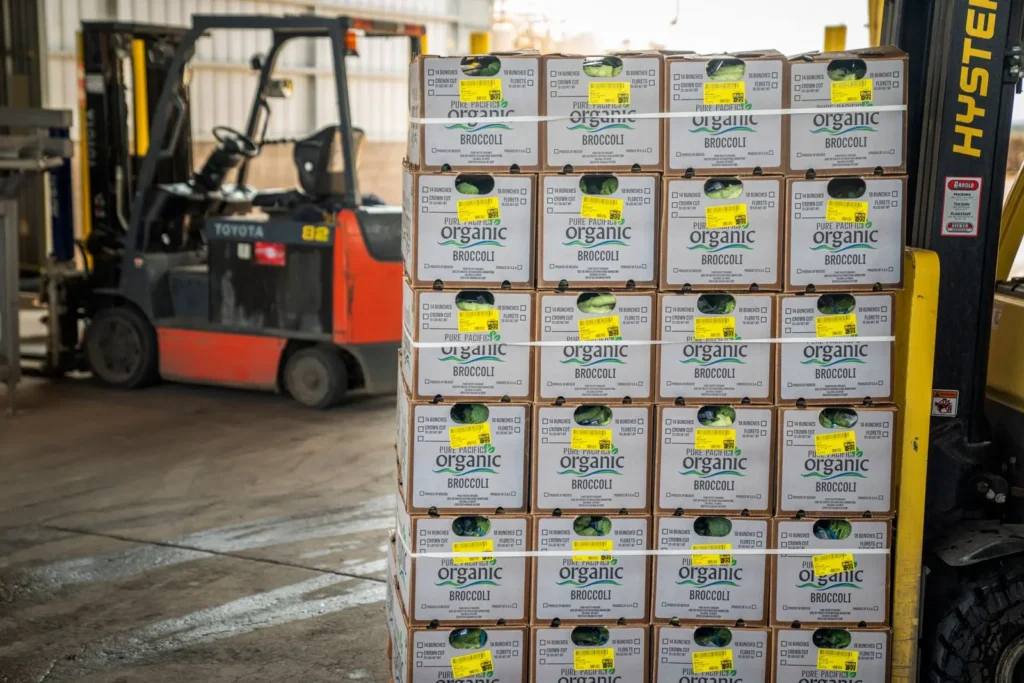
Pallet of boxed organic broccoli beside a forklift in a warehouse

Staged agricultural freight release

Inputs, packaging, parts, equipment, or approved products sometimes need to move before a farm, processor, or seasonal crew can receive them. Tetrix Transport can coordinate warehousing and distribution, cross-docking, or scheduled release when a suitable facility is available. Storage suitability depends on the commodity, packaging, sanitation or temperature needs, handling method, quantity, and expected dwell time. The release schedule and final delivery appointment should be agreed before freight enters storage.

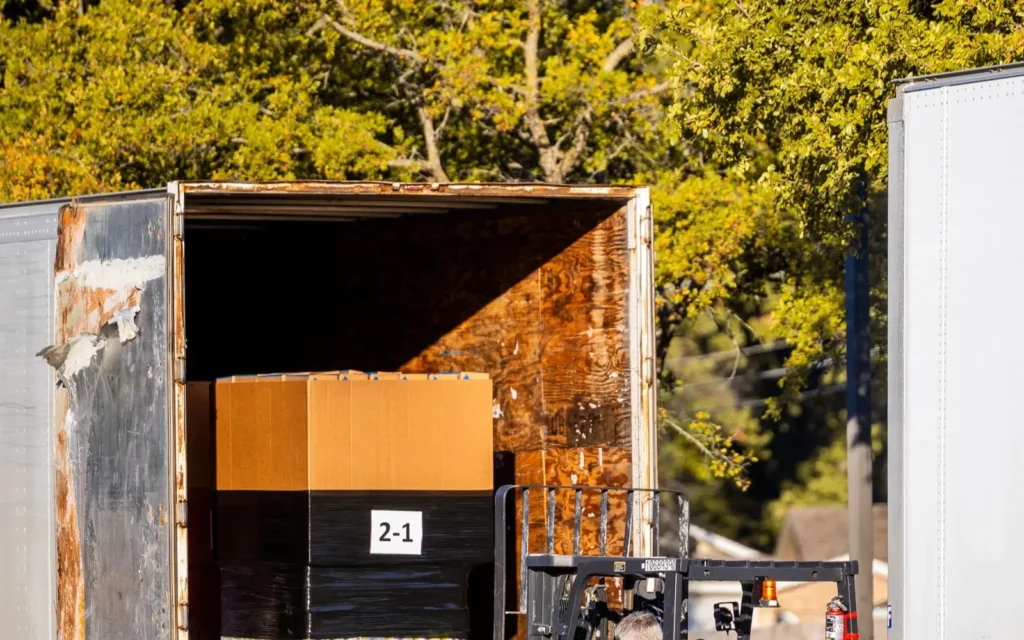
Forklift loading a pallet of boxes into a freight trailer

FTL or LTL matched to the shipment

FTL gives a larger or handling-sensitive shipment a dedicated trailer and usually fewer transfer points. LTL can be practical for smaller quantities of properly packaged seed, parts, supplies, or other accepted freight. Tetrix Transport compares shipment size, freight class, packaging, handling tolerance, transit needs, rural access, and accessorial charges before recommending a mode. Perishable, fragile, oversized, or contamination-sensitive freight may not be suitable for a standard LTL network.

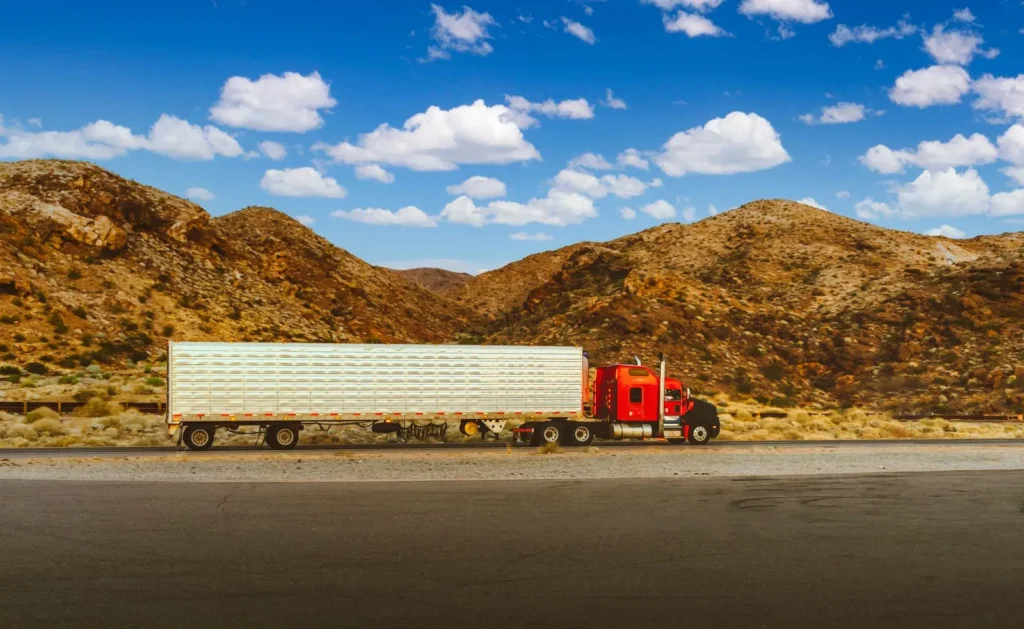
Red semi-truck and enclosed trailer on a highway through dry hills

Agricultural freight across North America

Tetrix Transport coordinates domestic United States lanes and qualified transportation to or from Canada and Mexico. The route and equipment are selected from the commodity, origin, destination, schedule, access, documents, and receiver requirements. Cross-border service is accepted only after product eligibility, customs responsibilities, and the border plan are clear. Lane-specific capacity is confirmed with each quote.

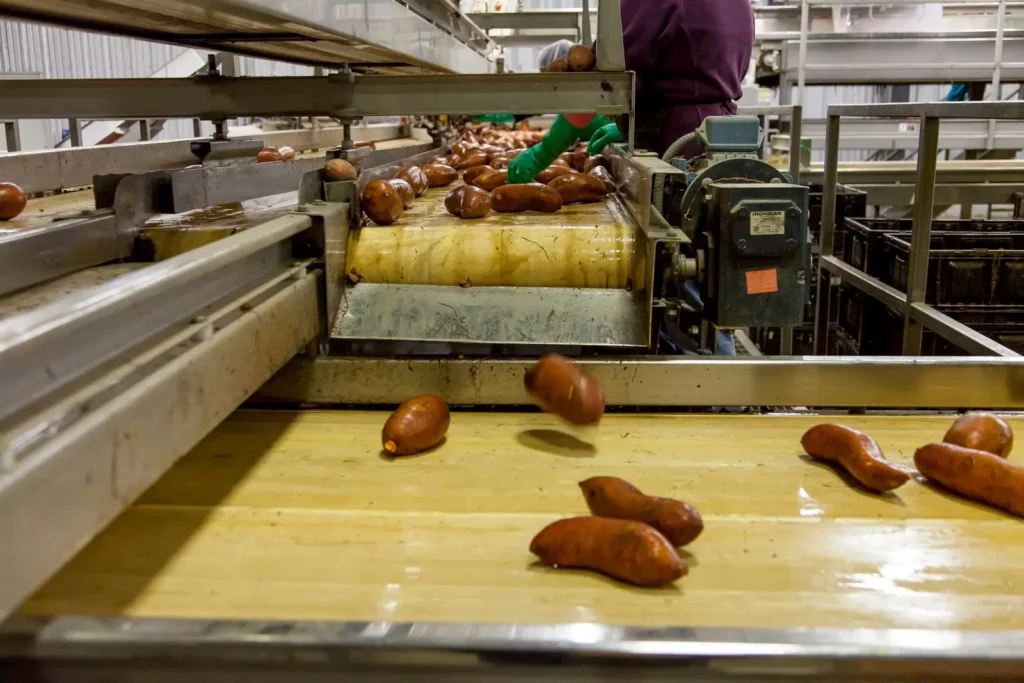
Worker sorting sweet potatoes on a processing conveyor

Processor, packer, and distributor delivery

Processors and distributors may require a purchase order, appointment number, pallet labels, seal procedure, temperature record, or specific check-in process. Send the routing guide and receiving instructions before the rate is finalized. Tetrix Transport places those requirements in the shipment plan and confirms requested accessorials with the carrier. Complete references help reduce detention, rejected deliveries, and costly redelivery attempts.

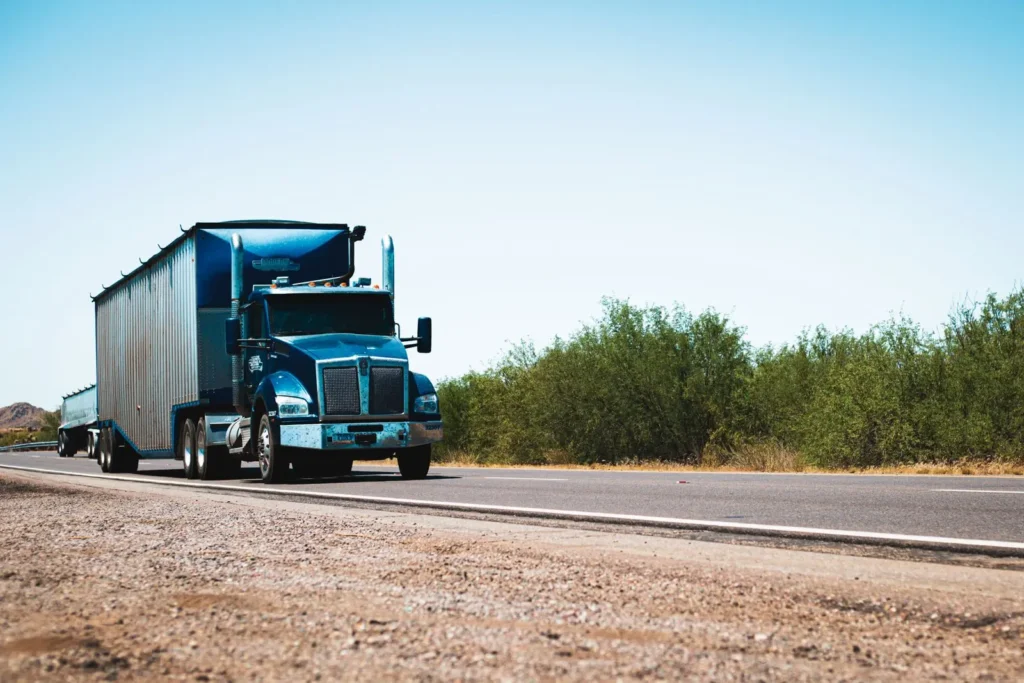
Blue semi-truck hauling an enclosed trailer on a highway

Recurring agricultural freight lanes

Repeat lanes work best when the operating details are documented rather than rebuilt for every load. Share forecast volume, shipping days, seasonal peaks, equipment, loading time, rural access, receiver appointments, and known accessorials. Tetrix Transport can use that lane profile to discuss repeat or dedicated capacity options, subject to carrier availability and confirmed tenders. Any change in commodity, weight, packaging, temperature, origin, or destination should be reported before the next shipment is booked.

1 / 13

OPEN-DECK EQUIPMENT

Farm machinery needs the right trailer and a workable route

Agricultural equipment should be quoted from verified transport dimensions, weight, attachments, loading method, securement points, and operating condition. Flatbed, step deck, RGN, permit, escort, and tarp needs vary by machine and route. Farm access, overhead clearance, turning space, and the unloading plan are reviewed before the carrier is booked.

Seed drill standing in a cultivated field

DRY VAN & REFRIGERATED

Enclosed capacity for inputs and qualified products

Dry van capacity can suit packaged seed, feed, supplies, packaging, parts, and shelf-stable agricultural goods. Reefer capacity is used when the shipper supplies written temperature, pre-cooling, ventilation, packaging, and monitoring requirements. Trailer condition, loading readiness, sanitation needs, seal instructions, and receiver appointments should be confirmed before dispatch.

Row of refrigerated semi-trailers parked outside a distribution facility

WAREHOUSING & RELEASE

Stage freight until the farm or facility can receive it

When inventory arrives before the planting window, crew, processor, or customer is ready, approved freight can be staged and released on schedule. Commodity restrictions, storage conditions, sanitation, handling, inventory instructions, expected dwell time, and final delivery are reviewed before the warehouse is selected. Standard space is not assumed to be appropriate for food, hazardous products, live goods, or temperature-sensitive commodities.

Pallet of boxed organic broccoli beside a forklift in a warehouse

Agricultural logistics at a glance

U.S.
Nationwide freight coordination
CA / MX
Qualified cross-border lanes
FTL / LTL
Capacity for different shipment sizes
VAN / DECK
Equipment matched to commodity and access

Planting and harvest windows leave little room for incomplete details.

Send the exact commodity, packaging, dimensions, weight, origin, destination, ready date, delivery window, equipment, temperature instructions, and site-access notes. Tetrix Transport will review the lane and identify a suitable available freight option.

Request a Quote

Request an Agricultural Freight Quote

Add your shipment details below and a Tetrix Transport specialist will follow up. For an urgent load, call (888) 889-6323 with the exact commodity, origin and destination ZIP or postal codes, dimensions, weight, equipment, ready time, delivery deadline, temperature instructions, and rural access details.

    Pickup Date *

    Service Type *

    Commodity *

    Company Name *

    Phone *

    Email *

    FREIGHT DENSITY CALCULATOR

    Estimate your freight class instantly

    Enter your shipment dimensions and total weight to estimate its density-based freight class.

    Calculate NowSample values shown. Change any field to calculate your shipment.
    Density Calculator
    Suggested classClass 65

    Agricultural freight services across North America

    Transportation and staging options are selected from the commodity, shipment size, loading method, temperature needs, site access, schedule, and receiver requirements.

    01

    Open deck

    Flatbed and specialized capacity for farm machinery and equipment

    02

    Dry van & refrigerated

    Enclosed capacity for approved inputs and agricultural products

    03

    Warehousing & release

    Staging coordinated with planting, harvest, and receiving schedules

    04

    Cross-border

    Qualified United States, Canada, and Mexico freight coordination

    Capacity matched to agricultural freight

    Choose equipment from the largest piece, total weight, commodity, packaging, loading method, temperature instructions, road access, and delivery window. Special services are included only when requested, priced, and confirmed.

    1 / 6

    Flatbed

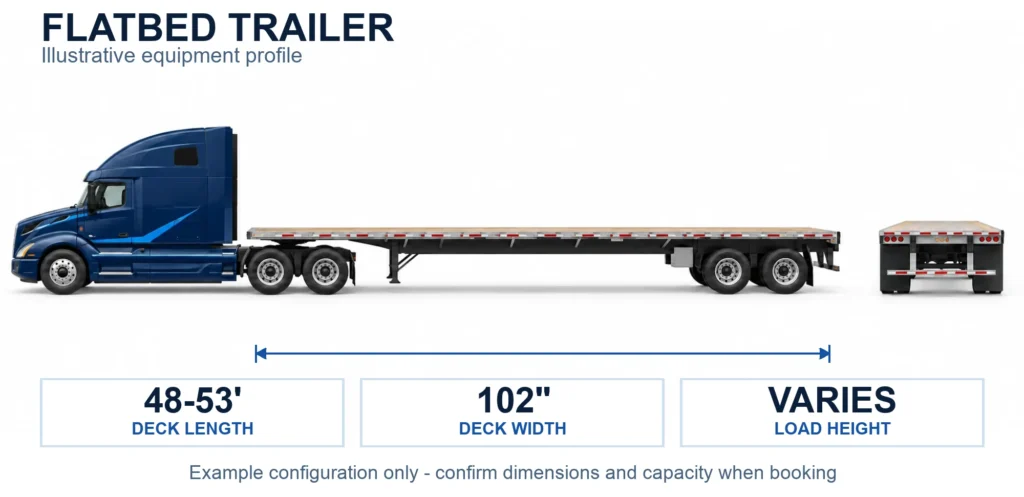
    Open-deck capacity for tractors, implements, irrigation components, palletized supplies, and equipment that needs side, top, crane, or forklift loading. Dimensions, weight, securement points, tarping, route, permits, site access, and unloading are reviewed before booking.

    OPEN DECK
    Side and top loading access
    DIMENSIONS
    Verified before pricing
    SECUREMENT
    Matched to the equipment
    PERMITS
    Reviewed for over-dimensional loads
    Navy flatbed truck showing illustrative 48–53-foot deck length and 102-inch deck width on white background

    Illustrative equipment dimensions. Actual dimensions and available payload are confirmed for each carrier and shipment.

    48–53 ft deck · 102 in deck width · load height varies

    Step deck

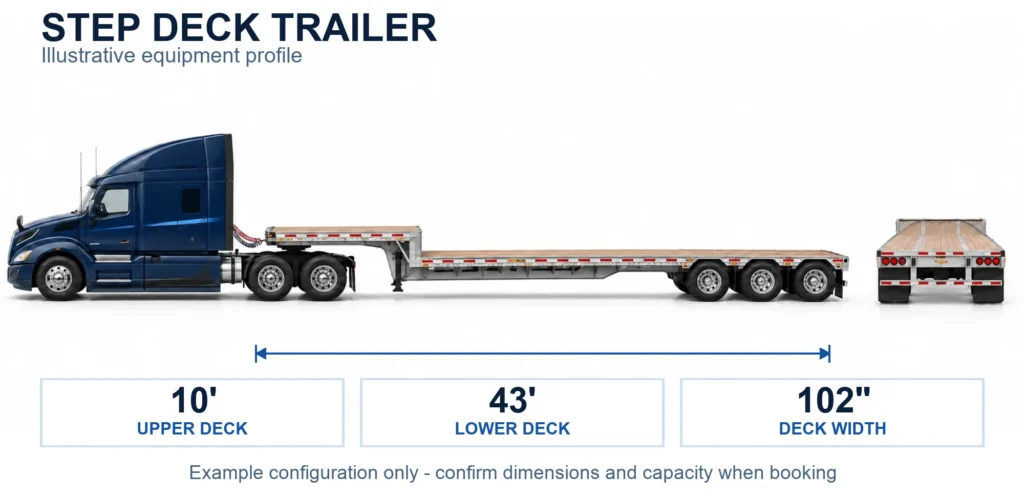
    Lower-deck height can help with taller agricultural equipment that does not fit a standard flatbed profile. The complete transport dimensions, weight distribution, loading method, ground clearance, permits, and final-site access must be checked before the trailer is assigned.

    LOWER DECK
    Added height clearance
    TALL LOADS
    Dimensions determine suitability
    RAMPS
    Requested when drive-on loading applies
    ROUTE
    Restrictions reviewed before dispatch
    Navy step deck truck showing upper and lower deck dimensions on white background

    Illustrative equipment dimensions. Actual dimensions and available payload are confirmed for each carrier and shipment.

    10 ft upper deck · 43 ft lower deck · 102 in width

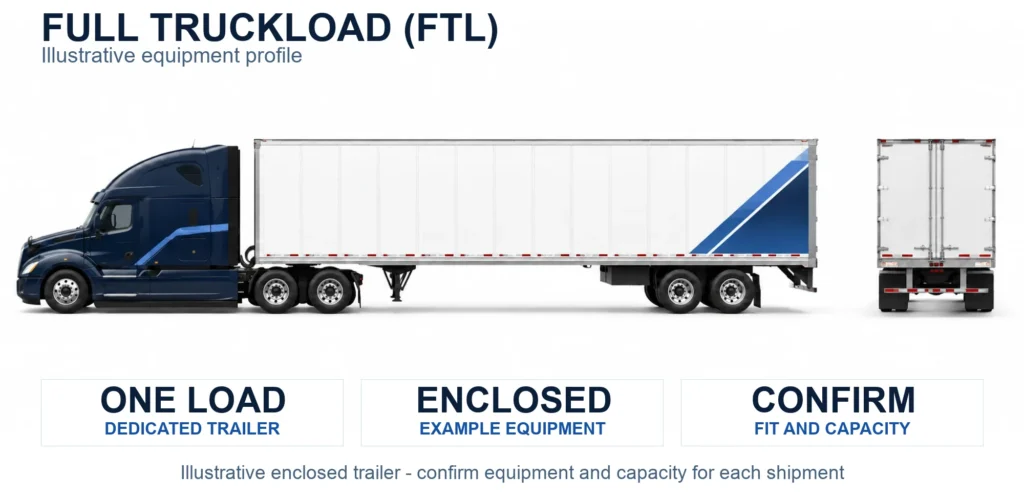
    FTL

    Dedicated full-truckload capacity for packaged seed, bagged feed, farm supplies, packaging, parts, and shelf-stable products that do not require active temperature control. Packaging, pallet count, stackability, trailer condition, loading time, seal instructions, and receiver appointments are confirmed before pickup.

    FTL
    Dedicated trailer space
    ENCLOSED
    Protection from normal road exposure
    PACKAGING
    Pallet count and stackability checked
    APPT.
    Scheduled receiving available
    Navy full-truckload truck with enclosed trailer, illustrating dedicated FTL freight

    Illustrative equipment dimensions. Actual dimensions and available payload are confirmed for each carrier and shipment.

    Dedicated truckload · Enclosed trailer example · Fit and capacity confirmed

    Refrigerated

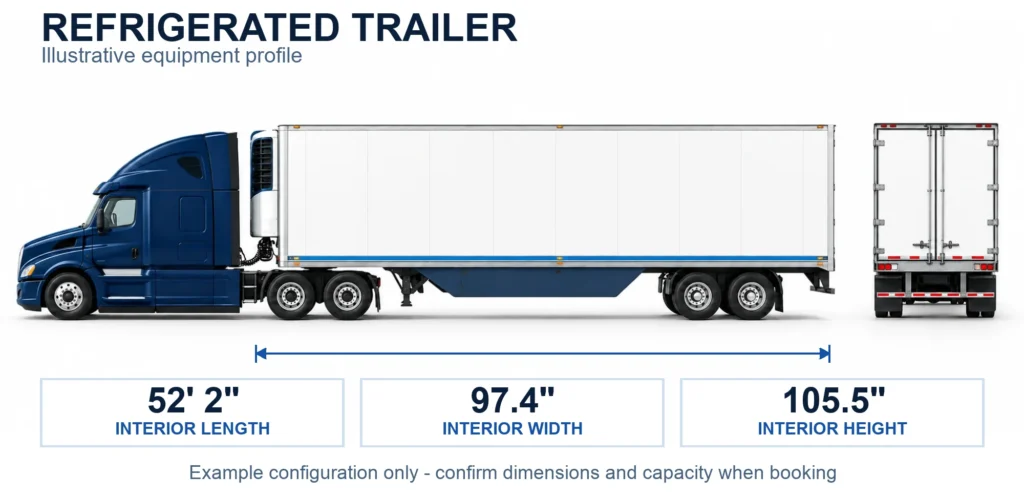
    Reefer capacity for qualified produce and agricultural products with written temperature requirements. The shipper supplies the setpoint or range, loading temperature, pre-cooling, ventilation, packaging, sanitation, and monitoring instructions before Tetrix Transport confirms the equipment.

    REEFER
    Active temperature control
    SETPOINT
    Supplied by the shipper
    PRE-COOL
    Confirmed when required
    AIRFLOW
    Loading pattern and ventilation reviewed
    Navy refrigerated freight truck with illustrative trailer interior dimensions on white background

    Illustrative equipment dimensions. Actual dimensions and available payload are confirmed for each carrier and shipment.

    52 ft 2 in interior length · 97.4 in width · 105.5 in height

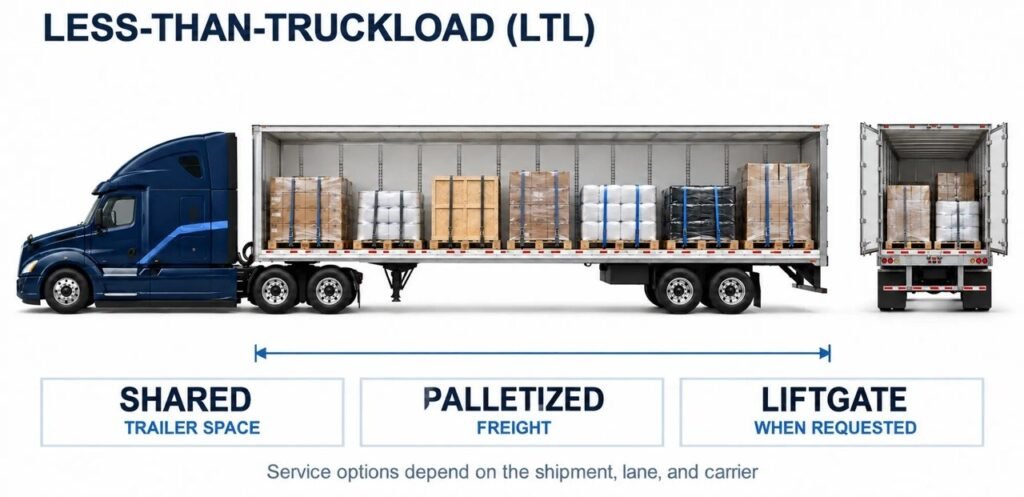
    LTL

    Less-than-truckload service for smaller quantities of properly packaged farm supplies, seed, parts, and other accepted freight. Accurate freight class, dimensions, weight, stackability, value, rural access, liftgate needs, and appointment details help prevent reclassification and delivery problems.

    LTL
    Shared-trailer capacity
    CLASS
    Correct classification required
    PACKAGING
    Built for normal network handling
    LIFTGATE
    Available when requested
    Navy truck with palletized freight sharing trailer space; liftgate service may be requested for LTL shipments

    Shared trailer space · Palletized freight · Liftgate by request

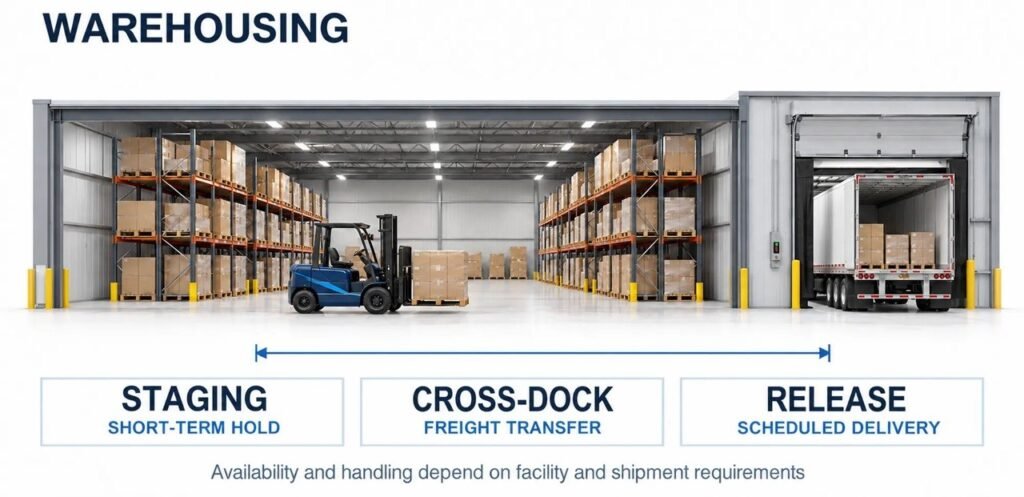
    Warehousing

    Short-term staging, cross-docking, or scheduled release for approved agricultural freight when inventory and field or facility schedules do not align. Warehouse selection depends on the commodity, packaging, storage conditions, sanitation, temperature, handling needs, location, and final-delivery plan.

    STAGE
    Hold approved freight temporarily
    RELEASE
    Schedule outbound delivery
    CROSS-DOCK
    Transfer freight when appropriate
    APPT.
    Align release with receiving time
    Warehouse with pallet storage, forklift and docked trailer; staging, cross-dock and scheduled release services

    Staging · Cross-dock · Scheduled release

    Agricultural freight across the United States

    Tetrix Transport coordinates agricultural freight throughout the United States, with cross-border service available for qualified Canada and Mexico lanes. Choose a state for practical market and routing details, then request a freight quote with the commodity, packaging, weight, equipment, pickup site, delivery site, and schedule.

    Alabama

    Alabama agriculture produces poultry, peanuts, cotton, corn, and hay. These sectors create freight demand from farms and input suppliers to processors and distribution facilities. Tetrix Transport coordinates accepted feed and seed products, packaged crops, farm supplies, and equipment through Birmingham, Montgomery, Mobile, and rural production areas. Dry van or reefer capacity may fit packaged goods, while tractors, implements, and irrigation components may require flatbed or step-deck equipment. Share the field or farm access, loading method, dimensions, harvest timing, and receiving appointment before the truck is booked.

    Request a Quote

    Alaska

    Alaska’s agricultural freight can include hay, barley, greenhouse supplies, farm equipment, and packaged products. Much of that freight moves to or from a small number of production centers. Anchorage, Fairbanks, the Matanuska-Susitna Valley, and remote destinations may require different combinations of highway, ocean, air, or terminal service. Tetrix Transport quotes these moves individually after reviewing the full route, transfer points, dimensions, weather exposure, and final-mile access. The service plan must identify which party handles each connecting mode and where responsibility changes.

    Request a Quote

    Arizona

    Arizona agriculture includes winter vegetables from the Yuma area, hay, dairy production, and specialty crops. Many of these products move on tight seasonal schedules. Tetrix Transport coordinates reefer, dry van, open-deck, and qualified cross-border freight through Yuma, Phoenix, Tucson, and surrounding growing regions. Produce loads should include the shipper’s written setpoint, loading temperature, ventilation, packaging, and appointment instructions. Desert heat, border traffic, field access, and peak harvest demand should be considered before pickup time is promised.

    Request a Quote

    Arkansas

    Arkansas freight demand reflects major soybean, rice, corn, cotton, and poultry-related production across the Delta and other farming regions. Tetrix Transport coordinates packaged crops, agricultural inputs, processing supplies, feed products, and machinery. Common gateways include Little Rock, Jonesboro, Fort Smith, and Northwest Arkansas. Hopper, tanker, live-animal, and other specialized bulk moves are outside a standard van or flatbed quote and must be disclosed for separate review. For farm or mill pickups, provide road conditions, scale availability, loading equipment, hours, and a contact who can direct the driver.

    Request a Quote

    California

    California agricultural freight serves a broad mix of almonds, grapes, pistachios, strawberries, lettuce, dairy-related products, and other high-volume commodities. Tetrix Transport coordinates qualified loads through several major growing regions. These include the Central Valley, Imperial Valley, Salinas Valley, Los Angeles, the Bay Area, and port-connected markets. Product condition, food-grade expectations, temperature, airflow, packaging, pickup appointments, and receiver specifications should be documented before tender. Seasonal capacity, urban congestion, wildfire disruptions, and agricultural inspection requirements can materially affect the route and schedule.

    Request a Quote

    Colorado

    Colorado agriculture generates freight for corn, hay, wheat, cattle-related supply chains, seed, fertilizer, and farm equipment. Tetrix Transport coordinates accepted freight along the Front Range and into Eastern Plains, San Luis Valley, and Western Slope markets. Machinery dimensions and loading plans determine whether a flatbed, step deck, permit review, or standard trailer is appropriate. Mountain grades, winter weather, wind, and long rural approaches call for realistic transit time and precise site directions.

    Request a Quote

    Connecticut

    Connecticut farms and agribusinesses support hay, nursery and greenhouse products, maple products, dairy-related operations, and specialty food production. Tetrix Transport coordinates packaged agricultural goods, growing supplies, equipment, and inbound materials through Hartford, New Haven, and the wider Northeast corridor. Smaller farms and greenhouses may have narrow roads, limited turning space, or no loading dock. The vehicle and unloading plan must therefore be confirmed early. Seasonal weather, toll routes, and tight receiving windows can matter even on relatively short regional lanes.

    Request a Quote

    Delaware

    Delaware agriculture is closely tied to corn, soybeans, wheat, poultry-related operations, and the larger Delmarva supply chain. Tetrix Transport coordinates feed ingredients in accepted packaging, farm inputs, processing supplies, palletized products, and equipment. Those lanes may run through Dover, Wilmington, and rural areas. Short regional distances do not remove the need for accurate weights, freight class, loading access, and receiver appointments. Farm roads, poultry-complex biosecurity instructions, and limited dock access should be provided before dispatch when they apply.

    Request a Quote

    District of Columbia

    Agricultural freight in Washington, D.C. generally serves a different market than freight in large production states. Likely destinations include urban farms, community growing programs, food hubs, nurseries, institutions, and specialty distributors. Tetrix Transport can coordinate accepted soil amendments, packaged seed, growing systems, greenhouse components, tools, and palletized food products to commercial receiving locations. Vehicle restrictions, curb or dock access, delivery permits, building security, and tight appointment windows should be checked before booking. A straight truck or liftgate may be more practical than a tractor-trailer at some sites, but it must be requested and priced in advance.

    Request a Quote

    Florida

    Florida agriculture creates seasonal freight for strawberries, tomatoes, oranges, sweet corn, watermelon, nursery products, and dairy-related supply chains. Tetrix Transport coordinates qualified reefer, dry van, and open-deck loads throughout the state. Frequent gateways include Miami, Tampa, Orlando, Jacksonville, Plant City, and major growing regions. Perishable freight requires shipper-defined temperature, ventilation, packaging, pre-cooling, loading, and receiver instructions. Heat, long in-state mileage, hurricane disruptions, and concentrated harvest windows make contingency contacts and realistic appointments important.

    Request a Quote

    Georgia

    Georgia agricultural freight supports peanuts, cotton, corn, blueberries, pecans, poultry-related businesses, and equipment serving farms across the state. Tetrix Transport coordinates packaged commodities, agricultural inputs, processing supplies, machinery, and qualified refrigerated products. Lanes often run through Atlanta, Macon, Savannah, Albany, and rural markets. Open-deck loads need complete dimensions, weight, securement points, loading method, and any weather-protection request. Port traffic, summer heat, storm season, and farm access should be reflected in pickup and delivery planning.

    Request a Quote

    Hawaii

    Hawaii agricultural shipments may involve coffee, macadamia nuts, papayas, avocados, nursery products, farm inputs, and specialized equipment. Tetrix Transport reviews mainland-to-island and island-origin moves individually. Ocean or air connections, terminal handling, inter-island service, and final delivery may be separate legs. Plant material, seeds, soil, fresh produce, and equipment carrying soil can be subject to agricultural inspection or import requirements, so eligibility must be confirmed by the responsible parties. Send the complete route, commodity, packaging, dimensions, deadline, and required permits or certificates before requesting capacity.

    Request a Quote

    Idaho

    Idaho freight demand is shaped by potatoes, hay, wheat, dairy-related production, seed, fertilizer, and farm equipment. These commodities move across large farming regions. Tetrix Transport coordinates qualified loads through Boise, Twin Falls, Idaho Falls, Pocatello, and rural production areas. Potato and other temperature-sensitive loads need written setpoint, ventilation, loading pattern, and freeze-protection instructions from the shipper. Long rural mileage, winter weather, warehouse appointments, and seasonal harvest volume can narrow the available pickup window.

    Request a Quote

    Illinois

    Illinois agriculture generates substantial movement of corn, soybeans, wheat, seed, crop inputs, machinery, and products supporting livestock operations. Tetrix Transport coordinates packaged and palletized freight through Chicago-area markets, Peoria, Bloomington-Normal, Springfield, Decatur, and rural production corridors. Standard van service may fit seed and packaged inputs. Large implements and attachments may instead need flatbed, step deck, or permit planning. Grain hauled loose in hopper or bulk equipment requires a specialized scope and should not be quoted as standard truckload freight.

    Request a Quote

    Indiana

    Indiana agricultural supply chains support corn, soybeans, hay, hog and poultry operations, dairy businesses, food processors, and equipment manufacturers. Tetrix Transport coordinates accepted freight through Indianapolis, Fort Wayne, South Bend, Lafayette, Evansville, and farm communities statewide. The quote should distinguish palletized products from bulk commodities and identify food-grade, temperature, or sanitation requirements. Seasonal road conditions, rural loading sites, processing appointments, and unloading capability should be confirmed before dispatch.

    Request a Quote

    Iowa

    Iowa agriculture creates steady freight demand around corn, soybeans, hog and cattle operations, seed, feed products, machinery, and processing facilities. Tetrix Transport coordinates packaged freight and equipment through Des Moines, Cedar Rapids, Davenport, Sioux City, and rural production areas. Farm machinery may require open-deck equipment, accurate dimensions, and securement details. State permit review may also be needed when legal size or weight is exceeded. Harvest congestion, winter weather, gravel access, scale procedures, and plant appointments should be included in the operating plan.

    Request a Quote

    Kansas

    Kansas agricultural freight serves wheat, corn, soybeans, sorghum, cattle-related businesses, farm inputs, and machinery across broad production areas. Tetrix Transport coordinates accepted dry van, refrigerated, and open-deck loads across the state. Key markets include Wichita, Topeka, Salina, Dodge City, and the Kansas City region. Wind, severe weather, long rural distances, and limited recovery options can affect equipment availability and transit. For machinery or field delivery, send the dimensions, weight, loading equipment, legal-access route, turning space, and on-site contact.

    Request a Quote

    Kentucky

    Kentucky agriculture supports corn, hay, soybeans, cattle and poultry operations, nursery businesses, and specialty crops. Tetrix Transport coordinates farm supplies, packaged commodities, processing inputs, and equipment across the state. Regular markets include Louisville, Lexington, Bowling Green, Northern Kentucky, and rural eastern and western areas. Terrain and smaller farm roads can limit trailer access, particularly for open-deck equipment or locations without a standard dock. Include unloading responsibility, appointment hours, site directions, and any liftgate or smaller-vehicle requirement in the first quote.

    Request a Quote

    Louisiana

    Louisiana agriculture creates freight for soybeans, rice, corn, cotton, sugarcane-related operations, seafood and food processors, and farm inputs. Tetrix Transport coordinates accepted loads across the state’s production and processing markets. These include New Orleans, Baton Rouge, Lafayette, Lake Charles, Shreveport, and major river corridors. Heat, humidity, bridge routes, port traffic, and hurricane disruptions can change transit and equipment planning. Bulk crops, liquids, and commodities requiring hopper, pneumatic, or tanker equipment must be identified separately from packaged van freight.

    Request a Quote

    Maine

    Maine agricultural freight includes potatoes, wild blueberries, dairy-related products, seed, packaging, growing supplies, and farm equipment. Tetrix Transport coordinates qualified loads through Portland, Bangor, Lewiston, Aroostook County, and coastal or inland production markets. Potatoes, berries, and other condition-sensitive products require the shipper’s written temperature, ventilation, packaging, and handling instructions. Long northern routes, winter weather, limited regional capacity, and seasonal harvest peaks make early scheduling especially important.

    Request a Quote

    Maryland

    Maryland agriculture supports corn, soybeans, poultry-related operations, dairy farms, nurseries, vegetables, and the broader Delmarva food supply chain. Tetrix Transport coordinates packaged products, farm inputs, processing supplies, and equipment across the state. Major lanes include Baltimore, Frederick, Hagerstown, the Eastern Shore, and the Washington suburbs. Busy interstate corridors and bridge crossings can affect appointment timing, while rural and coastal sites may have limited trailer access. Provide biosecurity instructions, loading method, dock or liftgate needs, and receiver references before the carrier is assigned.

    Request a Quote

    Massachusetts

    Massachusetts agricultural freight may serve cranberry growers, hay and dairy operations, greenhouses, nurseries, specialty food producers, and regional distributors. Tetrix Transport coordinates accepted products, packaging, supplies, and equipment through Boston, Worcester, Springfield, southeastern Massachusetts, and nearby New England markets. Cranberries and other perishable products need product-specific handling and temperature instructions rather than a generic refrigerated setting. Urban traffic, toll routes, narrow access, and short seasonal windows should be addressed in the rate and schedule.

    Request a Quote

    Michigan

    Michigan agriculture creates freight demand for corn, soybeans, hay, dairy-related products, fruit, vegetables, seed, and farm machinery. Tetrix Transport coordinates qualified loads through Detroit, Grand Rapids, Lansing, the western growing regions, and destinations across both peninsulas. Produce and processed food loads should include written temperature, loading, sanitation, and appointment requirements. Equipment loads need exact dimensions and securement information. Lake-effect snow, long in-state distances, bridge crossings, and harvest timing can affect capacity and transit.

    Request a Quote

    Minnesota

    Minnesota agriculture supports corn, soybeans, hay, dairy and hog operations, food processors, seed businesses, and equipment manufacturers. Tetrix Transport coordinates accepted freight through Minneapolis-Saint Paul, Rochester, St. Cloud, Mankato, Duluth, and rural production areas. Cold weather can damage products that cannot freeze, so protection requirements should be stated even when active refrigeration is not requested. Seasonal road conditions, long rural mileage, plant appointments, and loading-site access should be built into the plan.

    Request a Quote

    Mississippi

    Mississippi agricultural freight serves soybeans, corn, cotton, poultry-related operations, forestry-linked businesses, seed, fertilizer, and equipment. Tetrix Transport coordinates packaged commodities, supplies, machinery, and qualified refrigerated products through Jackson, Gulfport, Hattiesburg, Tupelo, and the Delta. Gulf Coast weather, heat, rural mileage, and peak crop schedules can influence routing and capacity. The quote should identify whether the freight is packaged, bulk, food-grade, temperature-sensitive, oversized, or subject to site-specific loading rules.

    Request a Quote

    Missouri

    Missouri agriculture produces soybeans, corn, hay, cattle and hog-related demand, food products, seed, and equipment freight. Tetrix Transport coordinates accepted shipments through St. Louis, Kansas City, Springfield, Columbia, and agricultural markets across the state. Cross-state mileage, river crossings, severe weather, and processor appointments can shape transit and delivery timing. Farm or mill locations should provide accurate directions, trailer access, scale instructions, loading hours, and a reachable contact.

    Request a Quote

    Montana

    Montana agricultural freight supports wheat, hay, cattle-related operations, seed, fencing, irrigation products, and large farm equipment. Tetrix Transport coordinates accepted loads through Billings, Great Falls, Missoula, Bozeman, and widely separated rural markets. Long distances, mountain weather, strong wind, and limited equipment in some areas require early capacity planning. For ranch or field sites, confirm legal access, road surface, turning space, loading equipment, and a contact who can meet the driver.

    Request a Quote

    Nebraska

    Nebraska agriculture creates freight demand around corn, soybeans, cattle-related supply chains, seed, feed products, irrigation systems, and machinery. Tetrix Transport coordinates qualified freight through Omaha, Lincoln, Grand Island, Kearney, North Platte, and rural production areas. Center-pivot components and large implements may require open-deck equipment, over-dimensional review, and carefully planned loading. Plains weather, harvest traffic, facility scales, and processor appointments should be accounted for before dispatch.

    Request a Quote

    Nevada

    Nevada agricultural freight may serve hay producers, dairy and cattle operations, ranches, nurseries, and businesses supplying remote growing areas. Tetrix Transport coordinates accepted products, feed in suitable packaging, irrigation equipment, and machinery through Reno, Carson City, Las Vegas, Elko, and rural markets. Desert heat, mountain passes, winter conditions in the north, and long gaps between services can affect the equipment and schedule. Exact site coordinates, road conditions, trailer clearance, unloading capability, and water or dust restrictions should be shared early.

    Request a Quote

    New Hampshire

    New Hampshire farms and agribusinesses move hay, maple products, dairy-related goods, nursery supplies, specialty crops, and compact agricultural equipment. Tetrix Transport coordinates packaged freight and equipment through Manchester, Nashua, Concord, and regional New England lanes. Rural roads, seasonal mud or snow, and smaller receiving areas can limit the vehicle that safely reaches the site. Confirm driveway width, turning space, dock or liftgate needs, delivery hours, and the on-site contact before booking.

    Request a Quote

    New Jersey

    New Jersey agriculture includes nursery and greenhouse products, blueberries, cranberries, vegetables, and farm businesses operating near dense consumer markets. Tetrix Transport coordinates accepted freight through South Jersey growing areas, the New York metropolitan market, Newark-area facilities, Trenton, and port-connected warehouses. Perishable products need written temperature and handling instructions, while live plants require commodity details, ventilation needs, and protection expectations. Congestion, tolls, seasonal demand, urban vehicle limits, and strict terminal appointments should be reflected in the plan.

    Request a Quote

    New Mexico

    New Mexico agricultural freight supports pecans, hay, chile peppers, dairy and cattle-related businesses, irrigation systems, and equipment. Tetrix Transport coordinates qualified loads through Albuquerque, Las Cruces, Santa Fe, Roswell, and production areas near the Texas and Mexico corridors. Heat, high elevation, wind, and long rural distances can affect product protection and legal transit. Cross-border or plant-product shipments also require accurate commercial documents, customs contacts, and any applicable agricultural certificates before pickup.

    Request a Quote

    New York

    New York agriculture produces dairy-related freight, hay, apples, vegetables, maple products, wine-industry supplies, and equipment for diverse growing regions. Tetrix Transport coordinates accepted loads through Buffalo, Rochester, Syracuse, Albany, the Hudson Valley, Long Island, and New York City distribution markets. Upstate winter conditions and rural farm access differ sharply from borough delivery restrictions, tolls, traffic, and limited loading space. Product temperature, trailer type, appointment, unloading, and vehicle-access requirements should be supplied for the exact destination.

    Request a Quote

    North Carolina

    North Carolina agriculture creates freight for sweet potatoes, tobacco, soybeans, corn, cotton, nursery products, and food processors. Hog and poultry-related operations add their own supply-chain demand. Tetrix Transport coordinates packaged commodities, supplies, machinery, and qualified refrigerated freight through Charlotte, Raleigh-Durham, Greensboro, Fayetteville, Asheville, and eastern growing regions. Mountain routes, coastal storms, summer heat, and concentrated harvest or processing schedules can affect capacity. Farm and plant locations should provide biosecurity rules, loading procedures, trailer access, receiver references, and unloading responsibility.

    Request a Quote

    North Dakota

    North Dakota agricultural freight supports wheat, corn, soybeans, canola, cattle-related businesses, seed, fertilizer, and large equipment. Tetrix Transport coordinates accepted loads through Fargo, Bismarck, Grand Forks, Minot, and remote production areas. Winter cold, strong wind, long distances, and limited short-notice capacity make realistic lead time important. Commodities that cannot freeze need written protection instructions, and field deliveries need exact coordinates, road access, turning space, and unloading equipment.

    Request a Quote

    Ohio

    Ohio agriculture generates freight for soybeans, corn, hay, dairy and hog operations, greenhouse products, processing facilities, and equipment suppliers. Tetrix Transport coordinates qualified shipments through Columbus, Cleveland, Cincinnati, Toledo, Dayton, and rural production markets. Interstate access supports regional lanes, but urban traffic, winter weather, harvest demand, and firm plant appointments still affect timing. Provide correct freight class for LTL, accurate machinery dimensions for open deck, and all food-grade or temperature instructions before booking.

    Request a Quote

    Oklahoma

    Oklahoma agricultural freight serves hay, wheat, cattle-related supply chains, seed, fencing, farm chemicals, and machinery across widely dispersed markets. Tetrix Transport coordinates accepted van and open-deck loads through Oklahoma City, Tulsa, Enid, Lawton, and rural production areas. Severe storms, wind, heat, long mileage, and unpaved approaches can change the pickup or delivery plan. The shipper should identify hazardous materials, bulk products, site restrictions, loading equipment, and securement or tarp expectations at the quote stage.

    Request a Quote

    Oregon

    Oregon agriculture produces hay, hazelnuts, wheat, dairy-related goods, nursery products, berries, vegetables, and specialty crops across distinct growing regions. Tetrix Transport coordinates qualified freight through Portland, Salem, Eugene, the Willamette Valley, Columbia Basin, and southern or eastern Oregon. Product-specific temperature, ventilation, moisture protection, food-grade, and packaging requirements should be provided in writing. Mountain passes, wildfire or smoke disruptions, winter weather, port traffic, and long rural mileage may affect routing and appointments.

    Request a Quote

    Pennsylvania

    Pennsylvania agricultural freight supports dairy operations, hay, corn, soybeans, poultry-related businesses, mushrooms, food processors, and equipment suppliers. Tetrix Transport coordinates accepted loads through Philadelphia, Pittsburgh, Harrisburg, Lancaster, Allentown, and rural farming areas. Turnpike routes, mountain terrain, winter weather, and dense local roads can influence equipment choice and legal transit time. Farm and processor deliveries should include appointment references, sanitation or biosecurity instructions, trailer access, and unloading capability.

    Request a Quote

    Rhode Island

    Rhode Island agricultural freight can serve nurseries, greenhouses, specialty growers, hay producers, food businesses, and landscape-supply operations. Tetrix Transport coordinates accepted palletized products, growing supplies, packaging, and compact equipment through Providence and regional New England markets. Dense roads, limited docks, restricted turning space, and short receiving windows can matter more than the mileage suggests. Share vehicle limits, liftgate needs, unloading plans, product protection, and the delivery contact before dispatch.

    Request a Quote

    South Carolina

    South Carolina agriculture creates freight for peaches, corn, soybeans, cotton, peanuts, poultry-related operations, nursery products, and food processors. Tetrix Transport coordinates packaged commodities, inputs, equipment, and qualified reefer loads through Charleston, Columbia, Greenville-Spartanburg, Florence, and rural growing areas. Perishable loads require the shipper’s temperature, packaging, ventilation, loading, and receiver instructions. Port traffic, coastal storms, summer heat, and peak crop schedules should be considered when setting appointments.

    Request a Quote

    South Dakota

    South Dakota agricultural freight supports corn, soybeans, hay, cattle and hog operations, dairy businesses, seed, feed products, and machinery. Tetrix Transport coordinates accepted shipments through Sioux Falls, Rapid City, Aberdeen, Brookings, and rural production markets. Winter weather, wind, long distances, and limited recovery options can affect capacity and transit. Field or ranch locations should confirm road conditions, loading method, trailer access, unloading equipment, and a reachable site contact.

    Request a Quote

    Tennessee

    Tennessee agriculture generates freight for soybeans, corn, hay, cattle-related operations, nursery products, food processors, and farm equipment. Tetrix Transport coordinates qualified loads through Nashville, Memphis, Knoxville, Chattanooga, Jackson, and rural production areas. The state’s interstate network supports regional freight, while eastern terrain and smaller farm roads may require closer access planning. Include commodity form, packaging, equipment, appointment details, loading method, and unloading responsibility in the quote.

    Request a Quote

    Texas

    Texas agricultural freight spans cotton, hay, cattle and dairy-related supply chains, grains, produce, seed, irrigation equipment, and machinery across a very large market. Tetrix Transport coordinates accepted freight through Dallas-Fort Worth, Houston, San Antonio, Austin, Lubbock, Amarillo, El Paso, and the Rio Grande Valley. Long in-state mileage, extreme heat, storms, border traffic, port congestion, and harvest cycles can materially change timing and capacity. Cross-border, refrigerated, oversized, bulk, or hazardous loads require complete product details and service requirements before a carrier is assigned.

    Request a Quote

    Utah

    Utah agriculture supports hay, corn, wheat, dairy and cattle operations, sheep-related businesses, seed, irrigation products, and equipment. Tetrix Transport coordinates accepted freight through Salt Lake City, Ogden, Provo, Logan, St. George, and rural production areas. Mountain grades, winter weather, desert heat, and long distances between markets can affect routing and product protection. Exact machinery dimensions, site access, loading equipment, receiving hours, and any freeze or heat limits should be confirmed early.

    Request a Quote

    Vermont

    Vermont agricultural freight is closely connected to dairy operations, hay, maple products, specialty foods, nursery businesses, and small-farm equipment. Tetrix Transport coordinates packaged goods, supplies, ingredients, and equipment through Burlington, Montpelier, Rutland, and regional New England lanes. Rural roads, mountain weather, seasonal mud, and limited dock access can influence the vehicle and appointment plan. Temperature-sensitive products need written setpoints and handling instructions, while farm deliveries need clear directions and unloading arrangements.

    Request a Quote

    Virginia

    Virginia agriculture creates freight for hay, corn, soybeans, poultry and cattle-related operations, nursery products, specialty foods, and equipment. Tetrix Transport coordinates qualified shipments through Northern Virginia, Richmond, Hampton Roads, Roanoke, the Shenandoah Valley, and southern production areas. Metro congestion, port activity, mountain routes, and rural access require different timing and equipment decisions. Provide processing appointments, biosecurity or sanitation rules, loading method, trailer restrictions, and unloading capability before pickup.

    Request a Quote

    Washington

    Washington agricultural freight supports apples, potatoes, wheat, hay, dairy-related goods, hops, cherries, and food-processing supply chains. Tetrix Transport coordinates accepted reefer, dry van, and open-deck loads through Seattle-Tacoma, Spokane, Yakima, Wenatchee, the Columbia Basin, and port-connected markets. Produce shipments should include commodity-specific temperature, ventilation, loading pattern, packaging, and receiver instructions. Cascade passes, winter conditions, wildfire disruptions, port traffic, and seasonal harvest demand can affect capacity and transit.

    Request a Quote

    West Virginia

    West Virginia agricultural freight may serve hay producers, cattle and poultry-related operations, orchards, specialty food businesses, farm suppliers, and equipment owners. Tetrix Transport coordinates accepted products, supplies, and machinery through Charleston, Morgantown, Huntington, Parkersburg, and rural communities. Mountain grades, narrow roads, bridge limits, turning space, and the absence of a dock can restrict the equipment that reaches a site. Exact dimensions, legal access, unloading method, delivery window, and an on-site contact should be confirmed before dispatch.

    Request a Quote

    Wisconsin

    Wisconsin agriculture generates freight for dairy-related products, corn, soybeans, hay, potatoes, food processors, seed, and equipment manufacturers. Tetrix Transport coordinates qualified loads through Milwaukee, Madison, Green Bay, Eau Claire, central growing regions, and statewide rural markets. Products sensitive to freezing or heat require written temperature and protection instructions, while food plants may require washout or sanitation documentation. Winter weather, plant appointments, harvest peaks, and farm access should be reflected in the schedule.

    Request a Quote

    Wyoming

    Wyoming agricultural freight supports hay, barley, cattle and sheep-related operations, fencing, irrigation products, feed in accepted packaging, and ranch equipment. Tetrix Transport coordinates qualified loads through Cheyenne, Casper, Gillette, Laramie, and remote production areas. Wind, snow, mountain routes, long distances, and limited equipment availability can leave little room for schedule recovery. Ranch and field deliveries need exact coordinates, legal road access, trailer clearance, unloading capability, and a reachable site contact.

    Request a Quote

    Plan the agricultural freight before the season gets busy.

    Tell us what is shipping, how it is packaged, where it is loading, where it is going, and when it must arrive. Tetrix Transport will review the commodity, equipment, site access, and schedule, then coordinate a practical freight option for an accepted load.

    Request a Quote

    Frequently Asked Questions

    What agricultural freight does Tetrix Transport coordinate?

    Tetrix Transport coordinates commercial freight for farms, growers, cooperatives, input suppliers, equipment dealers, food processors, warehouses, and distributors. Common shipments include packaged seed and feed products, fertilizer and crop inputs, palletized produce, packaged food ingredients, irrigation components, greenhouse supplies, tractors, implements, attachments, and replacement parts. Every load is reviewed from the actual commodity, packaging, dimensions, value, and handling requirements. Live animals, raw milk, loose grain, liquid bulk, pesticides, hazardous materials, soil, plants, or other regulated commodities require specific disclosure and acceptance and may need services outside our standard scope.

    What information do you need for an accurate agricultural freight quote?

    Provide the exact commodity and form, packaging, piece or pallet count, dimensions, total weight, declared value, origin, destination, ready date, and delivery deadline. Identify the equipment requested, temperature or ventilation instructions, food-grade or washout requirements, stackability, loading method, tarping needs, and whether the freight is bulk, hazardous, or regulated. Farm, field, greenhouse, mill, and processor locations should include road conditions, trailer access, dock or loading equipment, scale procedures, appointments, hours, and direct contacts. Complete information helps Tetrix Transport select a realistic mode and prevents changes after a carrier is booked.

    Can Tetrix Transport arrange farm equipment transportation?

    Yes, Tetrix Transport coordinates flatbed and open-deck freight for qualified tractors, implements, attachments, irrigation components, and other agricultural equipment. Send the make and model, exact length, width, height, weight, operating condition, loading method, securement points, pickup access, and unloading plan. Equipment that exceeds legal dimensions or weight may require permits, escorts, route review, or a different trailer, and those needs vary by state. No machine should be represented as standard legal freight until its transport dimensions and weight have been verified.

    Can you transport fresh produce and other temperature-sensitive agricultural products?

    Tetrix Transport can coordinate temperature-controlled transportation for qualified products when suitable capacity is available. The shipper must provide the required setpoint or temperature range, acceptable limits, loading temperature, pre-cooling, packaging, ventilation, sanitation, loading pattern, monitoring, and receiver instructions. Tetrix Transport arranges transportation from those written requirements; it does not determine product shelf life, maturity, compatibility, or the correct temperature for a commodity. The product and operating instructions must be reviewed before the load is accepted.

    Should agricultural freight move by FTL or LTL?

    Full truckload freight gives the shipment a dedicated trailer and usually involves fewer transfers, which may suit larger, seasonal, sensitive, or appointment-critical loads. Less-than-truckload shipping can be economical for smaller quantities of properly packaged seed, parts, supplies, and other durable products, but the freight normally passes through terminals and shares trailer space. The right mode depends on shipment size, packaging, freight class, value, handling tolerance, temperature needs, transit time, and site access. Fresh produce, fragile equipment, leaking containers, loose bulk commodities, and loads with unusual handling may not suit a standard LTL network.

    Can a truck pick up from or deliver directly to a farm, field, orchard, or rural site?

    Yes, when the site can safely and legally accommodate the selected equipment and the access plan is confirmed before dispatch. Provide accurate directions or coordinates, road surface, grades, bridge or weight limits, gate width, overhead clearance, turning space, weather restrictions, loading or unloading equipment, operating hours, and an on-site contact. A driver should not be expected to enter an unverified field, soft shoulder, narrow private road, or location without safe room to turn. Liftgate, smaller-vehicle, driver-assist, or other special service must be requested and priced in advance.

    Does Tetrix Transport coordinate agricultural freight between the United States, Canada, and Mexico?

    Yes, Tetrix Transport coordinates qualified truckload and LTL freight through Canada cross-border freight and Mexico cross-border freight services. The shipper or importer must provide accurate commercial documents, commodity descriptions, values, country-of-origin information, customs contacts, and any permits or phytosanitary certificates that apply. Plants, seeds, soil, fresh produce, animal products, and used farm machinery may face commodity-specific inspection or entry requirements. Product eligibility, border handoffs, carrier requirements, transit timing, and final appointments are reviewed before pickup.

    Can Tetrix Transport support seasonal programs, recurring lanes, and warehouse releases?

    Yes. For seasonal or recurring freight, provide the expected volume, lane, shipment frequency, crop or production window, equipment, loading hours, appointment rules, and known accessorials as early as possible. Tetrix Transport can also coordinate warehousing and distribution, cross-docking, or scheduled release for approved freight when a suitable facility is available. Storage requirements must identify the commodity, packaging, sanitation, temperature, pest-control, food-grade, handling, dwell-time, and inventory instructions; standard warehouse space is not appropriate for every agricultural product.

    Scroll to Top