Manufacturing Logistics Services for Industrial Freight

Keep raw materials, components, machinery, and finished goods moving with manufacturing logistics services planned around production schedules and plant requirements. Tetrix Transport arranges industrial freight shipping with dry van, FTL, LTL, open-deck, warehousing, drop trailer, and qualified cross-border options across North America.

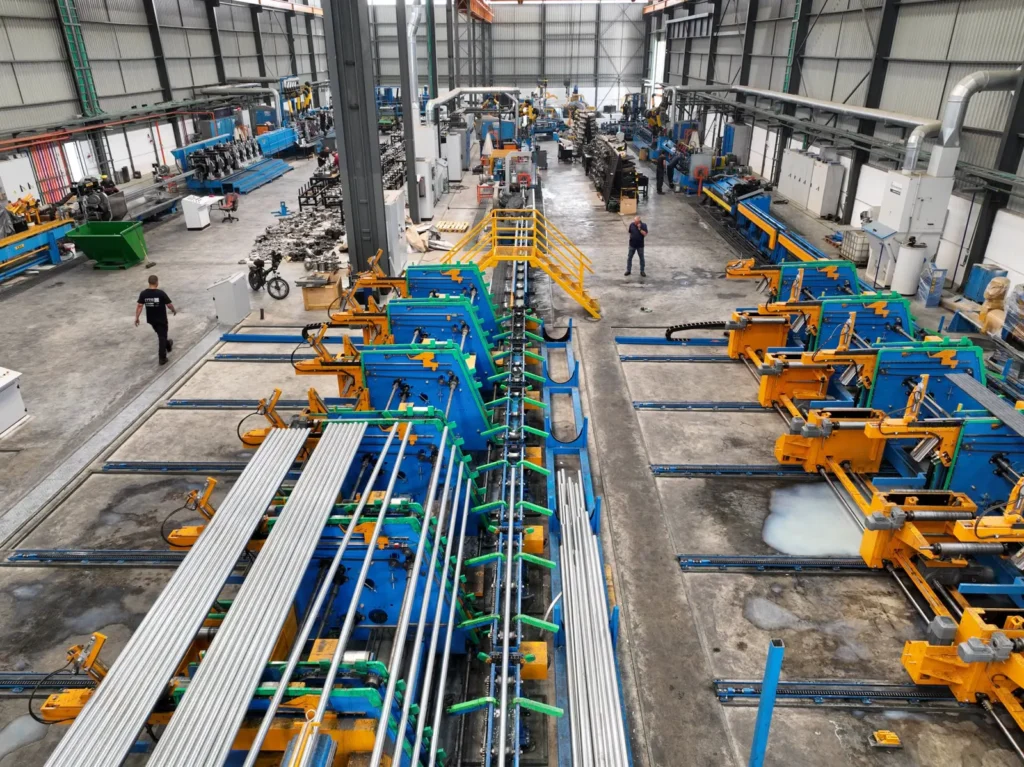
Industrial production floor with machinery and workers at a manufacturing plant

INDUSTRIAL LOGISTICS

Manufacturing freight has to match the production plan.

A shipment does not have to be large to disrupt a plant. A late component can hold up an assembly line, while an incorrectly measured machine can arrive on equipment that cannot load, clear the route, or enter the receiving site. Accurate freight details, realistic timing, and clear responsibility at both facilities are essential.

Tetrix Transport provides manufacturing logistics services as a freight brokerage and transportation coordinator for manufacturers, fabricators, parts suppliers, industrial distributors, equipment dealers, and plant contractors. We arrange full truckload freight, LTL, flatbed, step deck, RGN, warehousing, drop trailer, and qualified cross-border service according to the commodity, dimensions, weight, handling plan, site rules, and required delivery window.

INDUSTRIAL FREIGHT

How manufacturers use industrial freight shipping

Start with the use case closest to your shipment. Final equipment and service depend on the exact commodity, shipping dimensions, weight, packaging, loading method, securement needs, route, facility access, and receiving deadline.

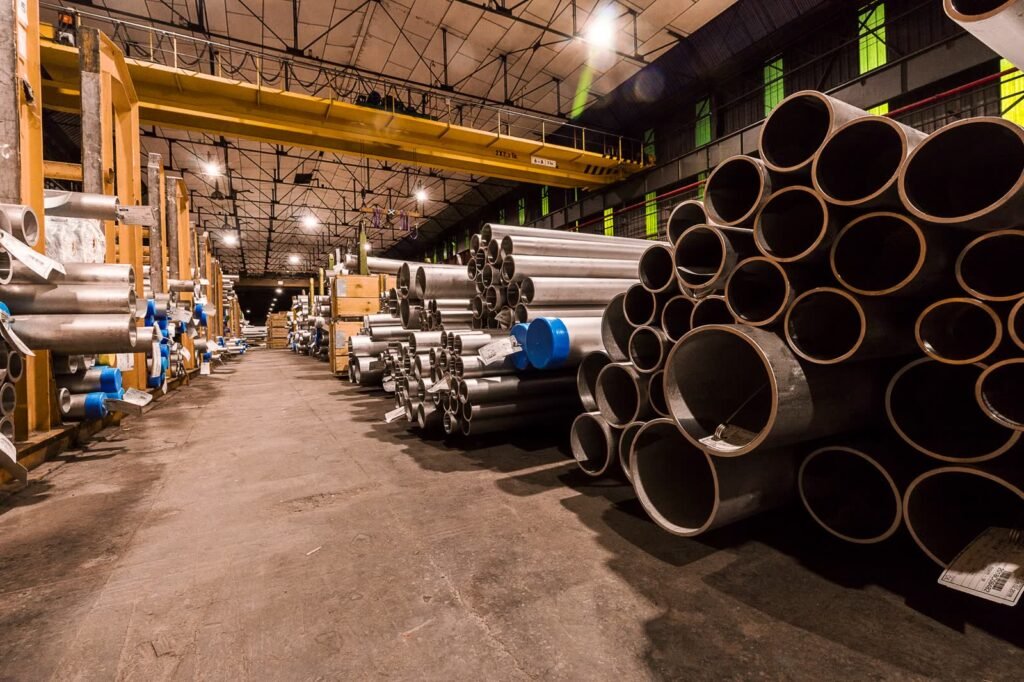
Stacked metal pipes inside an industrial warehouse

Raw material inbound

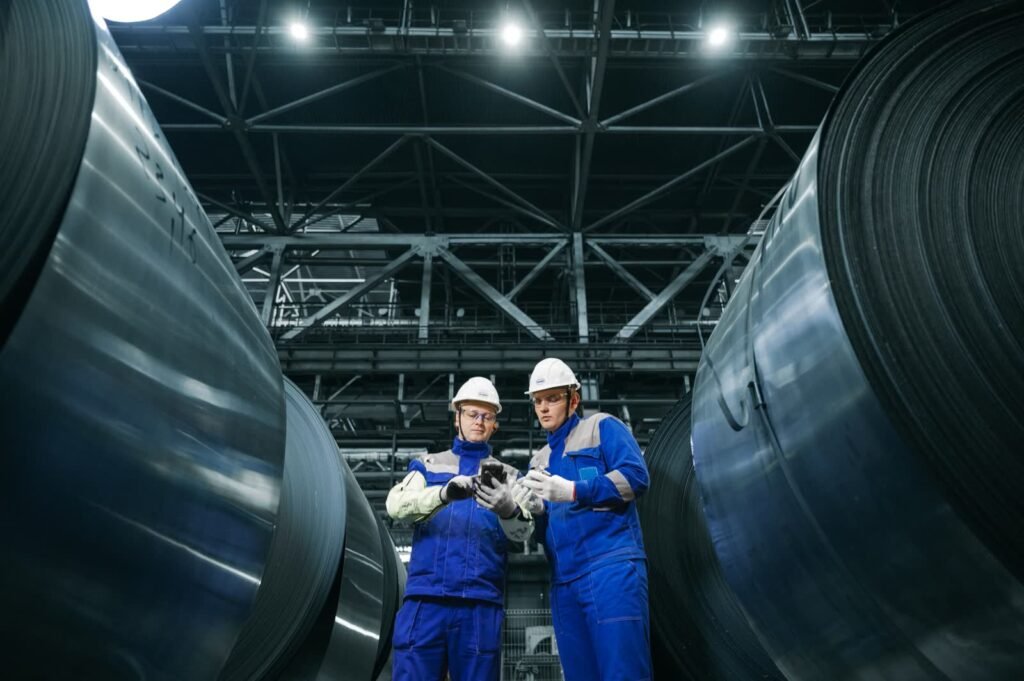
Inbound steel, aluminum, resin, lumber, paper, packaging, castings, and other production inputs have very different transportation profiles. Send the material form, piece or bundle count, dimensions, weight, packaging, weather sensitivity, and loading and unloading methods before equipment is selected. Coils, long products, concentrated weight, or freight requiring tarps or special securement need additional review. Tetrix Transport coordinates capacity from the shipper’s written requirements and the receiving plant’s schedule.
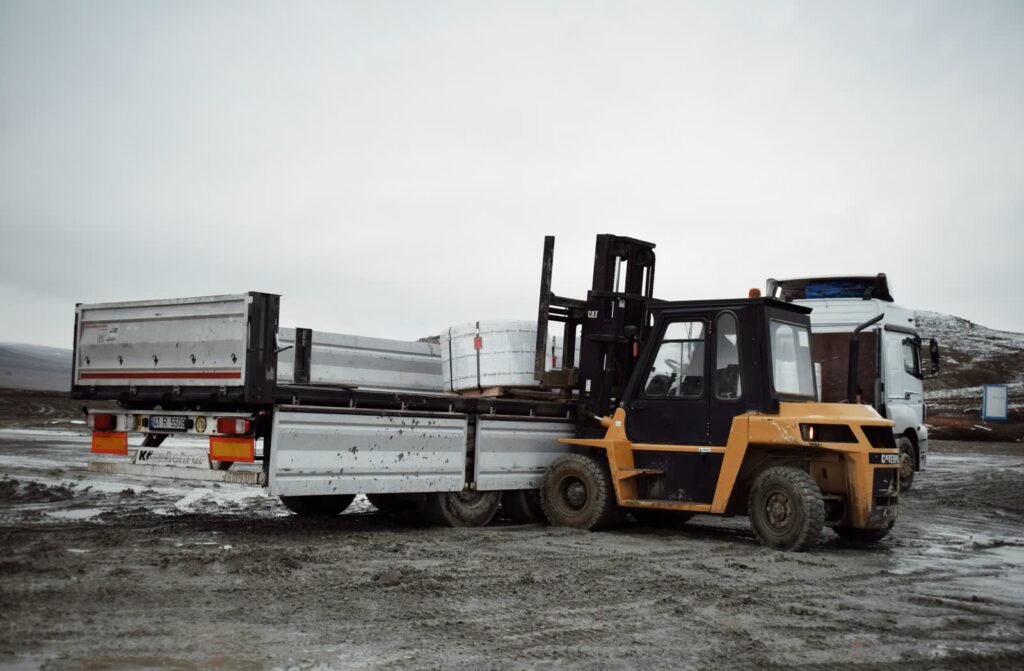
Forklift loading industrial materials onto a flatbed truck

Plant-to-plant transfers

Plant transfers may involve work-in-process inventory, components, tooling, packaging, maintenance materials, or completed subassemblies. Tetrix Transport builds the move around each facility’s operating hours, dock type, loading responsibility, inventory references, and required arrival time. Pallet count, dimensions, weight, stackability, and special handling should be consistent across the tender, bill of lading, and receiving paperwork. Recurring transfers can be reviewed as a lane program once actual frequency and volume are known.

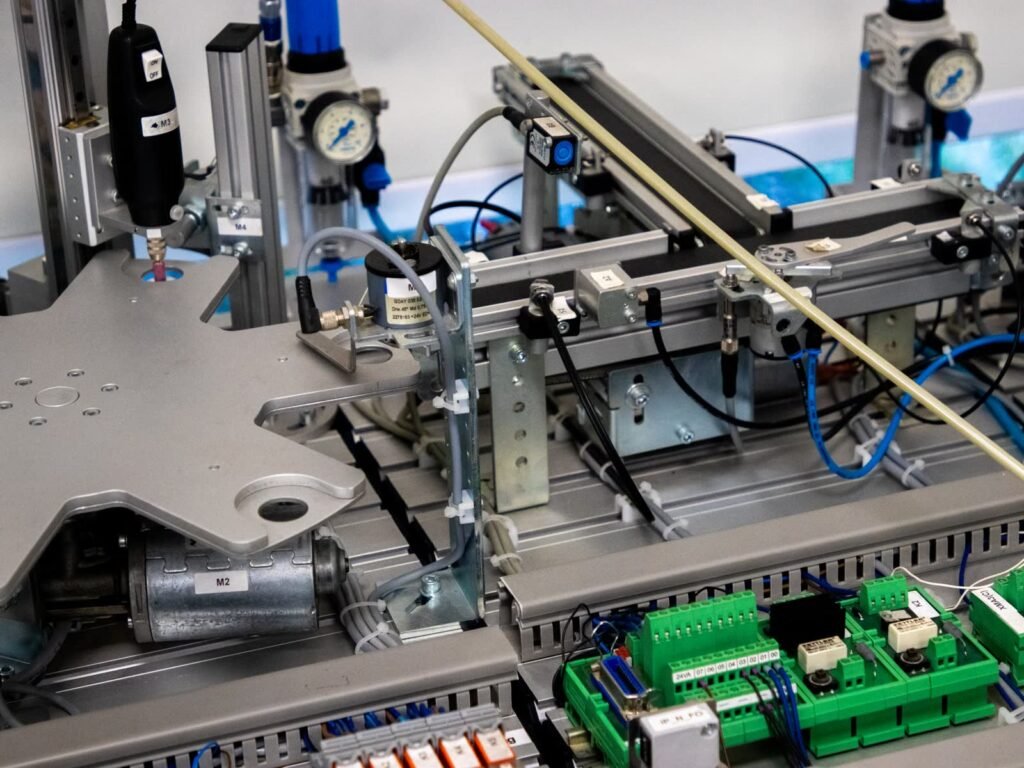
Industrial automation equipment with mechanical and electronic components

Machinery and equipment moves

Machinery transportation services start with transport dimensions, not a model name or catalog weight. Provide the actual length, width, height, weight, operating condition, center of gravity when known, securement points, loading method, and any removable parts. The origin and destination must confirm whether a dock, forklift, crane, rigger, or ground-level loading option will be available. Tetrix Transport arranges suitable available capacity but does not engineer lifts, certify securement points, or determine how the machine should be disassembled.

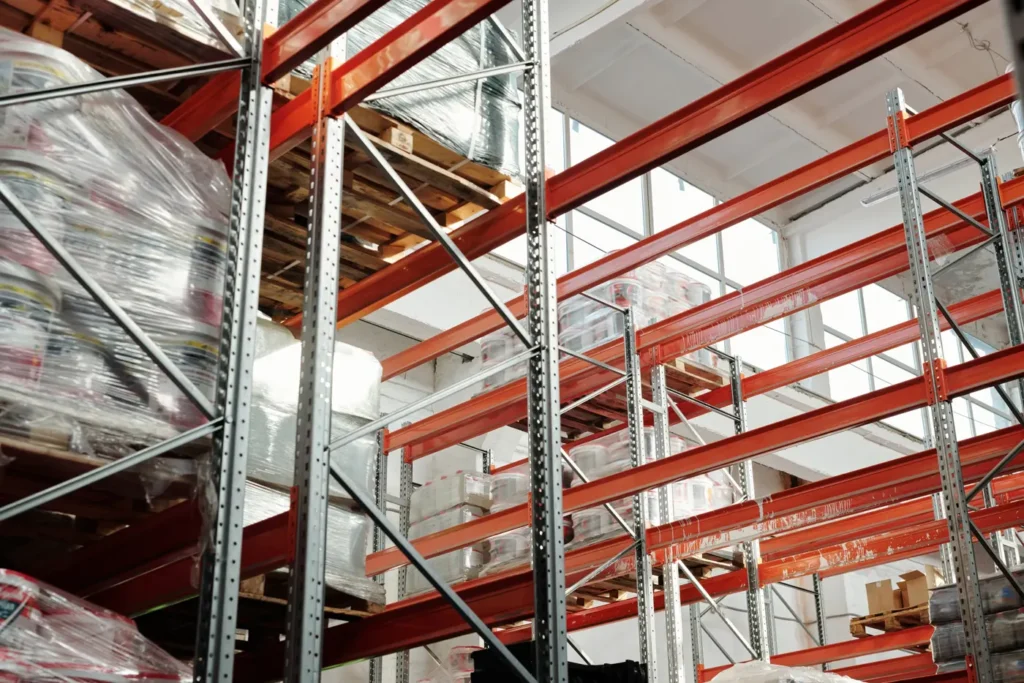
Palletized finished products stored on warehouse racks before outbound shipping

Finished-goods outbound

Finished products may move from the plant to a distributor, warehouse, customer, installation site, or another production facility. Tetrix Transport coordinates FTL or LTL service from the shipment size, packaging, freight class, value, handling tolerance, and appointment requirements. Purchase orders, labels, seals, pallet exchange, liftgate, and limited-access needs should be identified before booking. A clear release process helps prevent completed freight from sitting at the plant after it is ready.

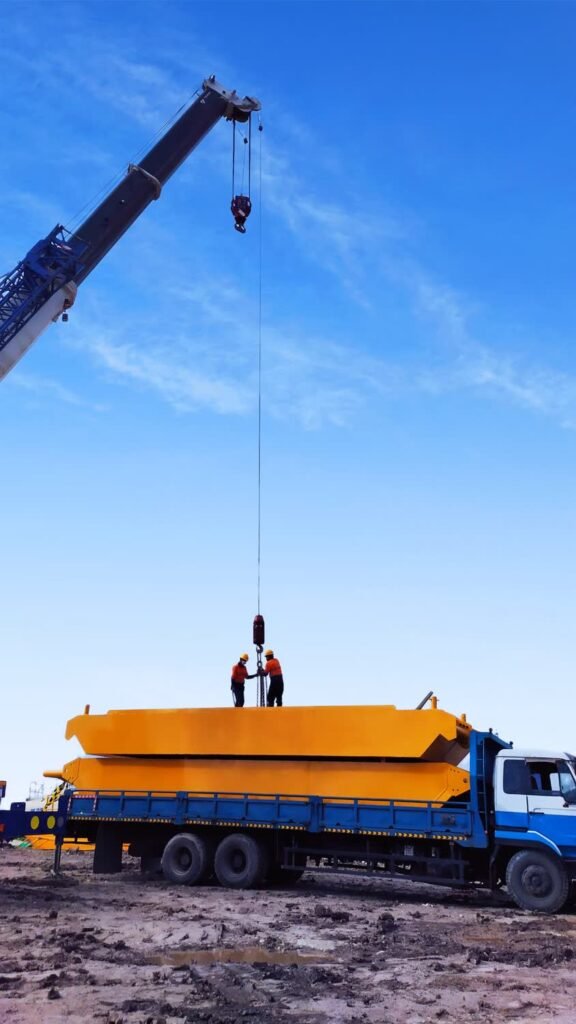
Crane lifting a large fabricated component onto a truck

Oversize industrial freight

Oversize planning begins with verified loaded dimensions and weight for the complete shipping configuration. Equipment, axle distribution, permits, route surveys, escorts, travel hours, and local restrictions may change by state and by route. Tetrix Transport coordinates the transportation plan with qualified providers after the shipment details are reviewed, but permit approval and final routing remain subject to the applicable authorities. Cranes, riggers, utility work, site preparation, and loading supervision must be assigned and confirmed separately when required.

Semi-trucks traveling on a highway in the United States

Cross-border industrial lanes

Manufacturing freight between the United States, Canada, and Mexico may involve a customs broker, commercial documents, carrier handoffs, border facilities, inspections, and a final delivery appointment. The shipper and importer should confirm product eligibility, classification, valuation, country of origin, customs responsibility, and any permit or agency requirement before pickup. Tetrix Transport coordinates qualified transportation and timing after those responsibilities are clear. Border transit should include time for document review and inspection instead of relying on a domestic-lane estimate.

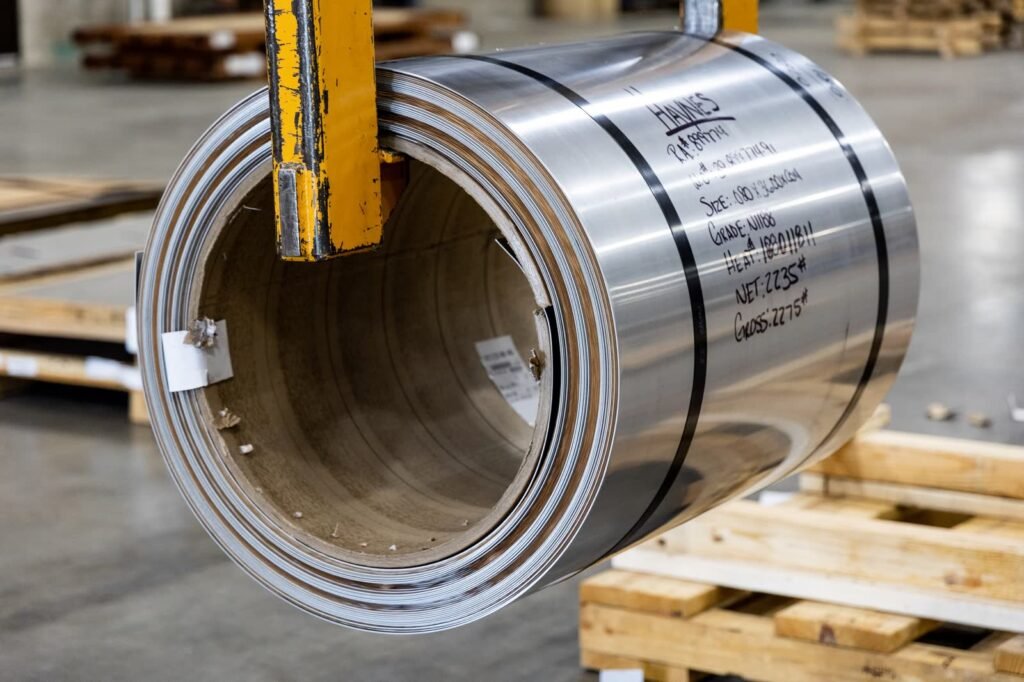
Metal coil stored on a pallet at a manufacturing facility

Production inbound freight

Production inbound freight often runs on supplier ready times, plant receiving windows, and limited inventory buffers. Tetrix Transport coordinates parts, components, packaging, and approved materials around the confirmed pickup and delivery plan. A just-in-time label does not replace the need for realistic loading time, legal transit, appointment details, and a contingency contact. Shippers should disclose the operational deadline so available service options can be compared before the line is at risk.

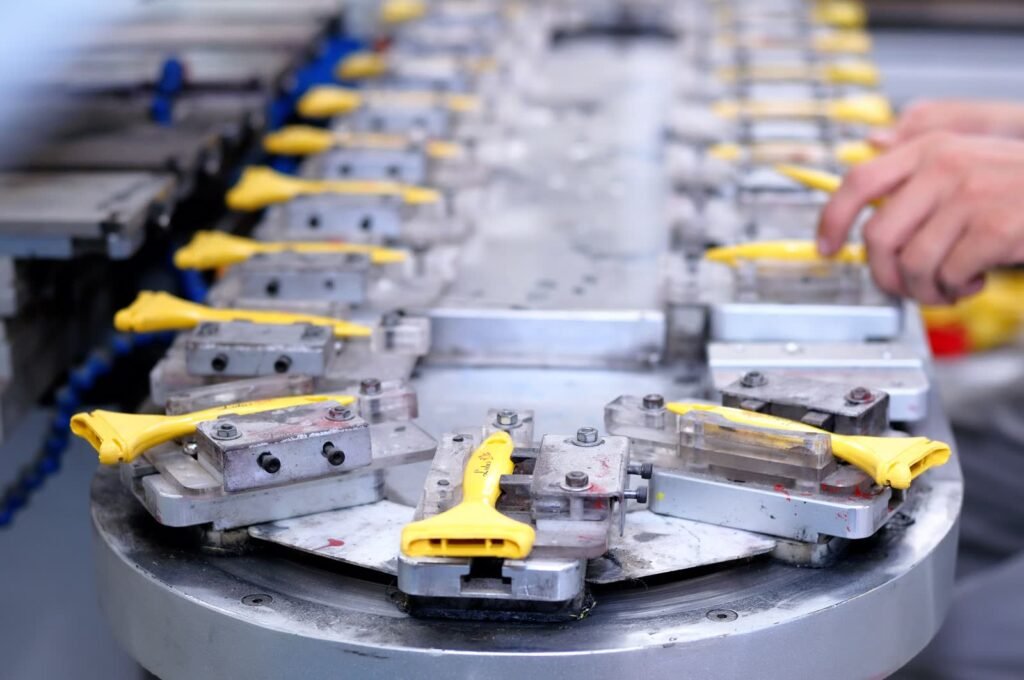
Metal components moving through an assembly station

Time-critical parts and replacement freight

A missing motor, control, bearing, die, tool, or replacement component can become urgent when production or maintenance is waiting. Share the exact ready time, required delivery time, dimensions, weight, loading method, site contacts, and financial or operational consequence of a missed window. Tetrix Transport reviews dedicated and expedited options that are legal and realistic for the lane. Pickup and delivery estimates remain subject to confirmed capacity, road conditions, facility readiness, and hours-of-service rules.

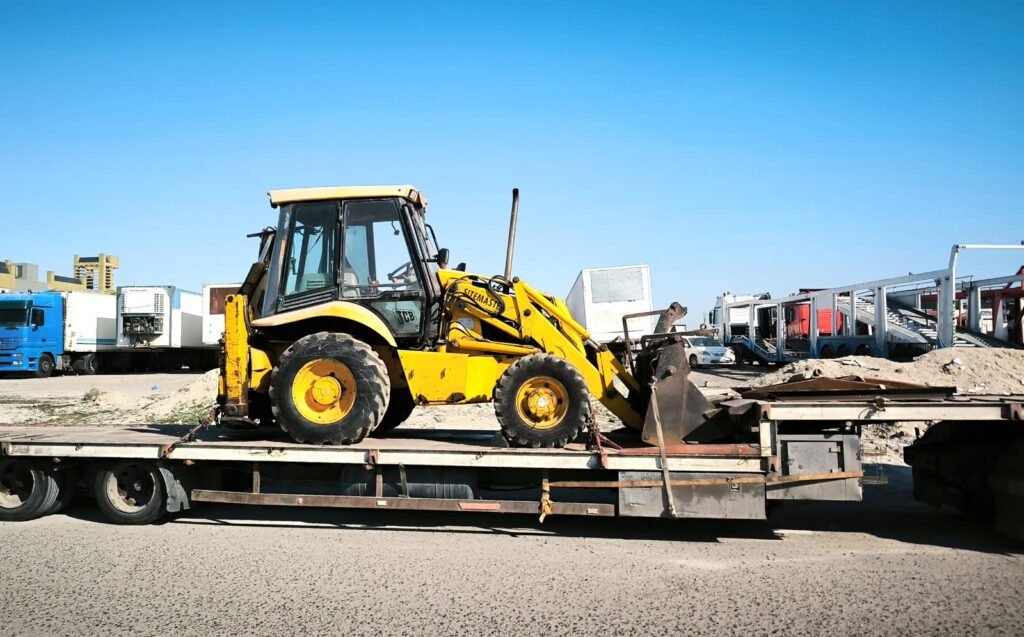
Yellow construction machine secured on a flatbed trailer

Equipment relocation

Relocating a machine between plants, dealers, auctions, rebuilders, or storage sites requires coordination beyond the highway miles. Confirm who will disconnect, drain, prepare, load, brace, unload, position, and reconnect the equipment. Transport dimensions, weight, condition, photos, securement points, and site access should be supplied after preparation is complete. Tetrix Transport coordinates the freight portion with suitable available equipment and clearly documented facility responsibilities.

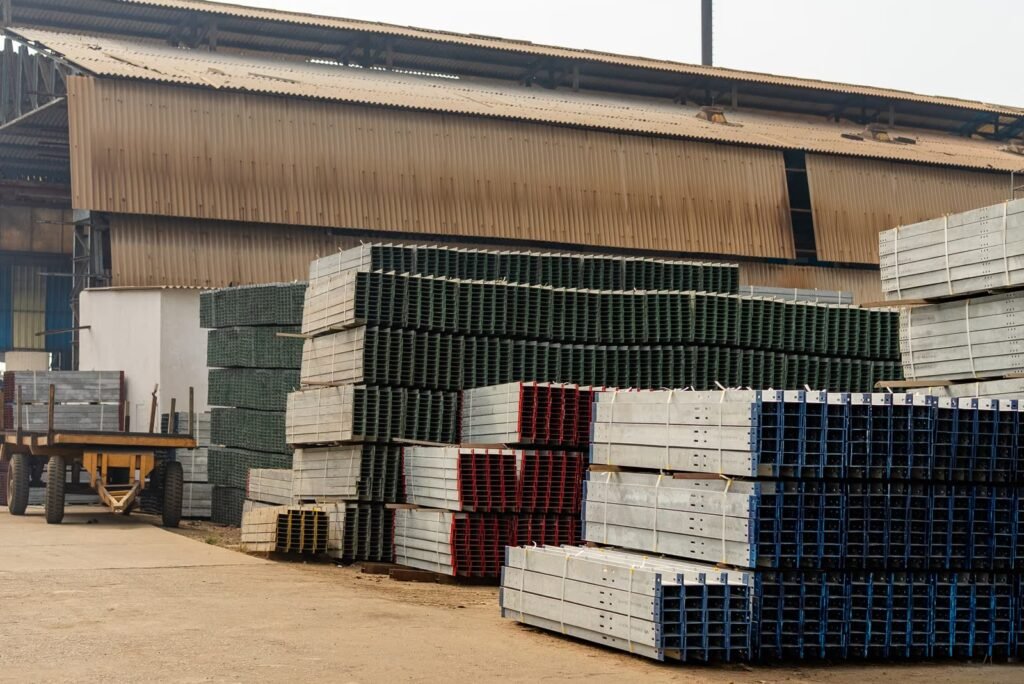
Stacks of metal beams outside an industrial warehouse

Industrial warehousing and scheduled release

Temporary storage can help when production dates change, customer appointments move, or inbound materials arrive before floor space is available. Tetrix Transport can coordinate warehousing and distribution, cross-docking, consolidation, and scheduled outbound delivery for approved freight when a suitable facility is available. Product dimensions, weight, value, handling method, storage condition, inventory instructions, dwell time, and release authority must be defined first. Heavy, hazardous, high-value, floor-loaded, or unusually shaped freight requires facility-specific approval.

Semi-trucks traveling on a highway in the United States

Dedicated capacity for recurring lanes

Repeat supplier, plant-to-plant, and customer lanes are easier to plan when forecast and tender data match actual operations. Provide lane pairs, weekly volume, shipping days, equipment, loading time, appointment rules, seasonal changes, and known accessorials. Tetrix Transport can review dedicated, contract, or repeat spot capacity and establish a communication process for accepted lanes. Forecasts support planning, but equipment is reserved only after the lane terms and individual shipment tender are confirmed.

Semi-trucks traveling on a highway in the United States

Industrial freight across North America

Tetrix Transport coordinates domestic United States freight and qualified industrial shipments to or from Canada and Mexico. The service plan is based on the commodity, equipment, route, dimensions, schedule, documents, border process, and final receiving requirements. Cross-border shipments are accepted only after customs responsibility, product eligibility, filings, and handoffs are understood. Capacity, transit, and any transfer points are confirmed for the specific lane.

Forklift loading industrial materials onto a flatbed truck

Plant and industrial site delivery

A plant delivery can fail at the gate even when the truck reaches the address on time. Send the appointment number, entrance, check-in process, PPE rules, trailer restrictions, dock or crane location, unloading method, driver-assist needs, and site contact before dispatch. Tetrix Transport places confirmed requirements in the transportation plan and communicates them to the selected carrier. Any orientation, escort, badging, special insurance, or safety documentation should be disclosed during quoting rather than at arrival.

1 / 13

INBOUND FREIGHT

Protect the production schedule with clean inbound data

Inbound freight should be planned from the supplier’s real ready time, the plant’s actual receiving window, and the consequences of a delay. Commodity, quantity, dimensions, weight, packaging, equipment, loading method, references, and site rules should travel with every tender. When requirements change, early notice gives the transportation team more room to protect the delivery plan.

Industrial workers inspecting large steel coils in a plant

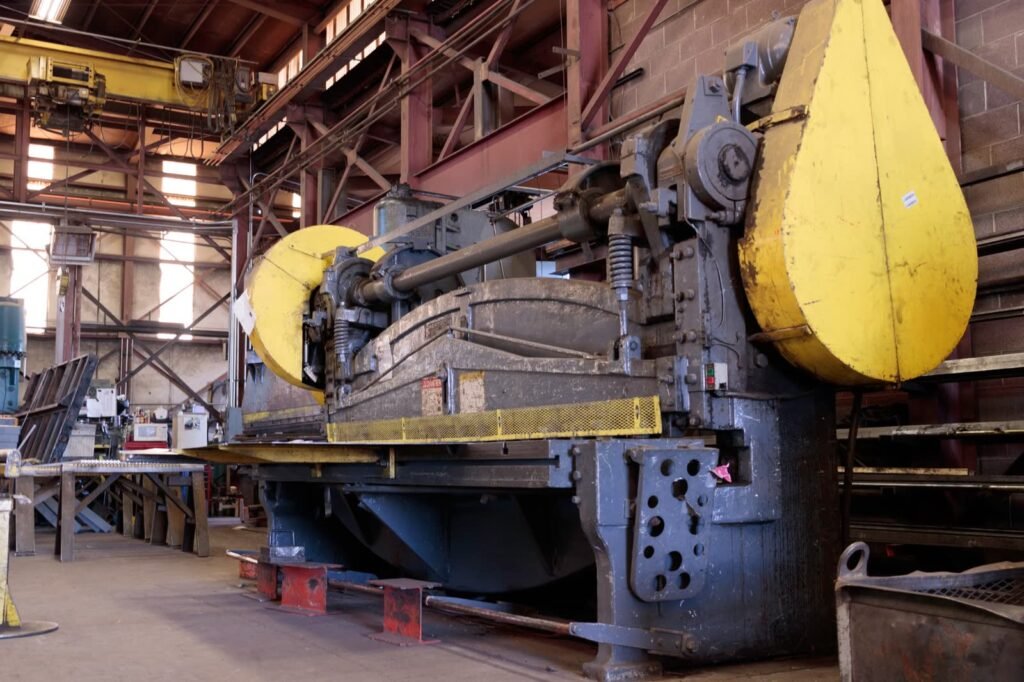
MACHINERY & EQUIPMENT

Measure the load, not the model number

Machinery should be quoted from verified transport dimensions, weight, photos, condition, loading method, and destination access. Attachments, skids, crates, guarding, overhang, and a low center of gravity can change the trailer and route even when the base machine appears standard. Loading and unloading crews should agree on responsibility before the truck is scheduled.

Heavy industrial machine inside a manufacturing plant

DROP TRAILER

Create breathing room at busy manufacturing docks

Drop trailer service can give a qualified plant more time to load or unload recurring dry freight without holding a driver at the dock. The program depends on shipment frequency, trailer type, yard space, security, dwell expectations, inspection procedures, and a clear empty-trailer process. Tetrix Transport reviews the lane and operating conditions before proposing a drop-and-hook arrangement.

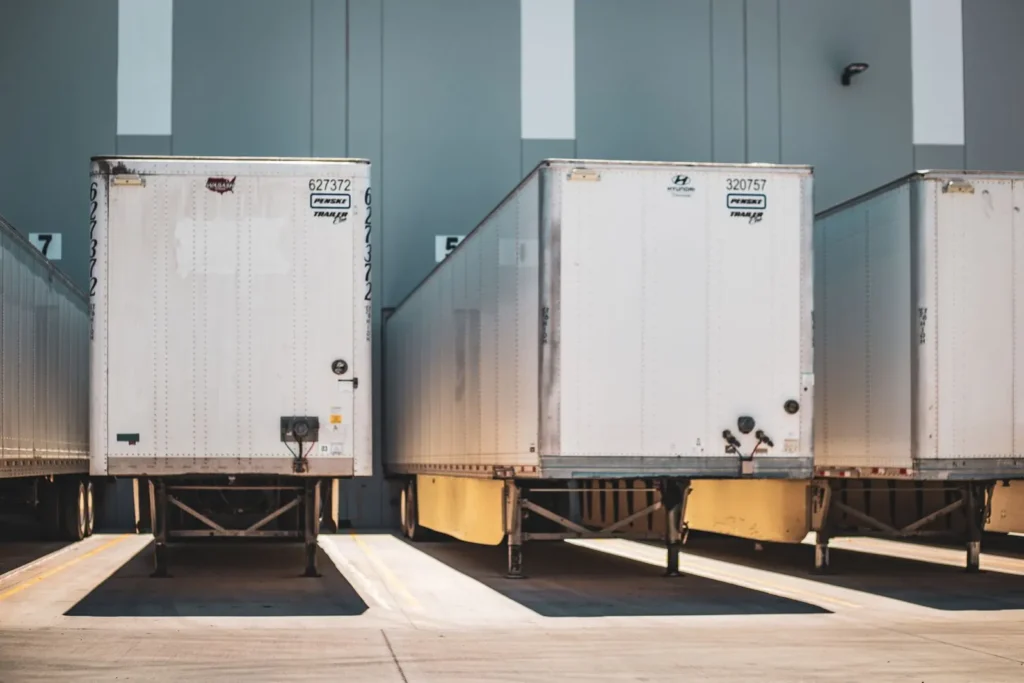
Rows of freight trailers parked at a commercial loading dock

Manufacturing logistics at a glance

U.S.
Nationwide industrial freight coordination
FTL / LTL
Options for full and partial shipments
OPEN DECK
Flatbed, step deck, and RGN options
CA / MX
Qualified cross-border manufacturing lanes

Plan industrial freight before it becomes a production problem.

Send the commodity, quantity, transport dimensions, weight, origin, destination, ready date, required delivery window, equipment, loading method, and facility rules. Tetrix Transport will review the lane and identify a suitable available freight option for an accepted shipment.

Request a Quote

Request a Manufacturing Freight Quote

Add your shipment details below and a Tetrix Transport specialist will follow up. For an urgent load, call (888) 889-6323 with the exact commodity, origin and destination ZIP or postal codes, piece count, transport dimensions, weight, equipment, loading method, ready time, and required delivery time.

    Pickup Date *

    Service Type *

    Commodity *

    Company Name *

    Phone *

    Email *

    FREIGHT DENSITY CALCULATOR

    Estimate your freight class instantly

    Enter your shipment dimensions and total weight to estimate its density-based freight class.

    Calculate NowSample values shown. Change any field to calculate your shipment.
    Density Calculator
    Suggested classClass 65

    Freight capacity for manufacturing operations

    Transportation and staging options are selected from the actual freight, dimensions, weight, loading method, production schedule, route, and receiving requirements.

    01

    Open-deck freight

    Capacity for machinery, materials, and irregular loads

    02

    Dedicated FTL

    Direct capacity for recurring or sensitive industrial freight

    03

    Warehousing & release

    Approved storage, staging, and scheduled outbound delivery

    04

    Cross-border freight

    Coordinated United States, Canada, and Mexico lanes

    Match the equipment to the industrial load

    Choose capacity from verified transport dimensions, weight, packaging, securement needs, loading method, route, site access, and delivery window. Special equipment and services are included only when requested, priced, and confirmed.

    1 / 6

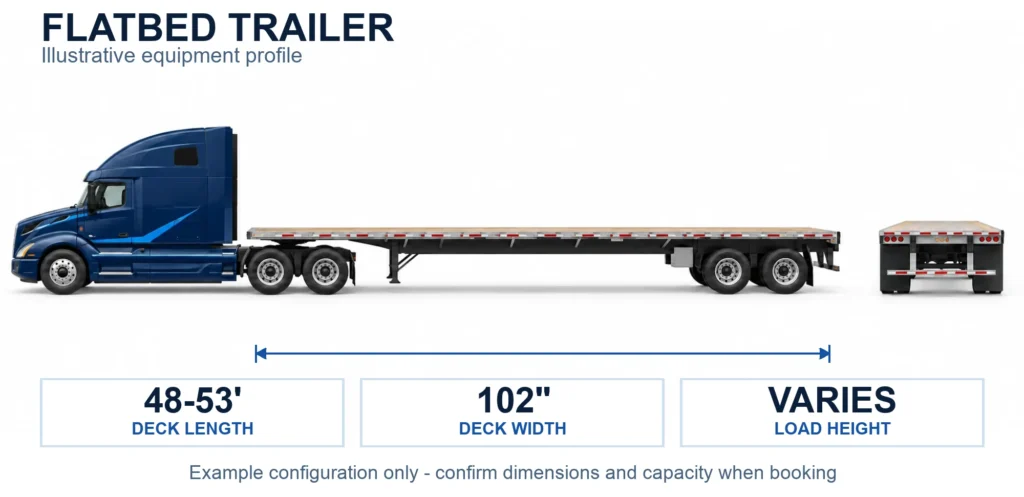
    Flatbed

    Flatbeds suit freight that needs top, side, forklift, or crane loading and can be safely transported on an open deck. Tetrix Transport coordinates flatbed and open-deck transportation after dimensions, weight, securement points, tarping, blocking, loading, and unloading requirements are supplied.

    ACCESS
    Top and side loading
    DIMENSIONS
    Verified before booking
    PROTECTION
    Tarp needs confirmed
    SECUREMENT
    Carrier plan reviewed at loading
    Navy flatbed truck showing illustrative 48–53-foot deck length and 102-inch deck width on white background

    Illustrative equipment dimensions. Actual dimensions and available payload are confirmed for each carrier and shipment.

    48–53 ft deck · 102 in deck width · load height varies

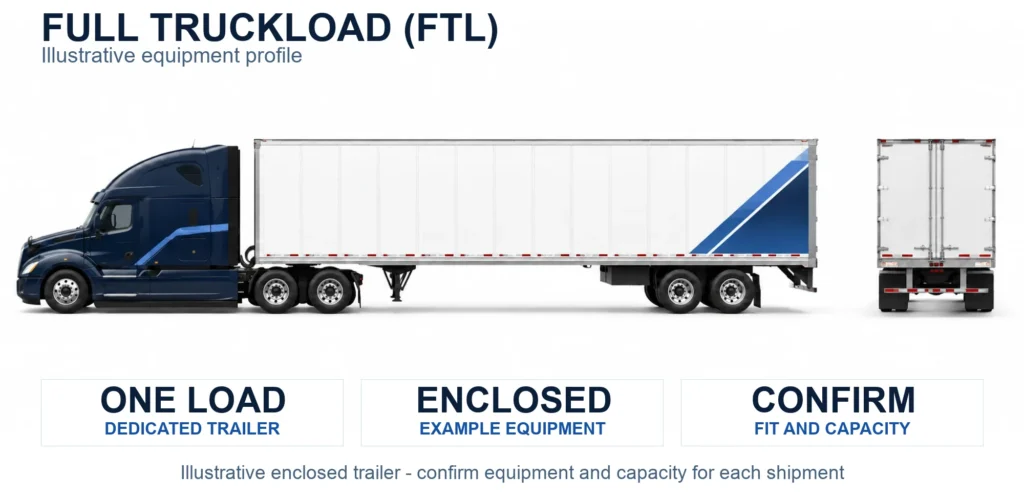
    FTL

    Dedicated full-truckload service for properly packaged components, parts, finished goods, packaging, and approved industrial materials that need enclosed transportation. Door clearance, pallet dimensions, concentrated weight, stackability, floor loading, trailer condition, seals, and dock access should be checked before loading.

    ENCLOSED
    Protection from normal road exposure
    CLEARANCE
    Door and interior fit confirmed
    WEIGHT
    Load distribution reviewed
    SEAL
    Procedure added when requested
    Navy full-truckload truck with enclosed trailer, illustrating dedicated FTL freight

    Illustrative equipment dimensions. Actual dimensions and available payload are confirmed for each carrier and shipment.

    Dedicated truckload · Enclosed trailer example · Fit and capacity confirmed

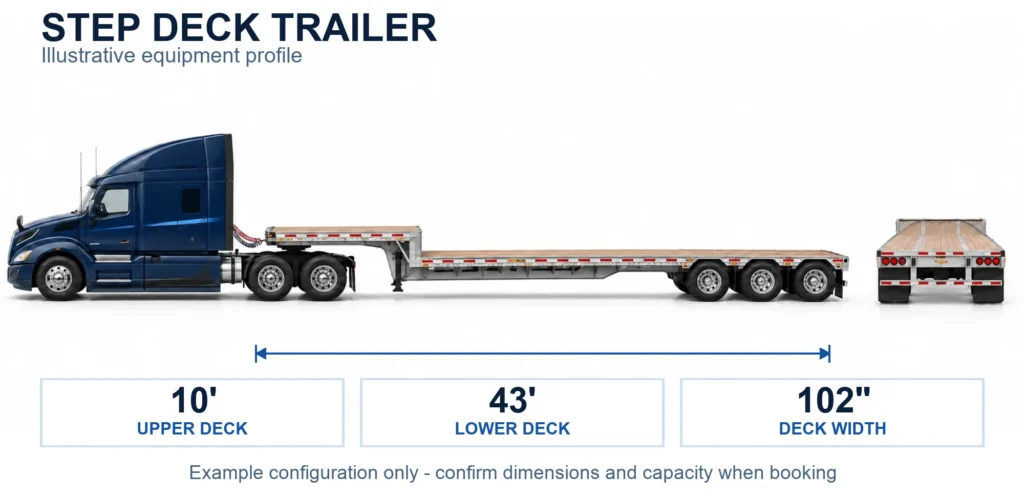
    Step deck

    A step deck provides a lower main deck for taller freight that can remain within the planned route and legal or permitted limits. Exact loaded height, length, width, weight, deck position, loading method, ramps, tarps, and securement details determine whether this equipment fits.

    DECK
    Lower main deck
    HEIGHT
    Loaded profile verified
    LOADING
    Crane, forklift, or ramp plan
    ROUTE
    Restrictions checked before dispatch
    Navy step deck truck showing upper and lower deck dimensions on white background

    Illustrative equipment dimensions. Actual dimensions and available payload are confirmed for each carrier and shipment.

    10 ft upper deck · 43 ft lower deck · 102 in width

    RGN / lowboy

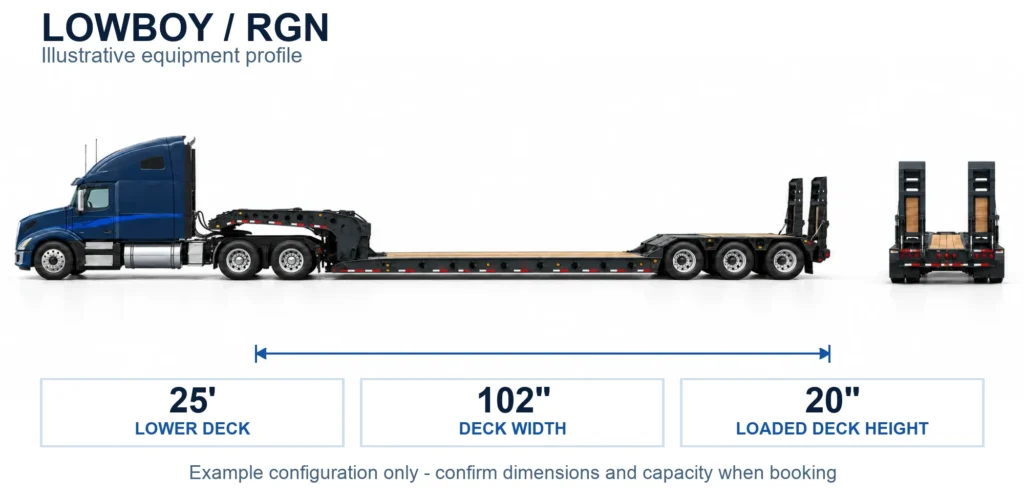
    RGN and lowboy options may fit heavy, tall, tracked, wheeled, or self-propelled machinery that cannot use standard deck height. Selection depends on actual dimensions, weight, axle configuration, ground clearance, operating condition, loading method, permits, and the access available at both sites.

    PROFILE
    Low-deck equipment options
    WEIGHT
    Axle needs reviewed
    LOADING
    Operating condition confirmed
    PERMITS
    Route-specific when required
    Navy lowboy RGN truck showing illustrative low deck dimensions on white background

    Illustrative equipment dimensions. Actual dimensions and available payload are confirmed for each carrier and shipment.

    25 ft lower deck · 102 in width · 20 in loaded deck height

    LTL

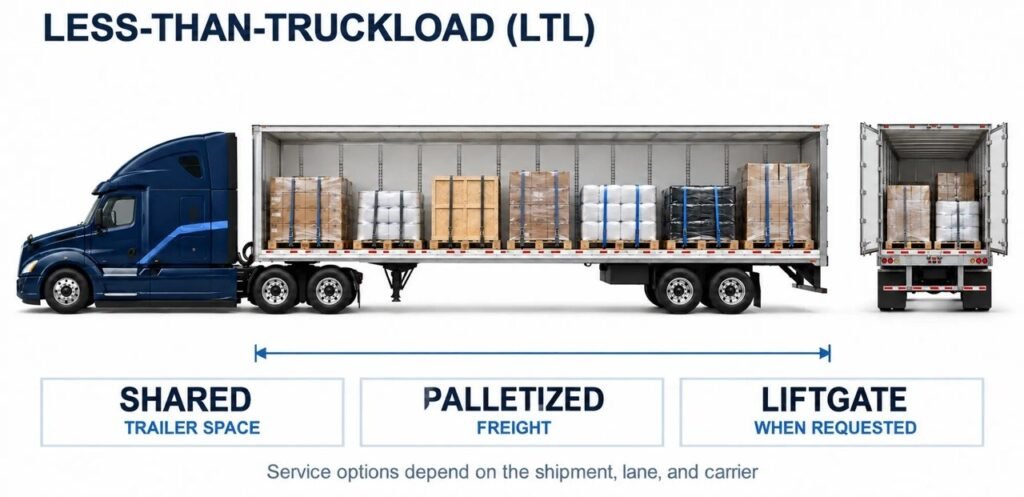
    Less-than-truckload shipping may be practical for smaller quantities of properly packaged and classed industrial freight. Since LTL shipments normally move through terminals and share trailer space, packaging, dimensions, weight, freight class, density, value, stackability, handling tolerance, and accessorials need careful review.

    CLASS
    Accurate freight classification
    PACKAGING
    Built for terminal handling
    ACCESS
    Liftgate and site needs declared
    VALUE
    Coverage options reviewed
    Navy truck with palletized freight sharing trailer space; liftgate service may be requested for LTL shipments

    Shared trailer space · Palletized freight · Liftgate by request

    Warehousing

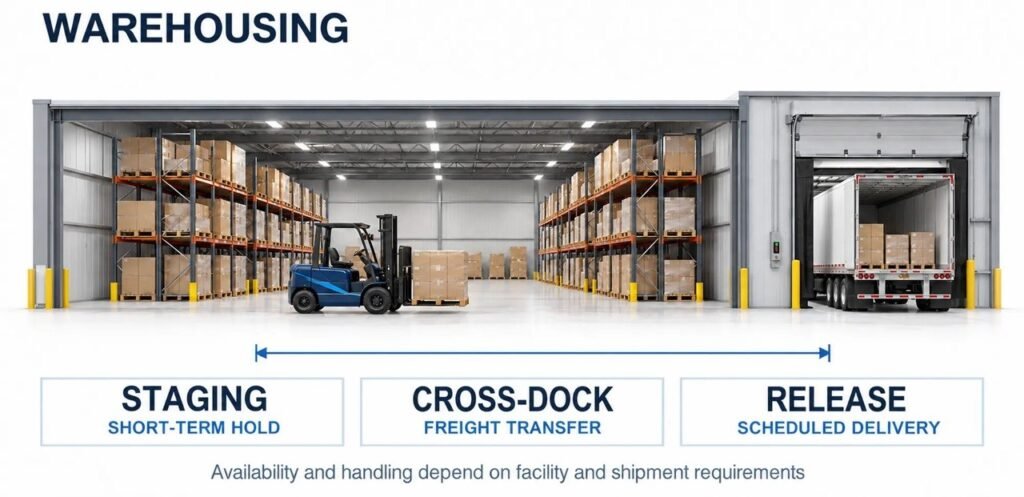
    Warehousing can support inbound staging, overflow inventory, consolidation, cross-docking, and scheduled releases when the freight and facility are compatible. Tetrix Transport reviews dimensions, floor or rack requirements, weight, value, handling equipment, storage conditions, inventory controls, dwell time, and release instructions before placement.

    STAGING
    Inbound or outbound inventory
    HANDLING
    Facility equipment confirmed
    CONTROL
    Release authority documented
    DELIVERY
    Final appointment coordinated
    Warehouse with pallet storage, forklift and docked trailer; staging, cross-dock and scheduled release services

    Staging · Cross-dock · Scheduled release

    Manufacturing freight across the United States

    Tetrix Transport coordinates manufacturing logistics throughout the United States, with cross-border service available for qualified Canada and Mexico lanes. Choose a state for practical market and routing details, then request a freight quote with the commodity, transport dimensions, weight, equipment, loading method, pickup and delivery sites, and schedule.

    Alabama

    Alabama manufacturing freight supports automotive assembly and suppliers, aerospace and defense operations, metals, chemicals, machinery, and forest products. Tetrix Transport coordinates inbound materials, components, equipment, and finished goods through Birmingham, Huntsville, Montgomery, Tuscaloosa, Mobile, and surrounding plant markets. Automotive and aerospace facilities may require precise appointments, part references, packaging standards, and site-specific check-in. Port traffic, Gulf Coast weather, rural supplier locations, and I-65, I-20, or I-85 congestion should be considered when setting pickup and delivery windows.

    Request a Quote

    Alaska

    Alaska industrial freight may serve seafood processors, energy operations, construction-product fabricators, wood-product businesses, repair facilities, and remote equipment users. Tetrix Transport reviews Anchorage, Fairbanks, Kenai, and coastal moves individually because ocean, highway, terminal, or local delivery legs may involve different providers. Machinery dimensions, winterization needs, transfer responsibility, and access at the final site must be established before booking. Long distances, severe weather, limited road connections, and sailing schedules require more lead time than a standard contiguous-state lane.

    Request a Quote

    Arizona

    Arizona manufacturing freight includes semiconductors, electronics, aerospace components, fabricated metals, plastics, machinery, and food products. Tetrix Transport coordinates dry van, LTL, open-deck, and cross-border lanes through Phoenix, Mesa, Chandler, Tucson, Nogales, and nearby industrial parks. Sensitive components need packaging and handling instructions, while machinery and metal products require verified dimensions, weight, and loading methods. Desert heat, seasonal monsoons, border traffic, and receiver appointments can affect equipment selection and transit planning.

    Request a Quote

    Arkansas

    Arkansas manufacturers move food-processing equipment and products, paper and wood goods, aerospace components, machinery, metals, plastics, and packaging. Tetrix Transport coordinates freight through Little Rock, Fort Smith, Jonesboro, Northwest Arkansas, Camden, and rural production areas. Plant loads should include dock hours, trailer requirements, purchase-order references, pallet details, and loading or unloading responsibility. Rural mileage, severe weather, winding access roads, and supplier ready-time changes can narrow the practical pickup window.

    Request a Quote

    California

    California industrial freight spans aerospace, electronics, semiconductors, medical devices, machinery, metals, chemicals, food processing, and a large network of import-dependent manufacturers. Tetrix Transport coordinates freight through Southern California, the Bay Area, Central Valley, Inland Empire, San Diego, Sacramento, and port-connected markets. Urban deliveries may need strict appointments, vehicle restrictions, and careful dock-access review, while open-deck loads require route-specific dimensions and permit planning. Congestion, port activity, mountain passes, wildfire disruptions, and long in-state distances should be built into the schedule.

    Request a Quote

    Colorado

    Colorado manufacturing includes aerospace, electronics, medical products, machinery, fabricated metals, food processing, and outdoor-industry goods. Tetrix Transport coordinates components, raw materials, equipment, and finished goods along the Front Range and into Western Slope, mountain, and Eastern Plains markets. A shipment serving Denver, Colorado Springs, Fort Collins, Pueblo, or a remote plant should be planned around the actual site elevation, dock access, and unloading method. Snow, high winds, mountain grades, construction traffic, and seasonal pass conditions can change safe transit timing.

    Request a Quote

    Connecticut

    Connecticut industrial freight supports aerospace and defense suppliers, precision machining, medical devices, electrical equipment, fabricated metals, chemicals, and specialty manufacturers. Tetrix Transport coordinates FTL, LTL, and open-deck shipments through Hartford, New Haven, Bridgeport, Waterbury, Stamford, and the I-91 and I-95 corridors. High-value or tightly toleranced parts should have suitable packaging, declared handling requirements, and clear receiving contacts. Congestion, toll-region traffic, older industrial sites, limited dock space, and narrow appointments deserve attention even on short Northeast lanes.

    Request a Quote

    Delaware

    Delaware manufacturers and distributors move chemicals, advanced materials, pharmaceuticals, food products, fabricated metals, plastics, and packaging. Tetrix Transport coordinates industrial freight through Wilmington, Newark, Dover, the Delaware River market, and nearby Mid-Atlantic plants. Chemicals, batteries, gases, or other regulated materials must be fully disclosed so carrier qualification, equipment, documents, and segregation requirements can be reviewed. Bridge traffic, port activity, Delmarva access, and limited receiving windows can affect the route and appointment plan.

    Request a Quote

    District of Columbia

    Manufacturing activity inside Washington, D.C. is limited, but industrial freight still serves printers, food producers, laboratories, contractors, institutions, utilities, exhibit builders, and facility-maintenance operations. Tetrix Transport coordinates accepted equipment, materials, fixtures, and palletized products around exact addresses and urban receiving conditions. Some sites may require a straight truck, liftgate, inside delivery, building clearance, security screening, or reserved loading zone instead of a standard tractor-trailer. Traffic restrictions, curb access, federal-area security, and short delivery windows must be supplied with the quote.

    Request a Quote

    Florida

    Florida manufacturing freight includes aerospace and aviation components, medical devices, electronics, marine equipment, machinery, fabricated metals, food products, and building-related goods. Tetrix Transport coordinates shipments through Miami, Orlando, Tampa, Jacksonville, the Space Coast, South Florida, and port-connected industrial areas. Marine and aerospace freight may need specialized packaging or open-deck equipment, while urban facilities often require appointments and exact access instructions. Heat, hurricanes, port traffic, seasonal congestion, and long north-to-south mileage should be reflected in the delivery plan.

    Request a Quote

    Georgia

    Georgia manufacturers move automotive parts, aerospace components, machinery, paper and packaging, metals, chemicals, food products, and finished consumer goods. Tetrix Transport coordinates plant and supplier freight through Atlanta, Savannah, Macon, Augusta, Columbus, West Point, and rural production markets. Port-connected materials should include terminal or warehouse handoff details, while automotive freight needs accurate ready times and receiving references. Atlanta congestion, Savannah port activity, severe weather, and plant appointment rules can materially affect timing.

    Request a Quote

    Hawaii

    Hawaii industrial freight may support food and beverage production, marine repair, wood and fabricated products, printing, construction-related manufacturing, utilities, and equipment maintenance. Tetrix Transport reviews these shipments individually because ocean service, terminal handling, inter-island movement, and final truck delivery may form separate legs. Packaging must withstand the complete route, and the parties should identify who controls booking, transfers, storage, and final-mile appointments. Sailing schedules, port cutoffs, agricultural inspections, island equipment availability, and limited site access require early planning.

    Request a Quote

    Idaho

    Idaho manufacturing freight serves semiconductor and electronics operations, food processors, machinery builders, wood and paper producers, fabricated-metal companies, and packaging suppliers. Tetrix Transport coordinates freight through Boise, Nampa, Twin Falls, Idaho Falls, Pocatello, Coeur d’Alene, and rural production areas. Electronics and precision parts need protective packaging, while machinery, lumber, and processing equipment may call for open-deck capacity and verified loading details. Winter weather, mountain routes, long rural approaches, and seasonal agricultural volume can influence available capacity and transit.

    Request a Quote

    Illinois

    Illinois is a major market for machinery, fabricated metals, chemicals, plastics, food processing, electrical equipment, paper, and diverse finished products. Tetrix Transport coordinates supplier, plant, warehouse, and customer freight through Chicagoland, Rockford, Peoria, Bloomington-Normal, Decatur, Springfield, and Metro East. Dense industrial traffic creates frequent appointment, detention, toll, and facility-access considerations, especially around Chicago. Accurate commodity, dimensions, weight, freight class, equipment, dock hours, and contact information help keep the lane workable.

    Request a Quote

    Indiana

    Indiana manufacturing freight includes automotive parts and vehicles, recreational-vehicle components, pharmaceuticals, steel, machinery, plastics, electrical equipment, and food products. Tetrix Transport coordinates inbound and outbound lanes through Indianapolis, Fort Wayne, South Bend, Elkhart, Lafayette, Evansville, Gary, and surrounding plant communities. Automotive and high-volume facilities may use strict delivery windows, routing instructions, trailer pools, or appointment references that must be confirmed in advance. Winter weather, toll-road traffic, urban construction, and shift changes can affect plant access and arrival timing.

    Request a Quote

    Iowa

    Iowa manufacturers move agricultural machinery, food-processing products, chemicals, fabricated metals, electrical equipment, packaging, and industrial components. Tetrix Transport coordinates freight through Des Moines, Cedar Rapids, Waterloo, Davenport, Sioux City, Ames, and rural supplier markets. Heavy machinery and metal freight require exact dimensions, weight, loading method, and securement information, while plant inputs need realistic supplier ready times. Winter storms, flooding, rural mileage, and seasonal agricultural demand can change route conditions and capacity.

    Request a Quote

    Kansas

    Kansas industrial freight supports aerospace manufacturing, agricultural equipment, food processing, fabricated metals, chemicals, plastics, and machinery. Tetrix Transport coordinates components, materials, tooling, and finished goods through Wichita, the Kansas City area, Topeka, Salina, Hutchinson, and western production markets. Aerospace and precision parts should have protective packaging and traceable references, while machinery moves require confirmed dimensions and facility equipment. High winds, severe storms, long rural distances, and tight plant schedules should be accounted for before dispatch.

    Request a Quote

    Kentucky

    Kentucky manufacturing freight includes automotive assembly and suppliers, aerospace products, metals, plastics, machinery, chemicals, food products, and beverages. Tetrix Transport coordinates plant and distribution lanes through Louisville, Lexington, Bowling Green, Georgetown, Elizabethtown, Northern Kentucky, and western manufacturing markets. Automotive freight often depends on supplier release times, part numbers, precise appointments, and rapid exception communication. Louisville traffic, bridge crossings, hilly routes, severe weather, and facility security procedures can influence the operating plan.

    Request a Quote

    Louisiana

    Louisiana industrial freight serves chemical and petrochemical operations, energy-equipment suppliers, shipbuilders, paper and wood producers, food processors, metal fabricators, and machinery users. Tetrix Transport coordinates approved freight through New Orleans, Baton Rouge, Lake Charles, Lafayette, Shreveport, and Mississippi River or Gulf Coast industrial corridors. Hazardous materials must be declared with proper classification, packaging, documents, and shipper responsibilities before capacity is considered. Storm exposure, bridge and river crossings, refinery security, port activity, and specialized site access call for detailed scheduling.

    Request a Quote

    Maine

    Maine manufacturing freight includes paper and wood products, food-processing goods, marine equipment, fabricated metals, precision components, aerospace parts, and specialty products. Tetrix Transport coordinates lanes through Portland, Bangor, Lewiston-Auburn, Augusta, the Midcoast, and northern production areas. Long or irregular products need verified dimensions and weather-protection instructions, while small industrial sites may require liftgate or limited-access service. Winter weather, rural mileage, bridge restrictions, seasonal tourism, and cross-border proximity can affect routing and delivery timing.

    Request a Quote

    Maryland

    Maryland industrial freight supports aerospace and defense suppliers, life-science and medical manufacturers, food processors, electronics companies, machinery builders, fabricated-metal shops, and packaging operations. Tetrix Transport coordinates freight through Baltimore, Frederick, Hagerstown, the I-95 corridor, the Washington suburbs, and the Eastern Shore. Port or defense-related deliveries may require extra references, security steps, facility appointments, and clear driver instructions. Baltimore tunnel restrictions, bridge traffic, urban congestion, and Chesapeake crossings should be reviewed for equipment, hazmat, and oversize loads.

    Request a Quote

    Massachusetts

    Massachusetts manufacturing freight includes medical devices, life-science equipment, electronics, aerospace components, robotics, machinery, plastics, and precision instruments. Tetrix Transport coordinates inbound materials and outbound products through Greater Boston, Worcester, Springfield, Lowell, the Route 128 corridor, and western manufacturing markets. High-value equipment and precision parts need packaging, handling, value, and appointment details that match the shipment’s risk. Congestion, tolls, winter weather, older facilities, and restricted urban docks can add time to short regional moves.

    Request a Quote

    Michigan

    Michigan industrial freight is closely tied to automotive assembly and suppliers, machinery, fabricated metals, furniture, chemicals, plastics, batteries, and advanced manufacturing. Tetrix Transport coordinates parts, tooling, raw materials, equipment, and finished goods through Detroit, Grand Rapids, Lansing, Flint, Kalamazoo, and northern production markets. Automotive lanes often require exact release times, part references, packaging standards, and rapid communication when a supplier or plant changes schedule. Winter weather, bridge and tunnel crossings, Canada-bound freight, and plant shift patterns can affect capacity and arrival planning.

    Request a Quote

    Minnesota

    Minnesota manufacturers move medical devices, machinery, electronics, food-processing equipment and products, paper, chemicals, fabricated metals, and industrial components. Tetrix Transport coordinates freight through Minneapolis-Saint Paul, Rochester, St. Cloud, Mankato, Duluth, and regional production centers. Medical and precision freight may require careful packaging and controlled handling, while machinery and paper loads need accurate weight distribution and loading details. Snow, extreme cold, spring road conditions, urban appointments, and long northern routes can influence service selection.

    Request a Quote

    Mississippi

    Mississippi manufacturing freight supports automotive suppliers, aerospace and shipbuilding operations, furniture and wood products, food processors, machinery builders, plastics, and fabricated-metal companies. Tetrix Transport coordinates shipments through Jackson, Tupelo, the Golden Triangle, Meridian, Hattiesburg, and Gulf Coast industrial markets. Shipyard and aerospace deliveries may require security instructions, site contacts, and specialized unloading, while furniture and finished goods need protective packaging. Severe weather, rural plant access, port activity, and long distances between production centers should be built into the schedule.

    Request a Quote

    Missouri

    Missouri manufacturing freight includes aerospace products, automotive components, food processing, machinery, chemicals, fabricated metals, electrical equipment, and packaging. Tetrix Transport coordinates supplier and customer lanes through St. Louis, Kansas City, Springfield, Columbia, Joplin, and central manufacturing communities. Large plants may use strict appointments and routing guides, while small fabricators may need flexible loading or limited-access arrangements. River crossings, urban congestion, severe weather, and Ozark routes can affect timing, especially for open-deck or oversize freight.

    Request a Quote

    Montana

    Montana industrial freight serves wood-product companies, machinery and equipment businesses, food processors, metal fabricators, chemical operations, and aerospace or precision-parts suppliers. Tetrix Transport coordinates freight through Billings, Missoula, Great Falls, Bozeman, Helena, and remote production or maintenance sites. Open-deck shipments should include verified dimensions, weight, tarping, securement points, and unloading capability before capacity is requested. Long distances, mountain passes, high winds, winter closures, and limited recovery options make realistic lead time important.

    Request a Quote

    Nebraska

    Nebraska manufacturing freight includes food-processing equipment and products, agricultural machinery, fabricated metals, plastics, chemicals, electrical equipment, and packaging. Tetrix Transport coordinates plant, supplier, and warehouse lanes through Omaha, Lincoln, Grand Island, Kearney, Norfolk, and western production markets. Machinery and dense metal loads need accurate weight and loading information, while production inputs require confirmed receiving hours and references. Winter weather, strong winds, flooding, long rural approaches, and seasonal agricultural demand can affect routes and capacity.

    Request a Quote

    Nevada

    Nevada manufacturing freight supports battery and electric-vehicle supply chains, electronics, aerospace, machinery, fabricated metals, food production, and distribution-linked assembly. Tetrix Transport coordinates freight through Reno-Sparks, Carson City, Las Vegas, Fernley, and industrial sites serving California and the Mountain West. High-value components need suitable packaging and documented handling, while machinery moves require exact dimensions, weight, loading, and site-access details. Desert heat, Sierra passes, high winds, long distances, and busy California connections should be considered when setting transit expectations.

    Request a Quote

    New Hampshire

    New Hampshire manufacturers move aerospace and defense components, electronics, medical devices, precision instruments, plastics, machinery, and fabricated metals. Tetrix Transport coordinates FTL, LTL, and open-deck freight through Manchester, Nashua, Concord, Portsmouth, Keene, and the southern New England manufacturing corridor. Small high-value parts need protective packaging and accurate value information, while rural plants may need exact approach and dock instructions. Winter weather, New England congestion, limited receiving hours, and older facilities can complicate seemingly short lanes.

    Request a Quote

    New Jersey

    New Jersey industrial freight includes pharmaceuticals, chemicals, food products, electronics, machinery, plastics, fabricated metals, packaging, and goods tied to port imports. Tetrix Transport coordinates freight through Newark, Elizabeth, Edison, Trenton, Camden, the Meadowlands, and industrial markets along the Turnpike corridor. Regulated or high-value products require complete disclosure, documentation, suitable equipment, and secure facility contacts before acceptance. Port appointments, tolls, dense traffic, bridge restrictions, and limited dock access can add significant time to pickup or delivery.

    Request a Quote

    New Mexico

    New Mexico manufacturing freight supports aerospace and defense, electronics and semiconductors, energy equipment, fabricated metals, food processing, and specialized research-related suppliers. Tetrix Transport coordinates components, machinery, materials, and finished goods through Albuquerque, Santa Fe, Las Cruces, Rio Rancho, and border-connected markets. Sensitive equipment may need special packaging, while open-deck freight requires verified dimensions and unloading plans for remote sites. Long distances, elevation changes, desert heat, high winds, winter weather, and border traffic should be reflected in the schedule.

    Request a Quote

    New York

    New York manufacturing freight spans semiconductors and electronics, aerospace, medical and pharmaceutical products, machinery, food processing, chemicals, metals, and paper products. Tetrix Transport coordinates lanes through New York City, Long Island, Albany, Buffalo, Rochester, Syracuse, the Hudson Valley, and Southern Tier. Metropolitan sites may require strict access instructions or smaller equipment, while upstate plants often depend on interstate and cross-border corridors. Tolls, bridges, urban congestion, lake-effect snow, and long statewide mileage can change transit and appointment planning.

    Request a Quote

    North Carolina

    North Carolina industrial freight includes aerospace, furniture, textiles, pharmaceuticals, machinery, fabricated metals, food processing, plastics, and paper products. Tetrix Transport coordinates inbound and outbound freight through Charlotte, the Triad, the Research Triangle, Asheville, Fayetteville, Wilmington, and rural plant markets. Furniture and finished goods need protective packaging, while machinery, textiles equipment, and aerospace freight may require specialized handling or open-deck capacity. I-40 and I-85 congestion, mountain grades, hurricane impacts, and strict plant appointments should be built into the plan.

    Request a Quote

    North Dakota

    North Dakota manufacturing freight serves agricultural machinery, food processors, energy-equipment suppliers, fabricated-metal shops, chemicals, and industrial maintenance operations. Tetrix Transport coordinates freight through Fargo, Bismarck, Grand Forks, Minot, Dickinson, and rural production or energy markets. Equipment loads should include dimensions, weight, operating condition, loading method, and destination access, especially for remote sites. Extreme cold, snow, high winds, spring road restrictions, and long distances between service points require flexible recovery time.

    Request a Quote

    Ohio

    Ohio is a dense manufacturing market for automotive parts, aerospace, machinery, polymers and rubber, steel, fabricated metals, chemicals, food products, and electrical equipment. Tetrix Transport coordinates supplier, plant, warehouse, and customer freight through Cleveland, Columbus, Cincinnati, Dayton, Toledo, Akron, and Youngstown. Recurring production lanes benefit from consistent tender data, dock schedules, part references, and escalation contacts. Urban congestion, Ohio Turnpike traffic, bridge routes, winter storms, and lake-effect snow can affect arrival windows.

    Request a Quote

    Oklahoma

    Oklahoma manufacturing freight includes aerospace components, energy equipment, machinery, fabricated metals, food products, chemicals, plastics, and industrial supplies. Tetrix Transport coordinates shipments through Oklahoma City, Tulsa, Ardmore, Lawton, Enid, and remote production or energy-service locations. Aerospace parts require careful packaging, while oilfield and industrial equipment may need flatbed, step deck, or RGN capacity with precise loading details. High winds, severe storms, heat, rural mileage, and I-35 or I-40 traffic should be considered before dispatch.

    Request a Quote

    Oregon

    Oregon industrial freight supports semiconductor and electronics production, machinery, wood and paper products, food processing, fabricated metals, transportation equipment, and specialty manufacturers. Tetrix Transport coordinates freight through Portland, Hillsboro, Salem, Eugene, Bend, Medford, and port-connected markets. Electronics need suitable packaging and handling, while lumber, machinery, and long materials may require open-deck equipment and weather protection. Cascade passes, winter conditions, wildfire disruptions, Portland traffic, and site-specific appointments can affect route and transit.

    Request a Quote

    Pennsylvania

    Pennsylvania manufacturing freight includes machinery, metals, chemicals, pharmaceuticals, food products, paper, plastics, electrical equipment, and transportation components. Tetrix Transport coordinates freight through Philadelphia, Pittsburgh, the Lehigh Valley, Harrisburg, Erie, York, Reading, and regional plant markets. Dense freight corridors may involve tolls, appointments, urban docks, and routing restrictions, while western and northern plants add mountain or winter exposure. Commodity, weight, dimensions, equipment, loading method, and receiver instructions should be settled before a truck is assigned.

    Request a Quote

    Rhode Island

    Rhode Island manufacturers move precision metal products, jewelry, marine and defense components, medical devices, plastics, electronics, food products, and specialty goods. Tetrix Transport coordinates regional and long-haul freight through Providence, Warwick, Pawtucket, Cranston, Quonset, and nearby southeastern New England markets. High-value small freight needs secure packaging and accurate declared value, while marine or fabricated equipment may require open-deck service. Bridge traffic, narrow streets, limited dock space, and dense regional congestion make exact site details important.

    Request a Quote

    South Carolina

    South Carolina industrial freight supports automotive assembly and suppliers, aerospace, tires and rubber, machinery, chemicals, plastics, paper, and fabricated metals. Tetrix Transport coordinates materials, components, equipment, and finished goods through Greenville-Spartanburg, Charleston, Columbia, Rock Hill, Florence, and port-linked markets. Automotive and aerospace facilities may enforce exact appointment, identification, packaging, and check-in procedures. Charleston port activity, I-85 congestion, severe weather, and hurricane disruptions should be included in timing and contingency planning.

    Request a Quote

    South Dakota

    South Dakota manufacturing freight includes agricultural machinery, food-processing equipment and products, electronics, fabricated metals, plastics, wood products, and industrial components. Tetrix Transport coordinates freight through Sioux Falls, Rapid City, Brookings, Aberdeen, Watertown, and rural production markets. Machinery and metal products require accurate dimensions, weight, loading, securement, and unloading information before open-deck capacity is selected. Winter storms, high winds, long rural mileage, and limited alternate routes can affect pickup, transit, and recovery plans.

    Request a Quote

    Tennessee

    Tennessee manufacturing freight includes automotive assembly and suppliers, appliances, machinery, chemicals, plastics, food and beverage products, electrical equipment, and fabricated metals. Tetrix Transport coordinates freight through Nashville, Memphis, Knoxville, Chattanooga, Jackson, Clarksville, and nearby plant corridors. High-volume plants may use strict appointments, routing guides, trailer pools, or drop procedures that should be documented during quoting. Nashville and Memphis congestion, Cumberland routes, severe weather, and changing production schedules can affect on-time plant access.

    Request a Quote

    Texas

    Texas industrial freight spans semiconductors and electronics, aerospace, automotive, energy equipment, petrochemicals, machinery, fabricated metals, food processing, and many other manufacturing sectors. Tetrix Transport coordinates freight through Dallas-Fort Worth, Houston, Austin, San Antonio, El Paso, the Gulf Coast, West Texas, and border-connected markets. Chemical or hazardous products require full disclosure, while heavy equipment and machinery need verified dimensions, weight, loading methods, and route review. Long in-state mileage, heat, port activity, severe weather, metropolitan congestion, and Mexico border timing make lane-specific planning essential.

    Request a Quote

    Utah

    Utah manufacturing freight supports aerospace and defense, electronics, medical devices, machinery, fabricated metals, food products, chemicals, and outdoor-industry goods. Tetrix Transport coordinates lanes through Salt Lake City, Ogden, Provo, Logan, Cedar City, St. George, and industrial markets along the Wasatch Front. Precision components need protective packaging, while machinery and fabricated products may require open-deck service and exact loading details. Mountain grades, winter storms, desert heat, I-15 congestion, and long routes to remote facilities should be considered in the schedule.

    Request a Quote

    Vermont

    Vermont manufacturing freight includes semiconductors and electronics, aerospace and precision parts, machinery, wood products, food processing, plastics, and specialty goods. Tetrix Transport coordinates shipments through Burlington, Rutland, Barre-Montpelier, Brattleboro, Bennington, and rural plant markets. Small facilities may have short receiving hours, limited dock access, or equipment constraints that should be disclosed before booking. Snow, mountain roads, seasonal mud conditions, rural mileage, and nearby Canada crossings can affect transit and capacity.

    Request a Quote

    Virginia

    Virginia industrial freight supports aerospace and defense, shipbuilding, machinery, food processing, chemicals, paper, electrical equipment, and advanced manufacturing. Tetrix Transport coordinates components, materials, equipment, and finished products through Northern Virginia, Richmond, Hampton Roads, Roanoke, Lynchburg, the Shenandoah Valley, and port-connected markets. Shipyard, defense, and secured facilities may require advance identification, appointments, escorts, or site-specific safety procedures. I-95 congestion, tunnels, bridges, mountain routes, port activity, and storm disruptions should be reviewed for each lane.

    Request a Quote

    Washington

    Washington manufacturing freight includes aerospace, electronics, machinery, marine equipment, wood and paper products, food processing, metals, and clean-technology components. Tetrix Transport coordinates freight through Seattle, Tacoma, Everett, Spokane, Yakima, Vancouver, and port-connected industrial areas. Aerospace and precision components need suitable packaging and handling, while machinery or marine equipment may require open-deck service and verified site access. Puget Sound congestion, port appointments, Cascade passes, winter weather, and wildfire disruptions can affect transit across the state.

    Request a Quote

    West Virginia

    West Virginia manufacturing freight supports chemicals, metals, aerospace components, automotive parts, wood products, machinery, plastics, and industrial suppliers. Tetrix Transport coordinates freight through Charleston, Huntington, Morgantown, Parkersburg, Clarksburg, and the Eastern Panhandle. Chemicals must be accurately classified and documented, while heavy or long products require equipment, route, securement, and unloading details before dispatch. Mountain grades, tunnels, winter weather, river crossings, and remote plant access can influence safe transit and appointment timing.

    Request a Quote

    Wisconsin

    Wisconsin manufacturing freight includes machinery, paper, food-processing equipment and products, fabricated metals, electrical equipment, plastics, furniture, and transportation components. Tetrix Transport coordinates supplier, plant, and customer lanes through Milwaukee, Madison, Green Bay, the Fox Valley, Racine, Eau Claire, and northern production markets. Machinery and dense components require precise weight and loading data, while paper and finished goods need suitable packaging and trailer-condition instructions. Snow, extreme cold, lake-effect weather, urban appointments, and long northern routes should be included in the delivery plan.

    Request a Quote

    Wyoming

    Wyoming industrial freight serves energy-equipment suppliers, chemical operations, machinery users, fabricated-metal shops, food processors, mining support, and maintenance facilities. Tetrix Transport coordinates freight through Cheyenne, Casper, Gillette, Rock Springs, Laramie, and remote industrial sites. Equipment moves need verified dimensions, weight, condition, loading method, securement points, and destination access before capacity is sourced. High winds, snow, road closures, long distances, and limited alternate routes make weather monitoring and realistic appointment windows especially important.

    Request a Quote

    Keep the next industrial shipment aligned with production.

    A workable manufacturing logistics plan starts with what is shipping, how it is prepared, its actual transport dimensions and weight, where it is going, when it must arrive, and what each facility requires. Tetrix Transport will review the details and coordinate a practical freight option for an accepted shipment.

    Request a Quote

    Frequently Asked Questions

    What manufacturing logistics services does Tetrix Transport coordinate?

    Tetrix Transport coordinates commercial freight for manufacturers, fabricators, suppliers, equipment dealers, industrial distributors, warehouses, plant contractors, and their customers. Common shipments include raw materials, palletized parts, components, work-in-process inventory, packaging, tooling, machinery, maintenance equipment, and finished goods. Every load is reviewed from the actual commodity, packaging, dimensions, weight, value, equipment, loading method, route, and receiving requirements. Hazardous, unusually heavy, high-value, oversize, self-propelled, or otherwise regulated freight requires specific disclosure and separate qualification.

    What information do you need for an accurate industrial freight quote?

    Provide the exact commodity, quantity, packaging, transport dimensions, total weight, declared value, origin, destination, ready date, and required delivery window. Include the requested equipment, loading and unloading methods, dock type, forklift or crane availability, securement points, tarping, permits, and handling restrictions. Share appointment numbers, purchase orders, plant entrances, PPE rules, security steps, limited-access conditions, and site contacts. Photos, technical drawings, or a dimensioned packing list are especially useful for machinery, irregular freight, and open-deck loads.

    What equipment can Tetrix Transport arrange for manufacturing freight?

    Depending on the shipment, Tetrix Transport can arrange dry van, FTL, LTL, flatbed, step deck, RGN or lowboy, drop trailer, and warehouse-supported transportation through qualified providers. Equipment is chosen from actual dimensions, weight, loading method, deck or door clearance, securement needs, weather protection, route, and site access. A generic request for a flatbed or dry van is not enough when freight is tall, concentrated, fragile, wheeled, tracked, or crane-loaded. Final availability and suitability are confirmed for the specific tender.

    Can Tetrix Transport coordinate machinery transportation services and oversize freight?

    Yes, Tetrix Transport can coordinate qualified machinery and oversize freight when suitable equipment and providers are available. The shipper must supply verified transport dimensions, weight, condition, photos, loading method, securement points, removable components, and access at both sites. Permits, route restrictions, escorts, and travel windows vary by jurisdiction and are reviewed after the loaded configuration is known. The shipper and receiver remain responsible for equipment preparation, safe lift planning, rigging, cranes, disconnection, loading supervision, unloading, and site readiness unless a separate written service is confirmed.

    Should industrial freight move by full truckload or LTL?

    Full truckload freight gives the shipment a dedicated trailer and usually fewer handling points, which may suit larger, fragile, high-value, dense, or appointment-critical freight. Less-than-truckload shipping can be economical for smaller quantities of properly packaged and classified products, but shipments normally move through terminals and share trailer space. The better option depends on shipment size, packaging, freight class, density, value, handling tolerance, transit, and accessorials. Machinery, exposed components, long freight, concentrated weight, or pieces that cannot tolerate terminal handling may not suit a standard LTL network.

    Can industrial freight be stored, cross-docked, or released on a schedule?

    Tetrix Transport can coordinate warehousing and distribution, cross-docking, consolidation, overflow storage, and scheduled release for approved freight when a suitable facility is available. Before acceptance, we review dimensions, weight, floor or rack requirements, value, handling method, storage conditions, inventory controls, expected dwell time, and release authority. Standard warehouse space is not automatically suitable for hazardous, extremely heavy, unusually shaped, high-value, temperature-sensitive, or specialized industrial products. Facility scope, insurance requirements, handling charges, and final-delivery responsibility must be confirmed before arrival.

    Does Tetrix Transport coordinate manufacturing freight between the United States, Canada, and Mexico?

    Yes, Tetrix Transport coordinates qualified truckload, LTL, and open-deck freight through Canada cross-border freight and Mexico cross-border freight services. The shipper or importer must provide accurate product descriptions, classifications, values, country-of-origin information, commercial documents, customs contacts, permits, and any agency filings. The responsible parties should confirm product eligibility and customs responsibility before pickup. Carrier handoffs, border facilities, inspections, equipment, transit, and final appointments are reviewed for the specific lane.

    Can Tetrix Transport support recurring production lanes or urgent replacement parts?

    Yes. For recurring freight, provide lane pairs, expected frequency, weekly volume, equipment, shipping days, loading time, appointment rules, seasonal changes, and known accessorials so Tetrix Transport can review repeat or dedicated capacity. For an urgent part, send its actual ready time, required delivery time, dimensions, weight, loading method, contacts, and the latest acceptable arrival. Tetrix Transport will compare practical available options, but a forecast, target time, or program discussion does not reserve equipment or guarantee transit until a specific shipment and service plan are confirmed.

    Scroll to Top