
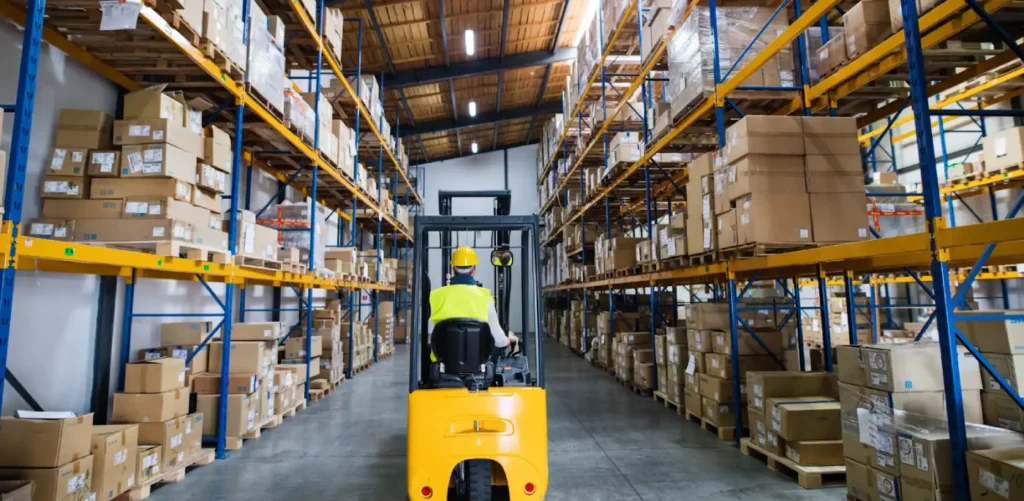
Freight bills don’t usually break a business in one day. They break it slowly.
A little extra waiting at a dock. A handful of half-empty trailers. A few “urgent” shipments that should have been planned. Then the month ends, and the shipping budget is gone.
From our dispatch and brokerage desk at Tetrix Transport, we see the same truth in 2026: most companies don’t need a cheaper carrier. They need a smarter freight flow.
That’s where warehousing and distribution services come in. Good warehousing and distribution services protect driver time, reduce surprise accessorials, and build loads that run clean. And if you’re looking for a clear playbook on how to lower shipping costs, warehousing and distribution services are one of the fastest levers you can pull.
This guide is written for truck drivers, owner-operators, and fleet managers who want freight that runs smoother. We’ll show how to lower shipping costs without “rate cutting,” how to lower shipping costs by changing how freight is staged, and how to lower shipping costs by eliminating common warehouse mistakes that create detention and missed appointments. We’ll also explain cross-docking services in plain English, and how cross-docking services support consolidation.
If your goal is to reduce freight costs with warehousing, you’re in the right place. We’ll break down what actually works, what looks good on paper but fails in real life, and what questions to ask before you commit your trucks to a shipper’s facility.
Why freight costs stay volatile now
In 2026, it’s not enough to ask, “What’s the rate?” You have to ask, “What’s the total cost of moving this product from dock to dock, without burning driver hours?”
Multiple 2026 indicators show that logistics movement is expanding, but pressure points are shifting month to month. The Logistics Managers’ Index reported a 59.6 overall reading for January 2026 (expansion). In that same report, transportation prices were at 71.4 (faster growth than any time since April 2022) and inventory costs were at 71.3. The report also described warehousing capacity and utilization moving as inventories and restocking shifted.
When transportation prices rise while inventory remains expensive, shippers feel pressure on both sides: holding product costs money, and moving product costs money. That’s one reason more companies are rethinking warehousing and distribution services and asking how to lower shipping costs without losing service.
The industrial real estate market matters too, because it shows what shippers pay for warehouse space and what type of space is available. In January 2026, Cushman & Wakefield reported U.S. industrial vacancy stabilizing at 7.1% and average industrial asking rents around $10.18 per square foot, still up year over year. In February 2026, CoStar Group projected industrial vacancy rising to 7.8% by the end of 2026 and rent growth pulling closer to about 1% before reaccelerating later.
Here’s why this matters to drivers and fleets: if warehousing costs are uncertain, shippers look for ways to make every square foot and every dock door produce more output. That often means one of two strategies:
- tighter warehousing and distribution services that reduce dwell time and build fuller outbound loads, or
- more cross-docking services to move freight through without long storage.
The last piece of the 2026 picture is business activity and labor pressure. The January 2026 Services PMI report from the Institute for Supply Management listed Transportation & Warehousing among industries reporting contraction in January, even while many other services industries reported growth. That kind of mixed signal is exactly why shippers chase flexibility: they don’t want to over-hire, over-lease, or over-ship when demand is uncertain.
Dispatch takeaway: in 2026, the shippers who win are the ones who ship on a plan. The best way to reduce freight costs with warehousing is to build a plan that keeps freight flowing even when prices and capacity shift. And if your daily question is how to lower shipping costs in a year like this, the real answer is: reduce unnecessary moves and unnecessary waiting.
What warehousing and distribution services really include
Most people hear “warehouse” and think “place where pallets sit.”
In reality, warehousing and distribution services can be a full operating system. Depending on the facility, warehousing and distribution services may include receiving, inspection, sorting, palletizing, labeling, short-term staging, pick/pack, order consolidation, inventory control, and outbound load building. Those services do more than store product. They shape the loads that carriers haul.
If you want to reduce freight costs with warehousing, it helps to think of warehousing and distribution services in two types.
First type: storage-based warehousing and distribution services.
This is the classic model: product comes in, gets put away, and leaves later. It is useful when demand is unpredictable or when lead times are long. But storage has costs: space, labor, handling, and inventory exposure.
Second type: flow-based warehousing and distribution services.
This model is about movement. Product comes in, is staged briefly, and leaves in planned waves. Cross-docking services are the cleanest example because cross-docking services move freight from inbound to outbound with minimal storage.
From a dispatch perspective, these are the cost levers that warehousing and distribution services control.
Driver time at the dock.
Detention time is one of the biggest carrier concerns tied to warehousing and distribution services. The Federal Motor Carrier Safety Administration summarizes research showing detention time is common enough to matter, including detention beyond the two-hour standard and differences in how often it occurs across carrier sizes. Public policy analysis also notes that detention time counts toward the 14-hour duty window and that drivers often are not paid for it (or are paid less than they earn driving with a payload).
Trailer utilization.
Half-full trailers increase cost per unit. Warehousing and distribution services can improve trailer utilization by letting shippers stage and combine orders before shipping.
Shipment count and minimum charges.
One of the simplest ways to lower shipping costs is to ship fewer loads. That does not mean shipping less product. It means shipping smarter: reduce the number of partial shipments, reduce the number of rushed shipments, and reduce the number of deliveries created by bad planning. The easiest place to do that is inside warehousing and distribution services.
Claims and damage risk from extra touches.
Every extra touch in a warehouse is one more chance for damage. Flow-based warehousing and distribution services and well-run cross-docking services can reduce touches, but only when labeling and staging are controlled.
So if you’re asking how to lower shipping costs, start by asking what your warehousing and distribution services are actually doing today. Are they building better loads, or are they creating more handling and more waiting?
This is also why cross-docking services get attention. Cross-docking services are not “storage.” Cross-docking services are load-building and movement control.
How consolidation changes the math
Consolidation is one of the most misunderstood topics in freight. People think it means “hold shipments until you have enough.”
In reality, consolidation is a process for matching freight release to trucking reality. Its purpose is simple: reduce partial moves and reduce empty space.
If your goal is to reduce freight costs with warehousing, consolidation is usually your highest-return lever. It is also a strong answer to the question how to lower shipping costs without lowering carrier pay, because consolidation reduces waste instead of reducing compensation.
Here are the three consolidation patterns we see most often in the United States freight operations.
Outbound consolidation by region.
A shipper is shipping multiple small loads into the same metro area or the same corridor. Warehousing and distribution services stage those orders and release them as fewer loads with higher utilization. This is freight consolidation in its simplest form.
Inbound consolidation and vendor pooling.
Multiple suppliers ship into one distribution center. Instead of five separate trucks fighting for dock doors, one planned route collects inbound freight and delivers it in a cleaner schedule. This type of freight consolidation reduces dock congestion, reduces detention time risk, and reduces the number of truck appointments.
Consolidation through a hub or pool point.
Freight moves into a hub in full loads, then gets broken down for shorter regional deliveries. This is common when linehaul is expensive and demand is spread out. It can also combine well with cross-docking services when the hub is flow-focused.
If you’re a driver or owner-operator, consolidation matters because it changes what freight looks like on your week. It can replace random short runs with planned lanes. It can also reduce “surprise loads” that show up after a warehouse misses its cutoffs.
Real-world driver scenario (this happens every day): An owner-operator runs regional dry van. The shipper keeps shipping small orders as soon as they are ready. The result is lots of short-haul pickups, tight appointment windows, and long check-in lines. Over a week, the driver loses hours at docks and ends up with fewer revenue miles.
When that shipper tightens warehousing and distribution services and uses freight consolidation, the freight changes:
- fewer pickups per day,
- fewer reschedules,
- more predictable ship windows, and
- more loads that are staged and ready.
That is a direct path to reduce freight costs with warehousing and to improve driver productivity.
But consolidation has to be controlled. Otherwise it backfires.
No cutoffs means chaos.
If the warehouse team does not have ship calendars and cutoff times, freight consolidation becomes guessing. Guessing creates late loads and premium freight later. That does not reduce freight costs with warehousing.
No staging discipline means slow unloading.
If the facility cannot stage by destination and stop order, drivers end up digging through trailers. That increases unloading time, increases claim risk, and increases detention time.
No honest transit plan means angry receivers.
Freight consolidation can create multi-stop routes. Multi-stop routes are fine when appointment times are realistic and driver hours are respected. Multi-stop routes become a problem when the schedule is built on hope.
So if you want to reduce freight costs with warehousing, the rule is simple: consolidate what is safe to consolidate and ship time-critical freight on time. That’s how to lower shipping costs without creating chargebacks, claims, and expedited freight later.
Cross-docking services can help, because cross-docking services provide freight consolidation without long storage. When you use cross-docking services correctly, you combine freight quickly and release it on a schedule.
Cross-docking services in plain English
Cross-docking services are one of the most practical tools for cost reduction in a network that ships frequently.
A widely used logistics glossary defines cross docking as a distribution system where received merchandise is not put away, but is readied for shipment, requiring close synchronization of inbound and outbound movement and reducing distribution costs by eliminating put-away, storage, and selection operations.
That definition matches what we see on dispatch: cross-docking services keep freight moving.
Why do shippers use cross-docking services in 2026 instead of traditional storage-based warehousing and distribution services?
Because cross-docking services help in three ways:
- they reduce handling and long dwell time,
- they support faster freight consolidation into cleaner outbound loads,
- they let shippers respond to demand changes without over-storing inventory.
In 2026, many shippers also combine cross-docking services with transloading. A 2026 explainer from STG Logistics describes cross-docking as speed-focused movement with little to no storage, while transloading includes transferring freight between modes and can involve unpacking, palletizing, consolidating, and sometimes storing.
In plain English: transloading changes what the freight rides on (and sometimes how it is packaged); cross-docking services change how fast it flows through.
For cost control, there are two cross-docking services models that matter most.
Consolidation cross-docking services.
This model combines multiple inbound shipments into one outbound truck. It is one of the fastest answers to how to lower shipping costs when a shipper is shipping too many small loads. It also tends to be carrier-friendly: most drivers would rather haul one clean load than deal with three small pickups and two reschedules.
Deconsolidation cross-docking services.
This model breaks a large inbound load into smaller outbound loads. It can be the right answer when long-haul trucking is expensive, but local distribution is easier to cover. It is also how many companies shorten the most expensive part of transportation by moving bulk freight into a region and distributing locally.
Cross-docking services are powerful, but not magic. They fail when timing is sloppy. The facility needs clear lane staging, firm cutoffs, and booked outbound capacity. Industry discussions of 2026 warehousing trends repeatedly point to the need for better data, visibility, and process discipline to keep warehouses productive under cost pressure.
So if your goal is to reduce freight costs with warehousing, ask a simple question: are your cross-docking services run with real schedules, or are they run “whenever inbound shows up”? Only the scheduled version will lower shipping costs consistently.
Dispatch-side playbook to reduce freight costs with warehousing
If you want to reduce freight costs with warehousing, you don’t need “industry buzzwords.” You need a clean operating rhythm.
This is the dispatch-side playbook we recommend when a shipper says, “Show me how to lower shipping costs,” and when a carrier says, “Give me freight that doesn’t waste my day.”
Set a shipping calendar that matches trucking reality.
Warehousing and distribution services cannot fix a bad calendar. You need ship days by region, cutoffs for orders, and tender times far enough ahead for trucks to cover the freight. When a warehouse runs without a calendar, it creates last-minute freight. Last-minute freight costs more. This is one of the simplest answers to how to lower shipping costs: reduce surprises.
Treat dock time like money.
Detention time is not an annoyance. Detention time is a real cost and a real safety concern. Policy analysis describes detention time as inefficient and notes that drivers often are not paid for it, and that it consumes on-duty time. FMCSA summaries show detention time occurring frequently enough to matter and often beyond two hours. If you want to lower shipping costs, reduce detention time and you reduce the hidden “risk premium” that gets baked into rates. If you’re wondering how to lower shipping costs and you want a starting point you can measure, start with dock turn time and fix the worst-performing facilities first.
Build true load readiness.
Many facilities say a load is “ready,” but it is not sealed, not staged, and not paperwork-complete. That creates driver waiting and rescheduling. If you want to reduce freight costs with warehousing, a “ready load” must mean ready.
Use a drop trailer program where volume supports it.
A drop trailer program reduces live-load bottlenecks and gives drivers flexibility. It can also improve equipment utilization, which can lower total cost without cutting carrier pay. A drop trailer program is not right for every lane, but on predictable lanes it is one of the fastest ways to lower shipping costs while protecting driver time.
Design freight consolidation windows that are short and intentional.
If a shipper wants to reduce freight costs with warehousing, the goal is not to store everything for a week. The goal is to stage just long enough to consolidate. Many successful programs use 24–72 hour staging windows for common lanes. That keeps flow moving and keeps inventory from piling up.
Control labeling and staging like it’s safety equipment.
Cross-docking services live or die on labeling and staging. If labels are wrong, freight gets misloaded. If staging lanes are messy, outbound building slows down. If you want cross-docking services that actually show how to lower shipping costs, you have to treat labeling and staging as non-negotiable.
Measure three numbers weekly.
You don’t need 40 KPIs. Start with three:
- Average dock turn time: check-in to checkout
- Trailer utilization: how much space you paid for vs how much you used
- Premium shipments: percent of loads expedited because the plan failed
If those three numbers improve, your warehousing and distribution services are working, your cross-docking services are working, and you will reduce freight costs with warehousing. If they don’t, you will keep asking how to lower shipping costs, and the answer will keep being “fix operations.”
Fleet manager scenario (also common): A small fleet runs 10 trucks. A customer ships to retail distribution centers and keeps getting chargebacks for late deliveries. The shipper blames carriers, carriers blame appointment windows, and the fleet loses money on reschedules.
When the shipper tightens warehousing and distribution services, enforces earlier cutoffs, and uses cross-docking services to build cleaner outbound loads by region, the plan changes:
- fewer missed appointments,
- fewer reschedules,
- fewer “late because it wasn’t loaded” failures,
- steadier tendering that lets the fleet plan trucks two days out.
That kind of improvement is exactly how to lower shipping costs without turning trucking into a race to the bottom.
How Tetrix Transport helps shippers and carriers execute the plan
A good freight brokerage does more than find a truck. A good freight brokerage helps shippers ship in a way that carriers can run.
When shippers ask us how to lower shipping costs, we don’t start by cutting the rate. We start by mapping shipping patterns and identifying where waste lives:
- Too many partials? Use warehousing and distribution services to enable freight consolidation.
- Too much waiting at docks? Fix appointments and load readiness to reduce detention time.
- Too many last-minute shipments? Build a shipping calendar and enforce cutoffs.
- Too many touches and claims? Use flow-based warehousing and distribution services or cross-docking services where they actually fit.
In 2026, even trusted market indicators show transportation prices can rise fast and that warehousing conditions can shift with inventory decisions. That makes execution more important than ever. “Better freight” is built, not begged for.
If you’re a carrier or fleet, predictable freight means predictable earnings. Predictable freight usually comes from shippers who invest in warehousing and distribution services that respect driver time, and from cross-docking services that operate with cutoffs and scheduling.
If you want to reduce freight costs with warehousing, and you want freight that is easier for drivers to run, the path is simple:
- tighten warehousing and distribution services,
- use freight consolidation where it fits,
- use cross-docking services where speed and flow create savings,
- and design the plan around driver hours, not wishes.
Bring us one week of shipment history and one target lane. We will show you where warehousing and distribution services can be tightened, where cross-docking services fit, and exactly how to lower shipping costs by removing wasted moves. If your goal is to reduce freight costs with warehousing, we’ll help you get there in a way that keeps carriers willing to haul your freight.
Frequently Asked Questions
Warehousing and distribution services reduce freight costs with warehousing when they reduce waste in three places: shipment count, dock time, and trailer utilization. In 2026, logistics indicators show transportation prices can rise quickly, which makes operational efficiency more valuable than “rate shopping.” If warehousing and distribution services are run on a calendar with real cutoffs, freight consolidation becomes easier, and you ship fewer partials. This is how to lower shipping costs without squeezing carriers: you remove waste instead of pay.
The fastest way to reduce freight costs with warehousing without slowing deliveries is to use short staging windows and cross-docking services on repeat lanes. Cross-docking services keep freight flowing because inbound freight is transferred to outbound loads with minimal storage. The key is discipline: cutoffs, booked capacity, and clean labeling. If the facility lacks discipline, cross-docking services turn into storage anyway, and then you lose the speed benefit and you don’t lower shipping costs.
Storage-focused warehousing and distribution services are designed for holding inventory and fulfilling unpredictable demand. Cross-docking services are designed for flow and speed. A common logistics definition notes that cross docking reduces cost by eliminating put-away, storage, and selection operations. In 2026, many companies use a hybrid: they keep slow movers in storage-based warehousing and distribution services and run high-velocity SKUs through cross-docking services. That hybrid approach can reduce freight costs with warehousing while protecting service levels.
To lower shipping costs when detention time is the problem, fix the dock process, not the carrier list. Public policy analysis describes detention time as inefficient and notes that it consumes on-duty time and often is unpaid or underpaid relative to driving with a payload. FMCSA research summaries also show detention time can occur regularly and can extend beyond two hours. The most effective fixes are appointment discipline, labor staffing aligned to shipping volume, true load readiness, and (when volume supports it) a drop trailer program to reduce live-load pressure.
A freight brokerage can help most by doing the boring work early.
That means verifying dimensions and weight before booking, confirming site type and unloading capabilities (dock and forklift availability), and pricing likely accessorial charges up front so the driver isn’t ambushed at delivery.
A strong freight brokerage process also reduces reclass fights because good documentation and consistent packaging/shipment descriptions reduce the “inspection mismatch” that leads to re-bills.
Finally, for carrier relationships: a broker who consistently sends clean info and sets realistic expectations reduces wasted time for dispatch and drivers—something that directly impacts utilization.
Freight consolidation usually lowers total cost when it replaces partial shipments with fuller loads and reduces the number of pickups and deliveries. That is how you reduce freight costs with warehousing without cutting carrier pay. But freight consolidation can backfire if it delays time-sensitive orders and creates late deliveries, chargebacks, or expedited shipments later. The best plans use warehousing and distribution services to consolidate predictable freight, and use cross-docking services to keep flow tight on high-frequency lanes. The “right” freight consolidation is the one that protects service while still reducing shipment count.

Choosing a Freight Broker for…
How Long Does It Take…
How to Reduce Freight Costs…